Tentacle Damage

LucidGoblin

New member
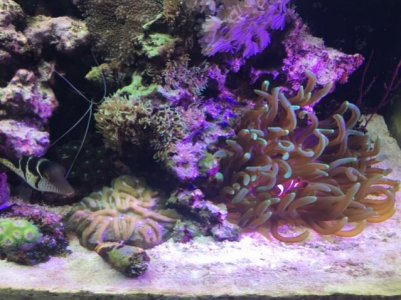
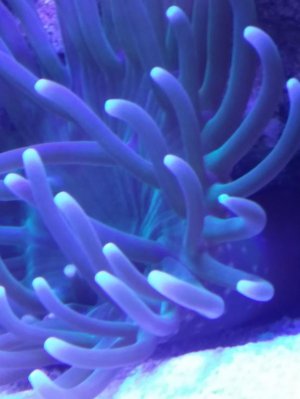
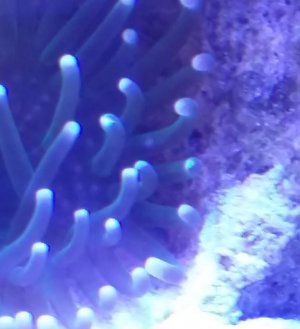
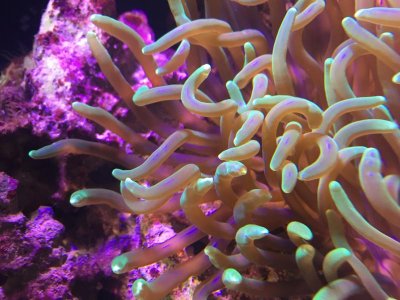
Can anyone please tell me what is causing this damage to my long tentacle anemone? All water parameters are ideal (pH 8.0, zero nitrates, phosphates, ammonia, etc.), I feed it fresh food twice a week, and provide it with direct illumination from a Coral Compulsion 14w Par30 LED 18k Vibrance Reef Light in addition to an overhead Finnex Planted+ 24/7 Fully Automated Aquarium LED. Parasites maybe? By the way, the nem is also hosting a small maroon clownfish. She's very gentle with it (so far), and keeps it clean.
 

Attachments

  • IMG_2272.jpg
    IMG_2272.jpg
    71.6 KB · Views: 2
Are you talking about the tentacles at the bottom of the picture that look like they have been nipped at?
 
Can anyone please tell me what is causing this damage to my long tentacle anemone? All water parameters are ideal (pH 8.0, zero nitrates, phosphates, ammonia, etc.), I feed it fresh food twice a week, and provide it with direct illumination from a Coral Compulsion 14w Par30 LED 18k Vibrance Reef Light in addition to an overhead Finnex Planted+ 24/7 Fully Automated Aquarium LED. Parasites maybe? By the way, the nem is also hosting a small maroon clownfish. She's very gentle with it (so far), and keeps it clean.

too much light looks like the tips are slightly burnt
 
Yes, the damage I'm referring to is the gnarled-looking tips on the bottom half of the photo. (I've have not observed anything in the tank "nipping" at the tentacles.)
I don't understand how can a PAR 30 LED bulb screwed into a 100 watt desk lamp provide too much light when it is recommended that anemones are illuminated with metal halide bulbs. (I cool the lamp with a fan, by the way.) Anyway, the tentacles in question are the furthest from any light source. Could the tips possibly be trying to regenerate by sloughing off dead tissue? And is not always true about the intense lighting requirements? I've noticed opinions can vary, but metal halide is always the most recommended. Perhaps certain species do better in lower light? Maybe the length of lighting time is an issue. How long should you leave the lights on for an LTA?
 
Can you pull back on the picture and lets see what is around it. Has it moved/rotated lately? Those are closed over and inflating. That shows it is older damage.
 
I highly doubt it is receiving too much light, as LTA's tend to be quite light-adaptable, although they do tend to do better with higher levels of light. It might help to better explain the system (size and depth, plus age and other inhabitants) and history of the nem.

To be honest, I don't see much of an issue with the tentacles from the photo - they simply don't look all that odd to me...
 
Looking at the bottom, you will see some have a ring/flat end.

attachment.php


Or it could be the wrong angle of the picture to the tips.

Can you take a video and lets see some movement to them.
 
I have seen "minor imperfections" like that before though (especially in newer nems), and they never seemed to impact anything...
 
Thanks For Replies!

Thanks For Replies!

One replying question stands out to me, from worm5406. Yes, the anemone does seem to rotate occasionally. The "odd-looking" tentacles first started to appear on what was currently the left side of the nem. Then it appeared as if the whole thing rotated so these same tentacles were more toward the top. The closest thing to the nem is a small brain coral (sorry, I can't be more specific, I will try to post a picture.)
By the way, I can't figure out how to upload a video attachment. (Something about a security token?)
 

Attachments

  • IMG_2275 (3).jpg
    IMG_2275 (3).jpg
    59.8 KB · Views: 2
I can help you with the video.

Let me increase the size of the picture first.

attachment.php


Upload the video to youtube.
Once in youtube go to your 'video manager'
Click on the video, it should start to play.
Click on the arrow at the bottom with the word 'share'
Use the embed title.

Copy and paste that link into a reply to this thread.


Also with that said the Anemone should be fine close to the brain, but the brain will not be. I would move the brain some, at least 4 more inches away. Do not try and move the anemone as it may decide to go someplace totally different. The tentacles will stretch checking its surroundings some and might have been damaged or did a little warfare. While the anemone will be fine, it knows how to close off at the base of each tentacle, it may get irritated and decide to move.

If moving it is not an option try moving/placing some rock to further the bend/distance between the two.

But I would say something else played with it. Almost like the tip got pulled off by something trying to get away.
 
Last edited:
The embed link works better.

It makes this happen auto'majic'ally:

<iframe width="853" height="480" src="https://www.youtube.com/embed/0XUtd1juvCE?rel=0" frameborder="0" allowfullscreen></iframe>
 
All the tentacles look normal to me.

I see you have some twisted ones too.

Look here at my tank a good while ago.

<iframe width="853" height="480" src="https://www.youtube.com/embed/BXZjy0n9k5k?rel=0" frameborder="0" allowfullscreen></iframe>
 
I have noticed that my very large cleaner shrimp will occasionally play with the tips of the tentacles as if looking for food. Sometimes a tentacle will snag a foot, and the shrimp will quickly pull away. (He's liable to get caught and eaten if he's not careful. He's a pain in the butt sometimes anyway.) I doubt the shrimp is doing any real damage. Whatever's going on, the tentacles seem to be healing okay. I guess I'll try not to worry about it too much and see how it goes. Thanks to everyone who replied.
 
It's self-canibalism.
First picture is taken while LTA was acting weird (turned out it was sucking at a tentacle in the side that is away from the camera.) The other picture is what the tentacles look like if they get interrupted in the act. The tentacles get a softer end like the ones on your picture when they suckle them and let go carefully. I turned a flashlight on it, making it retract - clearly not good for the anemone but making it possible for me to see the tentacles in it's mouth being desolved in stringy fluff of red-brown flesh.

It can be hard to see in the picture if you don't know what to look for but it is clear to become aware of when it happens on a day to day basis. I was just lucky/unlucky to interrupt with curiosity. It helped to feed it more and I don't know if it is related to the bleaching on this one since yours is not bleached.

But they eat themselves, they do. Maybe they just feel a need to trim down their skirts once in a while.
 

Attachments

  • IMG_20161026_151955~2.jpg
    IMG_20161026_151955~2.jpg
    36.9 KB · Views: 2
  • IMG_20161030_155227~2.jpg
    IMG_20161030_155227~2.jpg
    42.1 KB · Views: 2
Last edited:
It's self-canibalism.
First picture is taken while LTA was acting weird (turned out it was sucking at a tentacle in the side that is away from the camera.) The other picture is what the tentacles look like if they get interrupted in the act. The tentacles get a softer end like the ones on your picture when they suckle them and let go carefully. I turned a flashlight on it, making it retract - clearly not good for the anemone but making it possible for me to see the tentacles in it's mouth being desolved in stringy fluff of red-brown flesh.

It can be hard to see in the picture if you don't know what to look for but it is clear to become aware of when it happens on a day to day basis. I was just lucky/unlucky to interrupt with curiosity. It helped to feed it more and I don't know if it is related to the bleaching on this one since yours is not bleached.

But they eat themselves, they do. Maybe they just feel a need to trim down their skirts once in a while.

Please tell me you are not being serious, and if you are being serious, I don't know where to begin...:lol:
 
Can anyone please tell me what is causing this damage to my long tentacle anemone? All water parameters are ideal (pH 8.0, zero nitrates, phosphates, ammonia, etc.), I feed it fresh food twice a week, and provide it with direct illumination from a Coral Compulsion 14w Par30 LED 18k Vibrance Reef Light in addition to an overhead Finnex Planted+ 24/7 Fully Automated Aquarium LED. Parasites maybe? By the way, the nem is also hosting a small maroon clownfish. She's very gentle with it (so far), and keeps it clean.

planted tanks lights do not use the same spectrum as reef lights btw
 
Please tell me you are not being serious, and if you are being serious, I don't know where to begin...:lol:


Lol yea that's an interesting one. Coming from someone who is brand new to the hobby, he sure doles out some interesting advice.
 
Back
Top