
Using Biochar/Charcoal/Carbon as substrate / MMLR additive

MadReefist

New member
Nothing seemed to jump out trying to find this kind of discussion in searches for biochar/charcoal/carbon.

I have some bamboo biochar here and it strikes me as a material that would hold together rather well. With rather profound surface area it seems this might have some applications.

But are there any serious issues like say after 6 months of use?

SURFACE AREAS (square meters per gram):
Activated Carbon 500-1000 m2/g
Bamboo Biochar 300-500 m2/g
Wood Biochar 100 m2/g
Straw Biochar 30 m2/g

I didn't manage to find clear data on normal LR surface area. That kind of insight would aid in such a discussion of course..
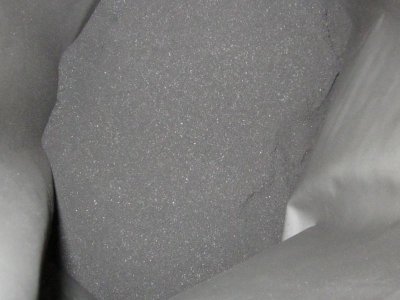
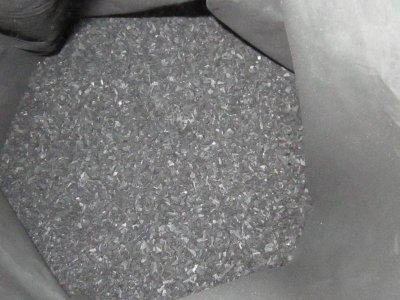
IMG_0001.jpg
IMG_0002.jpg

That's fine grade and coarse grade by bamboo standards. I don't think it comes much coarser. Nowhere near like the stuff you can make in the bonfire. It is about as ecofriendly as you could ever hope for.
https://en.wikipedia.org/wiki/Biochar
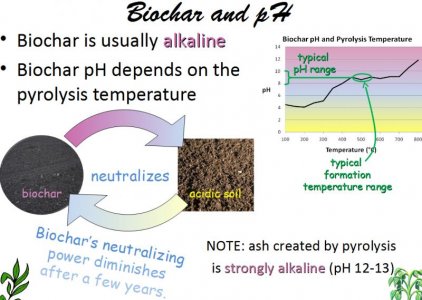
biochar ph.jpg
 
Last edited:
It's charcoal, and charcoal does not equal activated carbon. Has no use in our aquariums. Stick the activated carbon ;)
 
"No use" seems, well, "only the Sith deal in absolutes".

Assuming the batch of biochar weighs in at around the right pH, is there any specific (chemistry) reason not too use such (outside of concepts of it not quite being the highest porosity)?

I figure they cold effectively be used interchangeably. So if charcoal would be bad in the long run so would 'carbon'.

Note the purpose here isn't about using them for conventional 'chemical filtration', but rather for maximizing long term biofiltration type applications with all that surface area.
 
"No use" seems, well, "only the Sith deal in absolutes".

No worries, I'm not a Sith, just a marine biologist ;)

I figure they cold effectively be used interchangeably. So if charcoal would be bad in the long run so would 'carbon'.

Despite essentially both being carbon, the form is quite different, hence the lack of interchangeability.

Note the purpose here isn't about using them for conventional 'chemical filtration', but rather for maximizing long term biofiltration type applications with all that surface area.

For biofiltration, either could be used. However, both (the charcoal more so) will tend to degrade over time from abrasion in the filter. Hard porous ceramics and sintered glass media is better and more durable from that perspective.
 
Now we're getting somewhere.

I was more thinking in terms of using it inside man made live rock type applications. While also exploring the concept of it as the substrate itself.

Will look up those others THANKS
 
SURFACE AREA (Square Meters Per Gram):

Activated Carbon 500-1000 m2/g
Bamboo Biochar 300-500 m2/g
Wood Biochar 100 m2/g
Diatomaceous Earth 69.05 m2/g
Straw Biochar 30 m2/g
Porous Stone 2.59 m2/g (LIVE ROCK??)
Aragonite 1.82 m2/g
MarinePure™(HD) 1.50 m2/g
MarinePure™(LD) 1.50 m2/g
Ceramic Sphere 0.20 m2/g
Feather Rock 0.18 m2/g
Sintered Ceramic 0.10 m2/g
Plastic Bio-Balls N/A m2/g

Updated the entire list^
 
Last edited:
I think this is more of a long term effects kind of proposition.

Some quick search mentions Carbon & HLLE:
https://en.wikipedia.org/wiki/Head_and_lateral_line_erosion

Which would answer the raw substrate hypothetical as NO, but what would that mean for Biochar embedded inside porous rock structures?

"There are lots of brands of activated carbons to choose from. The quality ranges from downright detrimental to excellent. Avoid any product that uses the term “charcoal” or “char” in its name. These products are not activated and are limited to removing heavy metals and odors. There are ineffective against organics. They also contain calcium phosphates- which act as a nutrient for algae growth."
https://joejaworski.wordpress.com/2008/05/09/does-a-reef-tank-need-carbon/

But of course my intent is maximum (+most ideal) bio-surface, not gas/metal/chem removal.

"Likewise, phosphates are also byproducts of animal metabolism, and although not toxic to most animals, high phosphate concentrations may reduce or stop coral growth. The removal of both nitrogenous wastes, such as ammonia, and phosphates is accomplished by bacteria and microalgae which absorb these toxic animal byproducts and use them in their growth as necessary, required, and vital nutrients."
http://www.ronshimek.com/deep_sand_beds.html

So even if phosphates were inside, once it goes biofilter wouldn't that abate it?

"Many of us are familiar with the use of charcoal in the old cornerbox filters of our freshwater days. These usually consisted of small, shiny, irregularly shaped pieces of bone or wood charcoal. This type of carbon is not really suitable for use in marine aquariums and has been replaced by "activated" carbon. In this form the carbon has been subjected to extremely high pressures and temperatures to drive out all impurities and gases leaving behind extremely porous and pure grains of carbon. Particle size, type of gas used, activation temperature and, in some instances, inorganic salts of zinc, copper, phosphate, silicate and sulfate added before activation, provide carbon with specific adsorption characteristics (Moe, 1989). Therefore, activated carbon can be tailored to the specific type of impurities that one wishes to remove. By creating such extremely porous structures within the carbon grains we have, in effect, created a gigantic sponge that can absorb many impurities from the passing water."
http://www.fishchannel.com/setups/saltwater/reef-aquarium-setups.aspx

I wonder how one might go about 'confirming' which (carbon or biochar) would be better for bio-applications?

Bamboo Biochar:
sang1.gif

Scale: 100um

Activated Carbon:
Paper_262565_abstract_20007_0.jpg


I suppose the way the substances diffuse gases would be one proper way to look at it.

Bone Biochar Surface Area: 100 m2/g

Later I'll wet some and run some chem tests and post the results...
 
Last edited:
Why is the comparing in a area over gram, instead of area over volume? I assume feathers would be pretty good in area over grams too by the way... While a ceramic brick will not be. But in a cubic inch of both would the comparison still favor feathers?

As a substrate you will probably add until it looks right by volume, not just dump some set weight of each.
 
Good shootin' Tex!

GRAMS PER TBLSPN:
Bamboo Biochar (coarse) 4.73g
API Activated Carbon 7.96g
Seachem Renew 13.27g
*Cant find my Zeolite but expect it to weigh in on par with Renew.

More data scraped together:
Zeolite 621.18 m2/g (a form called "Zeolite Y")

m2/cc:
Seachem Renew 500-600 m2/cc

f2/cc:
Ion Exchange Resins 270-5400 f2/cc
Seachem Renew 500-600 f2/cc
Zeolite 324 f2/cc
Polymeric Resins 3240-5400 f2/cc

NOTE: Marine Aquarium Reference 1992 states that Zeolite "pores are too small for biological filtration". Okay, but what then is the upper limit in this metric??

Activated Carbon 500-2000 m2/g
Zeolite 621.18 m2/g (a form called "Zeolite Y")
Bamboo Biochar 300-500 m2/g
Bone Biochar Surface Area: 100 m2/g
Wood Biochar 100 m2/g
Diatomaceous Earth 69.05 m2/g
Straw Biochar 30 m2/g
"Porous Stone" 2.59 m2/g (as labelled in Marine Aquarium Reference 1992, should mean Live Rock)
Aragonite 1.82 m2/g
MarinePure™(HD) 1.50 m2/g
MarinePure™(LD) 1.50 m2/g
Ceramic Sphere 0.20 m2/g
Feather Rock 0.18 m2/g
Sintered Ceramic 0.10 m2/g
Plastic Bio-Balls N/A m2/g

Very curious now what the weight per volume is for sintered glass might be...

Fly Ash Zeolite:
pure-zeolites-synthesized-from-fly-ash.jpg
 
Last edited:
"Plant potting medium is normally composed of very fine materials, such as the silicate clay minerals, and course pebble size materials, such as perlite, and charcoal, and organic matter, such as sphagnum moss. The silicate clay minerals, such as vermicullite, and montmorillonite, because of the extreme fineness of their particles, and expanding type structure, could have as much as 800 square meters of surface area per gram of material. "
http://www.google.bj/patents/US5853460

In-trestin'!
 
Perlite is very light, it floats. Also not very durable. Any sort of tumbling motion or agitation will grind it down.
 
^: As too with charcoal/carbon, an important characteristic to keep in mind. So as a direct substrate material they are far from ideal.

But in man made live rock blending that can / should become irrelevant, so in this application that should only leave issues such as negative hydro-chemical reaction potentials & beneficial microbe support dynamics.

In that vein I've I happened across a bit of data on Biochar that should be worthy:
"For example, coniferous biochars generated at lower temperatures, e.g. 350°C, can contain larger amounts of available nutrients, while having a smaller sorptive capacity for cations than biochars generated at higher temperatures, e.g. 800°C (Gundale and DeLuca 2006). Furthermore, plant species with many large diameter cells in their stem tissues can lead to greater quantities of macropores in biochar particles. Larger numbers of macropores can for example enhance the ability of biochar to adsorb larger molecules such as phenolic compounds (Keech et al. 2005)."
http://organicsoiltechnology.com/paecilomyces-lilacinus.html

BioChar-mycorrhezal-schematic-relationship1.jpg

http://organicsoiltechnology.com/wp-content/uploads/BioChar-mycorrhezal-schematic-relationship1.jpg

Then this bit tanks about Mycorrhizal responses with BioChar:
"Experiments suggest that biomass-derived black carbon (biochar) affects microbial populations and soil biogeochemistry. Both biochar and mycorrhizal associations, ubiquitous symbioses in terrestrial ecosystems, are potentially important in various ecosystem services provided by soils, contributing to sustainable plant production, ecosystem restoration, and soil carbon sequestration and hence mitigation of global climate change. As both biochar and mycorrhizal associations are subject to management, understanding and exploiting interactions between them could be advantageous. Here we focus on biochar effects on mycorrhizal associations. After reviewing the experimental evidence for such effects, we critically examine hypotheses pertaining to four mechanisms by which biochar could influence mycorrhizal abundance and/or functioning. These mechanisms are (in decreasing order of currently available evidence supporting them): (a) alteration of soil physico-chemical properties; (b) indirect effects on mycorrhizae through effects on other soil microbes; (c) plant–fungus signaling interference and detoxification of allelochemicals on biochar; and (d) provision of refugia from fungal grazers. We provide a roadmap for research aimed at testing these mechanistic hypotheses.
http://link.springer.com/article/10.1007%2Fs11104-007-9391-5

So biochar supports and apparently enhances Mycorrhizal colonization (which are subterranean microbe scale fungi that symbiotically attach to the heliosphere cells of plant roots and bioenhance them/the plants in a plethora of ways).

Above some data I found suggested that BioChar's might have too fine of porosity for the bacteria to dwell.

But that data demonstrates that fungal microbes do great with them.

So the questions here I see are:
-How fine of porosity is too fine for our marine filtration bacteria's?

-Might marine filtration bacteria be 'enhanced' by BioChar as the Mycorhizal microbes are?


EDIT: Okay, taking another look at that image as I added it in, obviously 'regular' biochar does, that is it isn't too fine to support bacteria.

So now looking back at bamboo biochar (which has superior surface area to other biochars), it would seem obvious that bamboo would inherently have "large diameter cells in their stem tissues" if you've handled the stuff a bunch and de-extrapolate the plants design back to that level. For now I must say I'm not sure about that its one of the few plants categories I haven't done anything at all with yet... But it could be that the sturdiness & design quality of their cellular infrastructures survive 'perfectly' during the pyrolysis treatment compared to other types. Following this logic, the tube like nature of their design might allow the passage of microbes where in 'synthecized' carbon some other inherent physical trait does the opposite?
 
Last edited:
Back
Top