raythepilot
Member
As I stated in another post:
When I look at a BTA under the microscope it is obvious that they have at least two different symbiotic "algae" associated with them.
Symbiodinium species are the brownish single celled dinoflagellates that populate the slime layer on the inside surface of the anemone. In BTA's they give it the brownish color.
There are also zoochlorella species that live within the matrix of the epidermal cells. These vary in color giving the anemone its green to pink color.
Here are some things to understand about these photosynthetic species.
Symbiodinium are found on the slime layer of the gut side of the anemone. That means they are found on the gut surface and the inner surface of the anemone tentacles. When an anemone gets sick from a bacterial problem in the gut it purges the surface slime and with it goes the symbiodinium as a brown slime. This is usually a bad sign.
Zoochlorellae are found inside the matrix of the epidermal cells. They cannot be purged without killing the cell.
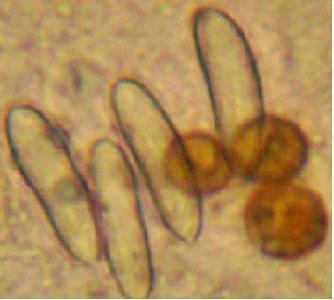
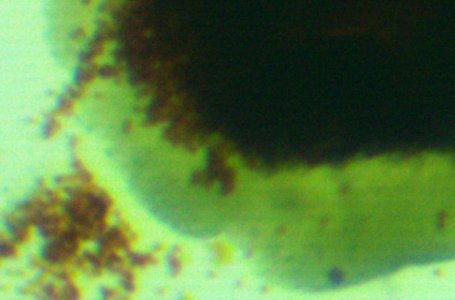
I uploaded two photomicrographs. One shows the two different algae found in a tentacle mash. The second shows a tentacle that has been severed from an anemone. The limitations of the forum download rules severely limit what I can download.
OK let's set some ground rules about this thread.
I already know that I am an idiot so please don't try to prove that fact!
Ask questions about facts. Do not waste time with a bunch of "what ifs."
I know that what I have posted is very limited so if you would like additional photomicrographs I will get them if possible and if you ask nicely.
My time is limited so I may not get back right away and if there are 10,000,000 people on this post... well I may not get back at all especially if I feel that everyone thinks I am an idiot, which is a fact.
OK lets go!
When I look at a BTA under the microscope it is obvious that they have at least two different symbiotic "algae" associated with them.
Symbiodinium species are the brownish single celled dinoflagellates that populate the slime layer on the inside surface of the anemone. In BTA's they give it the brownish color.
There are also zoochlorella species that live within the matrix of the epidermal cells. These vary in color giving the anemone its green to pink color.
Here are some things to understand about these photosynthetic species.
Symbiodinium are found on the slime layer of the gut side of the anemone. That means they are found on the gut surface and the inner surface of the anemone tentacles. When an anemone gets sick from a bacterial problem in the gut it purges the surface slime and with it goes the symbiodinium as a brown slime. This is usually a bad sign.
Zoochlorellae are found inside the matrix of the epidermal cells. They cannot be purged without killing the cell.
I uploaded two photomicrographs. One shows the two different algae found in a tentacle mash. The second shows a tentacle that has been severed from an anemone. The limitations of the forum download rules severely limit what I can download.
OK let's set some ground rules about this thread.
I already know that I am an idiot so please don't try to prove that fact!
Ask questions about facts. Do not waste time with a bunch of "what ifs."
I know that what I have posted is very limited so if you would like additional photomicrographs I will get them if possible and if you ask nicely.
My time is limited so I may not get back right away and if there are 10,000,000 people on this post... well I may not get back at all especially if I feel that everyone thinks I am an idiot, which is a fact.
OK lets go!