What if I take out 1 gallon of water and dump in a gallon of bleach?

fixingstill

New member
Easiest way to restart / reset a tank?
No fish, no coral inside. All dead because the tank was neglected.
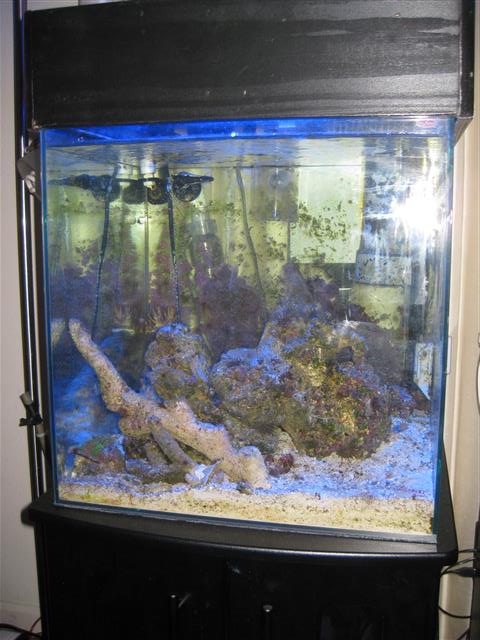
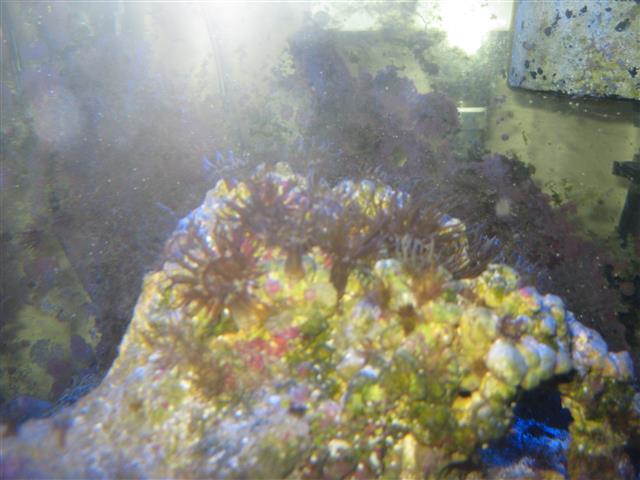
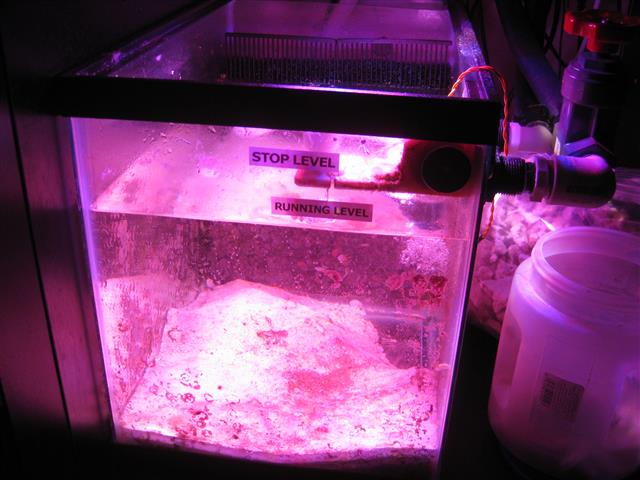
A lot of bubble algae, aiptasia, green algae, things you don't want are all in there. It is a 30G and has abut 1" of sand and live rocks. The sump has refugium and 2" of sand.
I have time and I am lazy. What if I take out 1 gallon of water and dump in a gallon of bleach and continue to let the return pump, powerhead to run? It will kill everything. And I continue to run the skimmer to get rid of the bio waste (dumped to a large container). I will continue to run the ATO. What will happen next? Bleach will evaporate and everything will be restarted? 2 weeks? Then do a 100% water change with RO and let it rinse thru all? Then fill with fresh saltwater and let the nature cycle the tank? Maybe add a piece of silverside a day/week?
 
Why bother, this hobby takes time dedication and commitment. I can see life getting in the way but when you have the opportunity to start again do it right.


Sent from my iPhone using Tapatalk
 
No bleach. Clean it up. Deal with what's there, then start over. Don't be lazy. Do things one at a time.
 
What is wrong with using bleach?
What is the "normal" way? I have seen people suggesting taking all rocks and sand out, acid wash, rinse, dry under sun, and rinse and put back.
If it is suggested not to use bleach, then I will use acid, or vinegar, whatever.
Doing it my way would also clean up all the plumbing internal, pumps, etc while taking the rocks and sand out would not.
Work smart, not hard. We want to find ways to make this hobby easier and more enjoyable, don't we?
 
Bleach kills everything and everything will still be in the tank. Getting it "all" out after the fact will be harder than you think. Compare it to removing the rock and cleaning it in the sink. It will be left in the sink and won't contaminate the tank. Might seem like more work, but wait till you try your way.
 
In theory yes, everything would die.

This is a radical idea...never heard it before. You should try it for science and report back...although I don't think it will be as successful as you hope.


Sent from my iPhone using Tapatalk
 
You'd be surprised what algae you'll still get. Do it right ,. Otherwise you're wasting your time
 
I have a swimming pool.

I can tell you that if the chlorine gets too low, algae shows up.

As soon as the bleach evaps out, it'd start growing back.

The bleach won't make it all the way into all of the pores like you'd hope.
 
If you want something to clean the rocks then use a toothbrush and hydrogen peroxide. When the bubbling stops the rock is clean then just use the toothbrush to clean all the algae off


Sent from my iPhone using Tapatalk
 
The bleach method works. It's nothing to be afraid of. It might take more than one 100% water change. Don't start with silverside, use ammonia and bottled bacteria, it's cleaner and faster.
 
As others have suggested, pull the rock and sand and clean it that way. Yes, absolutely simplifying things is ideal. Bleaching the whole system for algae I don't think qualifies.
 
I do not have the article, but there was an university biologist/chemist professor in the hobby that had access to a high-powered microscope. He was studying the affects of various cleaning agents (bleach, H202, detergent, alcohol, etc) on filter socks.

He cut and treated pieces of the "dirty" fiber with each of the cleaning agents.

I do not recall the magnification, but he found live algae spores still alive after treating bleach -- just that they turned white, but clearly still alive nonetheless.

Of all his treatments, he found H202 (hydrogen peroxide) worked the best. It literally destroys the molecular structure of organic material (bacteria, algae, etc).

It kind of like age-old adage...."Pay it now, or pay it later". Just do it right now, otherwise down the road (6 months, a year), your system crashes and all the money you invested in fish, corals, etc. go down with it.
 
You might, before going that extreme, try Reef Flux, (fluconasole). Follow instructions immaculately. And be patient. I'm pretty impressed with the stuff, in terms of straightening out a tank that's had some problems. Not that spendy, and might save you time and effort. You might even try a second dose a month later if that hasn't routed your algae and crud problems.
 
I do not have the article, but there was an university biologist/chemist professor in the hobby that had access to a high-powered microscope. He was studying the affects of various cleaning agents (bleach, H202, detergent, alcohol, etc) on filter socks.


He cut and treated pieces of the "dirty" fiber with each of the cleaning agents.


I do not recall the magnification, but he found live algae spores still alive after treating bleach -- just that they turned white, but clearly still alive nonetheless.


Of all his treatments, he found H202 (hydrogen peroxide) worked the best. It literally destroys the molecular structure of organic material (bacteria, algae, etc).


It kind of like age-old adage...."Pay it now, or pay it later". Just do it right now, otherwise down the road (6 months, a year), your system crashes and all the money you invested in fish, corals, etc. go down with it.


Are you saying that the hydrogen peroxide will cause the tank to crash?


Sent from my iPhone using Tapatalk
 
Am I correct is reading this is a 30 gallon aquarium? I honestly don't mean any offense, but if you don't want to clean a 30, you are in the wrong hobby. It's only a 30. Just take out the water, rinse it with tap water, rinse with RO, fill with salt water, start over. Bleach is unnecessary.
 
Are you saying that the hydrogen peroxide will cause the tank to crash?

No, not at all. I am simply saying that H202 was found to be a better cleaning agent (at least when it comes to organic matter). In some cases, the bleach made some things white but they were still living.

Bacteria spores are resilient, so there is no telling that simply bleaching the tank is going to kill everything 100%.
As other have said, 30G is a small tank. It could be washed-out, cleaned properly, etc. in an afternoon. I actually have a 32G AIO I bought used, broke it all down, cleaned, replaced with new substrate. Probably took me all of 3-4 hours.
 
I am the OP.
If soaking, for days, the rocks in bleach or H2O2 (as concentrated as it takes) would not kill all the algaes (inside the pores of rocks), how would toothbrush, rinsing with garden hose, and drying under the sun have better chance of killing all the lives inside the rocks?
And what about the inside of all plumbing, how do you clean it and flush it all out?

This 30G is my "jail tank" that I use occasionally for punishing naughty fish and other purpose. It is plumbed to the main 110G tank but I can easily isolate it by adding its own return pump.
H2O2 is a better idea. At least it is hydrogen and oxgen, not chlorine.

No matter how I look at it, running the tank with H2O2 seems to be easier and better.
I expect a lot of bio waste. I see it as an indication of when it is cleaned up by the skimmer.
I will of course change and test the water before putting new life in.

I will report back.
 
Before photos:
IMG_5912.JPG


IMG_5913.JPG


IMG_5915.JPG


IMG_5919.JPG
 
Back
Top