Would you try again?

jmm

New member
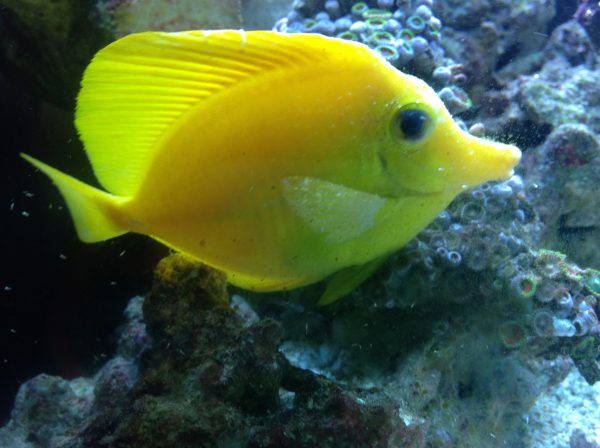
After putting a Mitratus Butterfly thorough four sessions of TTM (two with the last 50 minutes in formalin and two with Prazi Pro) and then two more sessions with antibiotics (while the new observation tank cycled) and five weeks of observation, all with crystal-clear fins and body, I put him in the display which had been fallow for 6 months.

After a week or so he started showing slight signs of spots (very slight), but his behavior and appetite were not affected. The display tank had hermits, snails and 6 cleaner shrimp. I knew the snails were at risk with NLS Ich Shield but not the shrimp or crabs. I decided to take the risk. For three weeks I went lights out (only room lights), no carbon or protein skimming, and no GFO. All through this routine the fish was completely clear of spots and had no ill effects with behavior or appetite. The snails died, the algae died and on the 19th or 20th day, two of the shrimp died.

After 3 weeks I performed two 30% water changes, restarted the protein skimmer and carbon and GFO and turned on the lights. The fish was clear.

Then 8 days later, he had some slight clear fin spots that didn't affect appetite or behavior. I'll mention that while going through the 3 week Ich Shield treatment I changed the socks and discovered I had left an old Puragin bag in there.

Would you try the Ich Shield again? Incidentally, copepods and amphipods are still alive through all this.
 
Sounds like it could be Lympho.

But it comes and goes on a part-daily basis. It's here;it's gone. And then it's back the same day.

And Lympho seems to be mostly in slightly dirty tanks. The readings are perfect, even if it was a reef tank, which it isn't, it's a fish tank with overkill filtration.
 
Disappearing throughout the day does not sound like ich at all. They'll remain for at least a couple of days (if the water is warm, longer if it's colder). and they'll be white spots that look like large specks of salt. If it appears different it's probably something else.

I'd call this a light case: If otherwise healthy, the fish should survive while looking like this.


Cryptocaryan_irritans.jpeg
 
After all this I would just observe it and see how it develops.

Lymphocystis has nothing to do with a tank being dirty, but rather with stress and a compromised immune system.

BTW, did you add anything wet to the DT during the fallow period?

Sent from my XT1254 using Tapatalk
 
Disappearing throughout the day does not sound like ich at all. They'll remain for at least a couple of days (if the water is warm, longer if it's colder). and they'll be white spots that look like large specks of salt. If it appears different it's probably something else.

I'd call this a light case: If otherwise healthy, the fish should survive while looking like this.


Cryptocaryan_irritans.jpeg

It's not that bad.
 
After all this I would just observe it and see how it develops.

Lymphocystis has nothing to do with a tank being dirty, but rather with stress and a compromised immune system.

BTW, did you add anything wet to the DT during the fallow period?

Sent from my XT1254 using Tapatalk

Yes, I (a mistake) added the hermits and snails. I also added two of the cleaner shrimp. But I used the Ich Shield after the fish had been in there a while and it cleared up the same day and showed no symptoms for the 3 weeks with the CP and for more than a week after I changed out the water.

The snails are dead and the shrimp, at first fine, started to die right before the 3 weeks were up. The water changes seemed to put some life back in the surviving shrimp.

Since I didn't notice the old Purigen bag for a couple of days do you think it diluted the CP enough to make it less effective (even though it killed the snails and all the algae but not the copepods) and thus need to re dose if the fish doesn't get better?
 
The issue is that CP can't do anything to the cysts. If anything, it only attacks the infective stage. So 3 weeks is not enough to begin with, even if you do not have the strain that can stay encysted for é months.
In general you have two choices:
1. Take the fish out and run it again through TTM or hyposalinity while leaving the DT fallow for 3 months (and nothing wet added that wasn't in a fallow QT for at least 3 months).
2. Wait and see how the fish manages the parasite. Most fish, if healthy and in a low stress environment, will acquire some level of immunity. This approach might limit what you can add later.

Sent from my XT1254 using Tapatalk
 
The issue is that CP can't do anything to the cysts. If anything, it only attacks the infective stage. So 3 weeks is not enough to begin with, even if you do not have the strain that can stay encysted for é months.
In general you have two choices:
1. Take the fish out and run it again through TTM or hyposalinity while leaving the DT fallow for 3 months (and nothing wet added that wasn't in a fallow QT for at least 3 months).
2. Wait and see how the fish manages the parasite. Most fish, if healthy and in a low stress environment, will acquire some level of immunity. This approach might limit what you can add later.

Sent from my XT1254 using Tapatalk

See, that's my problem. I have three tiny fish (juvenile regal angel, burgess butterfly and long nose yellow butterfly that have been through TTM, formalin and Prazi Pro. They're now in a small bare tank with PVC decorations. Two have been in there for seven weeks, one for three weeks. They're perfect and they get along and eat very competitively. I want them in the 120 with the mitratus. But I can't trust the tank. I thought the CP would clear it even though most don't like to use it in the main display. It kept it at bay for more than a month.

Is there any low level that can be run continously? Or can a "super dose" clear it once and for all?
 
CP isn't copper - low dose doesn't work. And pretty much nothing short of bleach will kill the cysts.
So you either have to eradicate the parasite or "train" and condition the fish to live and deal with it on their own.
Constant medication is not a good solution and will for sure cause long term problems.

Sent from my XT1254 using Tapatalk
 
I was so careful when setting up this tank. Acid washed the rocks, dry sand, oversize sump, skimmer and dual reactors. Everything was quarantined (except the snails). It was cycled with Dr. Tim's bacteria and ammonia. Twin Marinepure blocks. Beautiful plumbing and all electrical wires neatly hidden. And it's the worst tank I own.

I can't bleach it as long as the butterfly is alive, but believe me, if it dies it will be a complete restart. Traps, nets, nighttime fishing hasn't caught the fish and I pretty much can't get on a ladder and lift soaking wet 40 pound rocks out of there without risking breaking something.

It's discouraging.
 
It doesn't look like the usual parasite suspects (crypto, brook, velvet etc.) Bear in mind that there's a lot about the ocean that is not understood, so you could have a parasite that isn't known. I agree with ThRoewer - observe for now. If you don't know what you are treating, throwing chemicals at it may do more harm than good.
 
Back
Top