Can/will fish detrimentally over-eat?

TylerHaworth

New member
So since I've been carbon dosing my N+P have been at a dead zero (Hanna Checker) and my coral have started to fade... Along with cutting back the carbon source I've substantially increased the amount I feed.

My fish are all healthy with thick, round bodies, far from malnourished even before I upped the feeding.

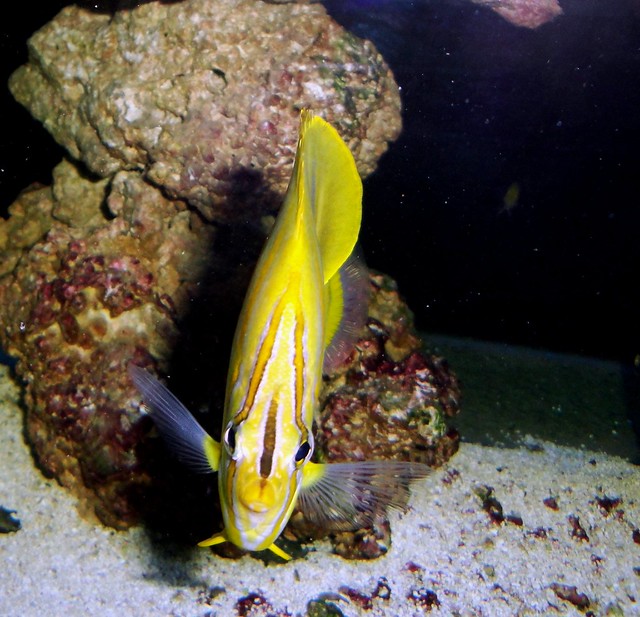
My question is, my Foxface goes HAM on the food to the extent that his/her stomach bulges like a golf ball and is breathing very heavily...

What's your take on this? Are the opportunistic instincts taking over to the extent that it could be harmful?
 
My foxface also seems to eat most of the food before other fish can get it. He is growing so fast and while his stomach isn't sticking out exactly, he is very plump. Not sure how I'd get him to eat less so other fish can get more because he loves everything I put in there.
 
Yeah, the fish is normal/healthy weight and the huge bulge and labored breathing goes away after a few hours. I'm just wondering if the binge eating is anything to really worry about...

This 3.5" fish is eating probably half a cube of mysis, some flake, and about a 1x2 piece of Nori in under 5 minutes.
 
My guess is that it might not "harm" the fish, but it still might not be good for it. Meaning, if the fish eat until they are about to explode, I can't imagine that their bodies are even able to absorb much of the nutrients they are consuming.

I'd say try feeding smaller quantities but more frequently... I do this by setting my auto-feeder to feed twice while I'm at work, then I feed another 2 times after I get home (and usually in the morning too before I go to work). My fish are all nice and plump, but never seem to "overeat" as you describe.

Hope this helps,

Chad
 
im going to say no. You will never see a skinny fish in the wild, and they eat all day long (literally, all day long) I dont think we could over feed compared to what nature provides. Thats all fish do, eat, poop, sleep :)
 
Yes, captive fish can die of hepatic lipidosis (fatty liver disease) if overfed, or fed too much of the wrong foods.

Likewise, fishes like anglers, other ambush preds have such slow metabolisms that the food can actually begin to decompose within their GI tract, which of course, kills them.
 
I think most are like humans - consistently overeating over long periods of time, especially poorly nutritious food, leads to obesity and health problems. The idea of a fish eating himself to death, a common rumor when I started this hobby many years ago, is nonsense. If it did, tangs and foxface would die in the ocean whenever they found large patches of seaweed, groupers would die whenever schools of small fish swam passed, etc.
 
Yes, captive fish can die of hepatic lipidosis (fatty liver disease) if overfed, or fed too much of the wrong foods.

I agree with this.

Also I'm a big koi hobbyist and if you don't know, it has been recommended that koi be fed 18 times a day to equal about 3% of the fishes total body weight, everyday. This produces great growth results but it also produces fish that live a lot shorter, a little more then just 8 years. Many people know that koi actually have an average life span of 25-30 years and maximum of 200 being recorded. During my growth experiments with these recommendations, I've also noticed these fish don't handle shock very well once on this type of diet. Once I go above the recommended daily to about 5%, even 10%, to what other hobbyist say produce even better results, I start seeing alot of issues, mainly mortality and definitely shorter life spans. Based off those results I feel, there is a safe zone to where you can feed up too and then it becomes dangerous to feed anymore.

I feel as though this may apply to other fish as well. I notice some fish, once full will stop eatting, however, some species of fish will continue to eat to death or to unhealthily safe zones. If the fish are round and plump, I would say thats plenty. Anymore and we are just making the fish unhealthy.
 
Yes, due to the reasons explain by Naxmas

The idea of a fish eating himself to death, a common rumor when I started this hobby many years ago, is nonsense. If it did, tangs and foxface would die in the ocean whenever they found large patches of seaweed, groupers would die whenever schools of small fish swam passed, etc.

Groupers are designed differently to eat lots but less often as they might not get regular meals. They can also definitely eat themselves to death. Its the whole eye bigger than their stomach problem.

Whilst i partly agree with you on tangs and other herbivores, their wild diets and aquarium diets normally differ. Algae doesn't have as big a problem as a high protein diet which they would likely recieve in the aquarium so they can be constantly grazing but not consuming as much. It has also been reported that 85% of what goes into a tang comes straight back out again with very little digestion. So again not such a big issue.

If it was me and i was looking to add more nutrients to the system for the corals i would feed the fish as normal but increase the amount of food specifically for the corals. That way you won't have to worry.
 
Predatory fish dont indulge to the point of death. I had a 9" volitan lionfish for a long time and he would only eat what he wanted to. After a few few, he would stop. Then once he pooped, would eat again. I use to feed grass shrimp and small feeders (saltwater only) and they would actually live in the tank with the lion until they were eaten. He was never skinny, but never obese. Groupers are the same way (same experience with a poleni and a panther)

If you dive or snorkel often you can see fish eating all day long - sun comes up, they are eating, eating and eating. I have never seen a fish die from over eating. Every fish i have ever owned/kept long term always has a point where they blatantly stop eating and "rest".

I'm assuming meals are easier in the aquarium, but if you have ever swam threw a patch of plankton on a reef, you would think otherwise about the amount of food in the wild for reef fish, lol.
 
Some preds DO kill themselves by overeating...this is especially true with anglers and other fish with very slow metabolisms. Lionfish have been known to eat to the point of regurgitation, not good, but it generally won't kill them. We feed our preds 4-6 eye-sized food items 3x a week.

I think another point peeps are missing is that fish in the ocean have a virtually infinite area in which to swim and hunting and evading preds keeps them in a whole lot better shape than sitting around being fat in a little box of water waiting too eat.
 
I think another point peeps are missing is that fish in the ocean have a virtually infinite area in which to swim and hunting and evading preds keeps them in a whole lot better shape than sitting around being fat in a little box of water waiting too eat.

Exactly! try replicating an achilles tangs natural environment in a tank.
 
Some preds DO kill themselves by overeating...this is especially true with anglers and other fish with very slow metabolisms. Lionfish have been known to eat to the point of regurgitation, not good, but it generally won't kill them. We feed our preds 4-6 eye-sized food items 3x a week.

I think another point peeps are missing is that fish in the ocean have a virtually infinite area in which to swim and hunting and evading preds keeps them in a whole lot better shape than sitting around being fat in a little box of water waiting too eat.

Your fish are sitting around? That's funny, it seems like mine are always moving or at least treading water. My cat on the other hand, is definitely sitting around :lmao:
 
Some preds DO kill themselves by overeating...

I'm amazed that wobbegongs didn't go extinct a long time ago.

omaculatusclose_big.jpg


carpet-shark-swallows-bamboo-shark-front_48651_600x450.jpg
 
I thought I would add to this thread. Last night I took a picture of my rainfordi butterfly, which reminded me of a similar picture I took when I first got the fish (coming up on 2 now). The difference was a little alarming. The issue with predators I've known, but reef fish, especially butterflies, never crossed my mind as possibly being overfed. I emailed Kevin Kohen to ask his opinion, and he had some great suggestions. Here are the pictures:

Before:
IMG_0449-1.jpg


After:
9072251942_054412a268_z.jpg
 
Last edited:
Im curious what the suggestions were?

I hope he doesn't mind me quoting him directly:

"Boy your fish is incredibly healthy and surely is plump and sturdy. Its hard to say what will happen to the fish, meaning that if fish are overweight what does this do to their long-term survival. I would think that it will reduce its longevity just like any animal that is not getting enough exercise and is overweight. ....One important criteria to consider is flow and a lot of it which can help fish constantly “fight the current” to burn off calories. This is imperative for Surgeonfishes but I also think Butterflies and other narrow/compressed bodied fishes need this as well.

I would consider adding more greens or vegetable matter (seaweed strips, Spirulina etc) to the diet, even though this is not normally what these fishes consume in the wild. Additionally I would limit the very high protein foods like PE Mysis to once per day and add more current to the aquarium.

I don’t think you will have a problem long-term but do think it would be prudent to start deviating from your feeding regime to make sure that the obesity doesn’t affect the fishes liver or other organs."


So, extra flow is definitely going to be added (already planned). I already feed a very high spirulina content pellet, but I think more and more nori is in order. I just need to figure out a way to feed the stuff without it turning into a huge mess.
 
I think your "after" pic more closely resembles butterflies in the wild, than your before pic. Maybe a little on the heavy side, but if so, not my much.

I think we grow accustom to seeing fish like this in our LFS, and that becomes the norm. Unfortunately, most of these fish are seriously malnourished.

Look at the butterflies in this video. When you come to a head on shot, pause it. There's a good one at 0:42, and a long nose at 3:41. All of these butterflies look thicker than your before pic. At least to me.

Check out how thick all the other fish are too. I've never seen yellows that thick in a LFS. The yellow eye kole tangs are pretty thick too.

<iframe width="560" height="315" src="http://www.youtube.com/embed/FjdbWlbejMQ" frameborder="0" allowfullscreen></iframe>
 
Last edited:
I agree that wild fish are incredibly thick (ever seen an adult blueface angel in the wild... looks like it swallowed a tennis ball! :lol: ). My concern was mostly with the thickness toward the top of the body, not necessarily the mid/lower sections. I think Kevin's suggestions are prudent, really, regardless of whether my fish is indeed fat or not, to be honest.
 
Back
Top