jedimasterben
LED world domination!
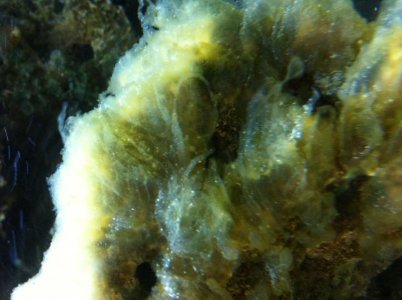
So yesterday, despite the garbage weather and chilly water, I went back to the Fort Pierce Intracoastal (basically the beach that the Smithsonian Marine Station sits on) on a quest for snails (Cerith, periwinkle, nerite). There were no ceriths to be found, but I managed to collect a dozen each of periwinkles, nerites, and keyhole limpets. I grabbed a floating piece of macroalgae to put under the microscope, as I can usually find dinoflagellates stuck to things like that. This area is where I presume that my Ostreopsis population originated.
Put it under the scope, plenty of life covering it (and in just the water), but no dinoflagellates that I could find at 100x magnification.
At that time, I also took samples from my tank, a little schmutz from a couple of rocks, and I found something a little different than before. Previously, samples after my first blackout contained around 20-30 each live and dead Ostreopsis cells. The samples from yesterday contained zero dead and exactly two live cells. This could be due to the 55w UV sterilizer, or could be due to the series of 3-day blackouts I've been doing every week and a half or so. Who knows. All I know is that it makes me a bit happy to see so few of them living!
Put it under the scope, plenty of life covering it (and in just the water), but no dinoflagellates that I could find at 100x magnification.
At that time, I also took samples from my tank, a little schmutz from a couple of rocks, and I found something a little different than before. Previously, samples after my first blackout contained around 20-30 each live and dead Ostreopsis cells. The samples from yesterday contained zero dead and exactly two live cells. This could be due to the 55w UV sterilizer, or could be due to the series of 3-day blackouts I've been doing every week and a half or so. Who knows. All I know is that it makes me a bit happy to see so few of them living!