Dinoflagellates.

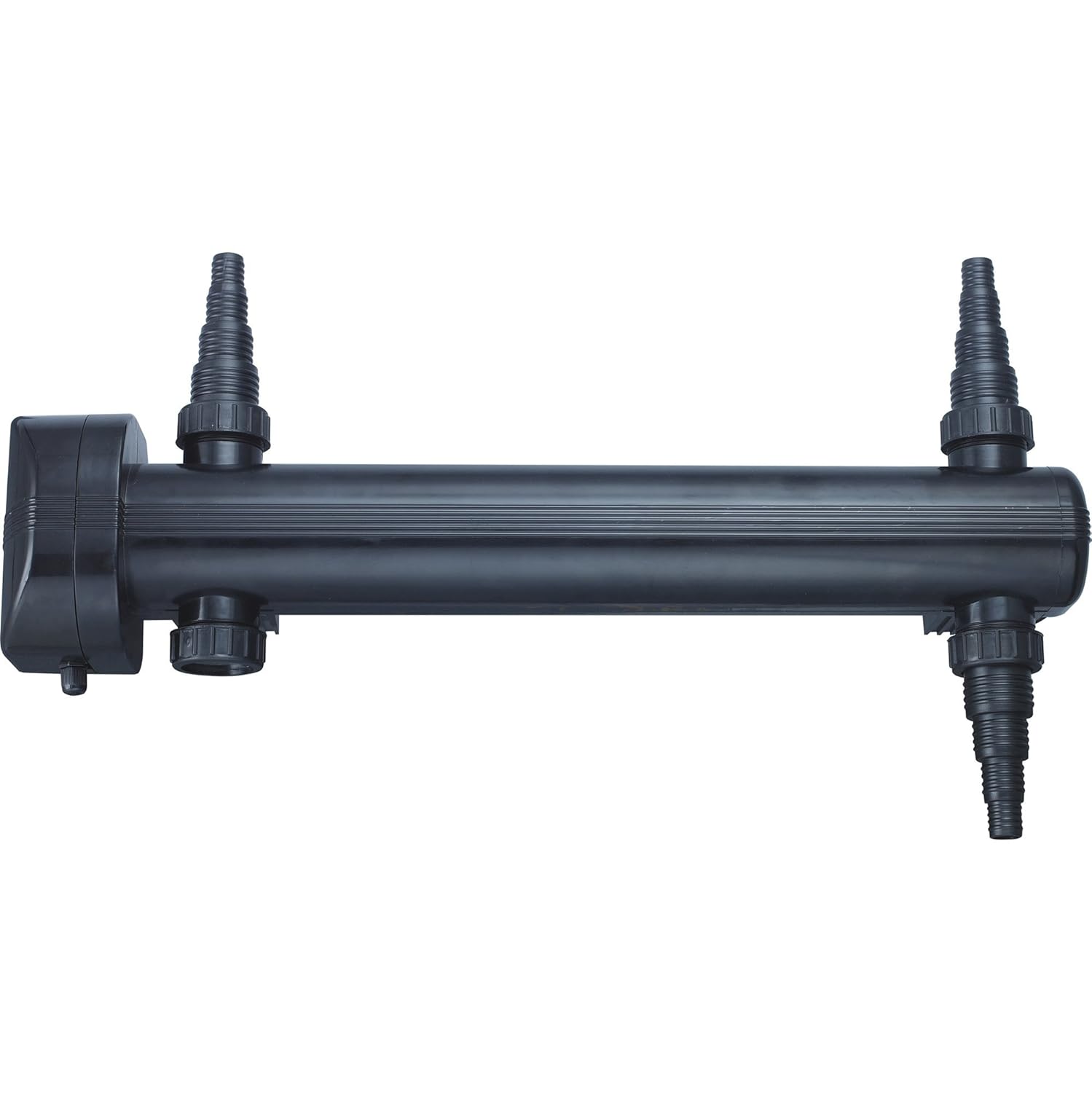
by the way - don't go fancy on expensive UV equipment. It's a temporary tool at best and they all do about the same thing. I broke my expensive UV and just got a cheap Jebao 55 and it's fine.

71WzFhMx55L._SL1500_.jpg


https://www.amazon.com/Jebao-CW-55-Clarifier-Sterilizer-Aquarium/dp/B00K1HHG9U

I know this looks massive on a 29, but you want a lot of power and real low flow. this isn't a fast fix... it's mutliple days of blasting them a little at a time.
 
We'd all bet on dinos, but aren't sure without microscope.
Pic 3 looks like a cyano/dino party. But color in another person's tank pics can be deceiving.
You say "dust" when blowing of rocks rather than hunks or sheets like cyano.
Diatoms don't usually plague like that, but been wrong before. Suck up a bit of it, and put in a beaker, stir to mix. If it's dinos, it'll reassemble into a clump in minutes.

It's not ostreopsis - no long strings/bubbles in high flow.
So is it amphidinium or prorocentrum?
I'd lean prorocentrum over amphidinium because of preference of rocks over sand, and your description of it covering/killing zoas.

Support UV as a first measure, and any thing you do to get rid of dinos would be more effective without sand.
 
Man... you guys know your stuff. I ordered an 13W submersible UV sterilizer on amazon yesterday and should be here soon. Given my lack of sump, that seemed to be the best option. I'll try the suction / agitation / observation method after work. I'm glad to hear it doesn't sound like ostreopsis, from what I gather that's a bad one. I'm also looking into converting the mid back section of the biocube 29 into an algae scrubber. Looks like some success with others doing this. And suctioning out the sand.... man, I just might have to do it, but it sure is bothering me to think to do so. So much of my reading years ago focused on the benefits of the sand bed.
 
Unless you have worms, your sand bed isn't very beneficial imo. I love sand and kept mine but I also had enough life to keep it healthy.

Do you have a skimmer? The dead tissues from the uv need to be exported or consumed.
 
13W submersible UV sterilizer on amazon yesterday and should be here soon. I'll try the suction / agitation / observation method after work. I'm also looking into converting the mid back section of the biocube 29 into an algae scrubber.
All good. Any chance you could get yours under a microscope?

So much of my reading years ago focused on the benefits of the sand bed.
Agree w/ karim. If your nutrient input is low, and you have dinos, there's basically no biodiversity in the sand but dinos anyway.
With an algae scrubber online or higher nutrient input, that might change in the future.
 
Ideas for distinguishing the big 3 dinos (90% of all cases) without a microscope
Ostreopsis Ovata: Long strings (>1/2 inch) higher in the tank in the highest flow available surfaces, bubbles.

two speculative ways that I think should work to distinguish between amphidinium operculatum(?) and prorocentrum lima(?) when presenting on sand/rocks. Someone would need a microscope to confirm these tests are valid.

Macro Test: Place a small amount of macroalgae (Chaeto best?) on the brown patch: Prorocentrum should colonize the macroalgae happily - does so in the wild. Amphidinium that I've seen has always stayed locked to the sand/rocks/cyano even when surrounded by macroalgae.

Snail death test: get a dozen small snails (cerith best choice?) and place on the brown patches. Never seen snail death reported with amphidinium, but often is with prorocentrum. (does prorocentrum ever show up in our tanks with no or low-toxin?)
 
My dinos always come back once the rodi filters start going bad, seems if I have anything over 10ppm problems start. We have well water here that is pretty high in iron. The higher the ppms get, the more dinos there are. Ive been running a huge 100g chaeto fuge for a while and it hasnt really been a problem. I also dont use a skimmer.

If I get them again, i think ill try UV. Sounds like a lot of people just dont know how to use it properly.
 
My dinos always come back once the rodi filters start going bad, seems if I have anything over 10ppm problems start. We have well water here that is pretty high in iron. The higher the ppms get, the more dinos there are. Ive been running a huge 100g chaeto fuge for a while and it hasnt really been a problem. I also dont use a skimmer.

If I get them again, i think ill try UV. Sounds like a lot of people just dont know how to use it properly.

And what's the proper way to use UV?
 
high intensity, very low flow. The vendors don't help since they spec the maximum flow through their UV sterilizers but that's completely useless for eliminating real pathogens. You want to run down in the 200-300 gph rate if you're at or under 50W but they advertise 5000 gph capable...

That might be technically true - that the device can handle that flow rate. But it would serve no function at that rate at 50W. The lower the power, the slower the flow rate needs to be to make sure the UV has a chance to sterilize the water.
 
Ideas for distinguishing the big 3 dinos (90% of all cases) without a microscope
Ostreopsis Ovata: Long strings (>1/2 inch) higher in the tank in the highest flow available surfaces, bubbles.

two speculative ways that I think should work to distinguish between amphidinium operculatum(?) and prorocentrum lima(?) when presenting on sand/rocks. Someone would need a microscope to confirm these tests are valid.

Macro Test: Place a small amount of macroalgae (Chaeto best?) on the brown patch: Prorocentrum should colonize the macroalgae happily - does so in the wild. Amphidinium that I've seen has always stayed locked to the sand/rocks/cyano even when surrounded by macroalgae.

Snail death test: get a dozen small snails (cerith best choice?) and place on the brown patches. Never seen snail death reported with amphidinium, but often is with prorocentrum. (does prorocentrum ever show up in our tanks with no or low-toxin?)

What about the snotty strings that are 3-6" long blowin' and dancin' in the flow (brown/green)?
 
I did try Vibrant for the tiny patches left and I'd say it has no effect on ostis.
That can not be said for my well thought out method that actually works.
No luck involved and I still feel like a superhero.


DNA - I know you said it's your last post here so maybe this question is for others...I have read a lot but not all...and I read about the method that worked for you.

Has anyone else had success with DNAs method (marine snow removal)?


FWIW I got to mine by what seems to be a common route: tank is 5-6 years old - Had a cyano breakout - used chemi - that worked but then I couldn't skim for a while but was ignorant so I kept up feeding then had green hair - Ni an Po where high understandably - started NoPox which brought parameters in check and eradicated green hair and then within a day or so - viola! brown nasty stringy snotty crap developing everywhere - parameters still in check near zero ni and po.

I am at the beginning of the battle - have long since had a minimal/shallow sand bed so I will remove the rest of that as was planned anyway. Plenty of crap settled all over my rocks. My fuge is currently sand and rocks and dark.

crossing my fingers....
 
karimwassef how do you keep all the algae in your sump from clogging the return pipe?

I don't have algae in my sump. I have a dedicated algae tank that runs side by side with my DT. Unfortunately, my turf algae is losing the battle to macroalgae and Xenia now. It's ok but I really believe that turf is essential.

<a href="http://s1062.photobucket.com/user/karimwassef/media/068EB74E-0791-46C0-BA1A-E76220EE7FA5_zps208hsibl.jpg.html" target="_blank"><img src="http://i1062.photobucket.com/albums/t496/karimwassef/068EB74E-0791-46C0-BA1A-E76220EE7FA5_zps208hsibl.jpg" border="0" alt=" photo 068EB74E-0791-46C0-BA1A-E76220EE7FA5_zps208hsibl.jpg"></a>

<a href="http://s1062.photobucket.com/user/karimwassef/media/E4871824-117B-4DE6-A5FE-97656F999BE3_zpsx7muobgl.jpg.html" target="_blank"><img src="http://i1062.photobucket.com/albums/t496/karimwassef/E4871824-117B-4DE6-A5FE-97656F999BE3_zpsx7muobgl.jpg" border="0" alt=" photo E4871824-117B-4DE6-A5FE-97656F999BE3_zpsx7muobgl.jpg"></a>
When I did have turf in my sump, I grew it on sheets like an algae scrubber. That kept the algae attached until I removed it.

Here's my current scrubber

http://www.reefcentral.com/forums/showthread.php?t=2631042
 
My dinos always come back once the rodi filters start going bad, seems if I have anything over 10ppm problems start. We have well water here that is pretty high in iron. The higher the ppms get, the more dinos there are. Ive been running a huge 100g chaeto fuge for a while and it hasnt really been a problem. I also dont use a skimmer.

If I get them again, i think ill try UV. Sounds like a lot of people just dont know how to use it properly.

Awesome. My experience also found iron as a likely dino limiter, and macroalgae (chaeto/caulerpa) as a way to regulate it. Thumbs up on UV.

meant to say brown/grey not green

Thanks. I just assumed you and I had different definitions of green :-)
 
Awesome. My experience also found iron as a likely dino limiter, and macroalgae (chaeto/caulerpa) as a way to regulate it. Thumbs up on UV.

So, you're saying iron concentration is a limiting factor for dinos? Are there other known limiting factors you are aware of?
 
So, you're saying iron concentration is a limiting factor for dinos? Are there other known limiting factors you are aware of?
Sorry. This got long.
DNA demonstrated using low Alk to halt dinos. (And everything else) There are lots of limiting factors: B12 (other vitamins?), iron, other trace metals, N, P, alk, light...
Problem is finding something that dinos need that they can be deprived of, and outcompeted for on an ongoing basis in a reef setting.
Alk, N, P, light are problematic either because dinos are just as good as our other tank inhabitants at uptake of scarce amounts of these, or they can wait out low levels seemingly forever, or we just can't let our tanks stay low for long enough to hurt dinos.

Here's things people do that they report re-invigorate a stalled dino bloom. Indicates dinos probably ran out of something, but grew when it was available again: and what might have been provided...
Water changes: iron, trace metals.
Aminos, Fuel, coral frenzy, etc: vitamins, B12, trace metals.
Sea veggies seaweed: lotsa iron, trace metals, vitamins
GFO: iron, though barely any soluble.

Cyano also makes B12, captures N and maybe iron - so its cozy association with dinos might be more about scarce resources than coincidence.
I've hunted through bunches of triton reports of people's salt mix when they said water changes caused dino re-bloom, and there is no common element, so it is probably something where biologically useful amounts are below the triton detection limits. iron fits that description, but so might other trace metals.
Also B12 is made around cobalt, so there's some overlap in the vitamin/trace metal labeling.

Macroalgae has iron, trace metals, vitamins etc. It needs them, and seems to be good at getting them. It's quite possible that this competition for trace elements/vitamins is the other factor (predation being big also) that keeps an algae heavy tank away from dino infestation.
In my tank I grew tons of macro - chaeto & caulerpa - and amphidinium dinos disappeared. I threw in some trace elements with iron and dinos made a modest recovery.
It would be instructive to look at published growth media that scientists use to culture our specific dino species. might be able to eliminate some candidates that way.

Sent from my SAMSUNG-SGH-I337 using Tapatalk

 
We'd all bet on dinos, but aren't sure without microscope.
Pic 3 looks like a cyano/dino party. But color in another person's tank pics can be deceiving.
You say "dust" when blowing of rocks rather than hunks or sheets like cyano.
Diatoms don't usually plague like that, but been wrong before. Suck up a bit of it, and put in a beaker, stir to mix. If it's dinos, it'll reassemble into a clump in minutes.

It's not ostreopsis - no long strings/bubbles in high flow.
So is it amphidinium or prorocentrum?
I'd lean prorocentrum over amphidinium because of preference of rocks over sand, and your description of it covering/killing zoas.

Support UV as a first measure, and any thing you do to get rid of dinos would be more effective without sand.
My prorocentrum is sand only.

Sent from my SM-G935T using Tapatalk
 
Sorry. This got long.
DNA demonstrated using low Alk to halt dinos. (And everything else) There are lots of limiting factors: B12 (other vitamins?), iron, other trace metals, N, P, alk, light...
Problem is finding something that dinos need that they can be deprived of, and outcompeted for on an ongoing basis in a reef setting.
Alk, N, P, light are problematic either because dinos are just as good as our other tank inhabitants at uptake of scarce amounts of these, or they can wait out low levels seemingly forever, or we just can't let our tanks stay low for long enough to hurt dinos.

Here's things people do that they report re-invigorate a stalled dino bloom. Indicates dinos probably ran out of something, but grew when it was available again: and what might have been provided...
Water changes: iron, trace metals.
Aminos, Fuel, coral frenzy, etc: vitamins, B12, trace metals.
Sea veggies seaweed: lotsa iron, trace metals, vitamins
GFO: iron, though barely any soluble.

Cyano also makes B12, captures N and maybe iron - so its cozy association with dinos might be more about scarce resources than coincidence.
I've hunted through bunches of triton reports of people's salt mix when they said water changes caused dino re-bloom, and there is no common element, so it is probably something where biologically useful amounts are below the triton detection limits. iron fits that description, but so might other trace metals.
Also B12 is made around cobalt, so there's some overlap in the vitamin/trace metal labeling.

Macroalgae has iron, trace metals, vitamins etc. It needs them, and seems to be good at getting them. It's quite possible that this competition for trace elements/vitamins is the other factor (predation being big also) that keeps an algae heavy tank away from dino infestation.
In my tank I grew tons of macro - chaeto & caulerpa - and amphidinium dinos disappeared. I threw in some trace elements with iron and dinos made a modest recovery.
It would be instructive to look at published growth media that scientists use to culture our specific dino species. might be able to eliminate some candidates that way.

Sent from my SAMSUNG-SGH-I337 using Tapatalk
Yep. Thanks. What you describe is consistent with what I've seen in my tank and read other's cases.
 
Back
Top