
Dsb's work, what makes them work best?

<a href=showthread.php?s=&postid=6558674#post6558674 target=_blank>Originally posted</a> by inwall75
Pretty good summation IMO. :thumbsup:
Thanks

I would argue on point #4 that infauna are useful for bioturbation but the health of the bed does not depend on diversity. I also believe that adding a "critter recharge pack" of worms, etc. is INCREASING the bioload of your system and not reducing it.
Hopefully, the recharge pack would have a lot of relatively self-sustaining life in it (ie takes care of its own detritus). However, there should probably be some work done determining what is required in such a recharge pack to make sure it does good rather than harm. I do not have enough experience with the commercial packs to comment.


If your hope is to maintain a reef tank and utilize a sandbed for NNR, diversity is not required IMO. On the other hand, if your hope is to represent a lot of the diversity in a lagoonal ecosystem because you're interested in maintaining full food chains, then more power to you. I just don't feel that it is necessary to maintain a sandbed.
Personally, I do love diversity, so that is why I often harp on it a lot. That's one of my goals in reefing. Of course, everyone has different goals for their tanks (besides providing an environment that allows our inhabitants to thrive), and that's good; if we all had identical goals, I think the aquarium hobby would be much less exciting. I agree wholeheartedly that diversity is not required for NNR. Where diversity might come into play is controlling phosphate, but I don't know enough about the workings of phosphates and sand beds to say that it is necessary. Some research (reading and maybe even experimental) is required on my part before I can jump to that conclusion. Thankfully, it seems (it could be otherwise, who knows) that NNR is not affected by faunal extinction, so the most important filtration aspect (IMO) of the DSB will just keep going and going...thank goodness for bacteria!

On the other hand, if you believe that diversity is important, then there are some authors who say you should not use silica sand because it is too sharp for some fauna which also hits point #3. Also on point #3, if you are counting on aragonite for large amounts of buffering, I feel you are going to be sadly dissapointed. In a sterile environment, I would say yes you will get buffering. In an environment where you are dealing with biochemistry vs straight chemistry, things get a 'little' more complicated.
Personally, I use aragonite simply because that's what is easily available to me. I never considered that different compositions would have different effects on the fauna, but it makes sense now that you mention it. This is again probably an area in which more research is needed (at least on my part:)).

I am personally going to do some investigating into some of these aspects of DSBs, as I find them quite fascinating. I also have access to very nice lab equipment and a very knowledgeable biology faculty that sould help clear up some of the fuzzy areas. If I find anything of importance, I will definitely share my findings.

This sort of reminds me of the old saying, though, "the more you know, the more you realize you don't know."
 
<a href=showthread.php?s=&postid=6551927#post6551927 target=_blank>Originally posted</a> by Paul B
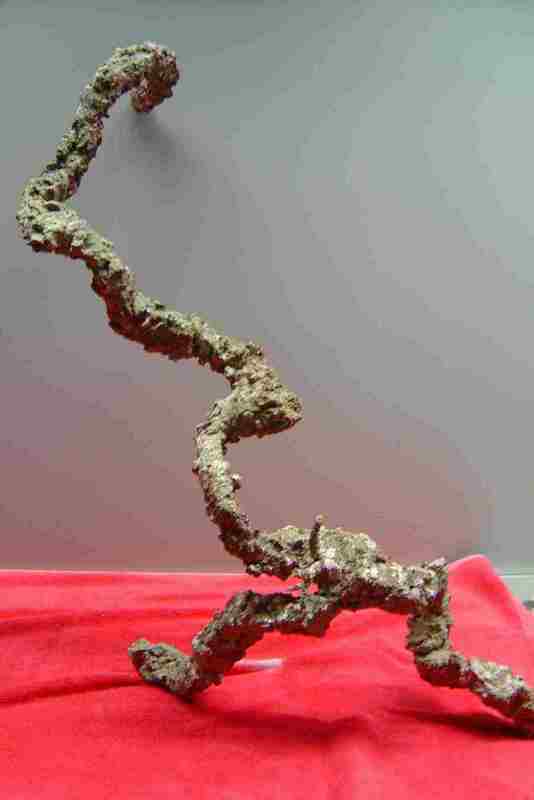
Also I think my home made rock helps with nitrogen also. They are hollow and I believe they can process nitrate better than real live rock. Of course this is a theory with absolutely no experimentation just some common sense.

This 3' rock is hollow and water can diffuse into it from many places.

Take care.
Paul


13094Copy_of_Copy_of_Copy_of_DSC00857-med.jpg

Paul, tell us more about your homemade rock. Composition, technique, placement?

Thanks much, > Barry :)
 
<a href=showthread.php?s=&postid=6551945#post6551945 target=_blank>Originally posted</a> by joefish
I hope , your not taking what I said wrong or personal . I'm not saying my way is better , It just suits me better . Yours and other DSB I have seen are much to aspire to and should be used as models for a newbie .;)

Actually, set-up and operation are simpler for BB, than for DSB. Even Eric B. from the DSB "team", does not recommend DSB for beginners.

As for those who would claim that setting up a DSB is "as easy as falling off a log", I would suggest they try falling off a log first, and then write a book on the proper selection of hiking shoes.

Still, while I expect to run a BB someday, primarily for SPS, that system is inappropriate for many of the animals that I want to keep, and simply is not even an option. I really enjoy sand animals. There are lots of them.

> Barry :)
 
<a href=showthread.php?s=&postid=6565063#post6565063 target=_blank>Originally posted</a> by barryhc
Actually, set-up and operation are simpler for BB, than for DSB. Even Eric B. from the DSB "team", does not recommend DSB for beginners.

Actually, Anthony doesn't anymore either.
 
<a href=showthread.php?s=&postid=6561273#post6561273 target=_blank>Originally posted</a> by Amphiprionocellaris
Where diversity might come into play is controlling phosphate, but I don't know enough about the workings of phosphates and sand beds to say that it is necessary. Some research (reading and maybe even experimental) is required on my part before I can jump to that conclusion. Thankfully, it seems (it could be otherwise, who knows) that NNR is not affected by faunal extinction, so the most important filtration aspect (IMO) of the DSB will just keep going and going...thank goodness for bacteria!

This post is highly simplified again. It was done on purpose to help people understand without becoming too technical. Let's discuss but not cross hairs over minor things.


Yeah, we have different interests. I only care about NNR, other people want to keep sand animals but also want NNR, you are interested in not only keeping sand animals but you want a full ecosystem. Therefore, our setups will vary somewhat but all types can be successfully setup IMO.

In terms of processing phosphorus, more diversity does not really translate into more processing. Like you said earlier....phosphorus is phosphorus. (I know you understand this based on your nuclear decay comment but not everyone does so I'm speaking to them). It's never processed, off-gassed, nor broken down. It just moves around:

It might be temporarily bound in an animal or plant (worm, bacteria, algae, etc.) and it would be Particulate Organic Phosphorus (POP) that isn't testable.

It might be adsorbed to something in the sandbed or LR (i.e. Calcium-phosphate, Magnesium-phosphate, Iron-phosphate, Aluminum-phosphate, etc.) in which case it will also not be able to be tested for. This is called Particulate Inorganic Phosphate (PIP).

It might be Dissolved Inorganic Phosphate (DIP) also known as orthophosphate or PO4 which can be tested for.

Dissolved Organic Phosphates (DOP) are a little harder to describe but the cool thing about them is that they are less reactive. These are not testable either.

Diversity will however, temporarily STORE that phosphate. If we could keep them from pooping or dieing, this would be a solution. But they do poop and die. As a result, the more sand and more worms, the more you can temporarily STORE as POP. However, it is only a short-term solution and the other recommendations in this thread are still true. Import as little as possible and export as much as possible.
 
<a href=showthread.php?s=&postid=6566494#post6566494 target=_blank>Originally posted</a> by inwall75

Diversity will however, temporarily STORE that phosphate. If we could keep them from pooping or dieing, this would be a solution. But they do poop and die. As a result, the more sand and more worms, the more you can temporarily STORE as POP. However, it is only a short-term solution and the other recommendations in this thread are still true. Import as little as possible and export as much as possible.
Just to add to this: even good export systems will always lack 100% efficiency. The chemistry behind it is a little complicated (and I don't totally understand it yet, so I won't add it here for fear of misleading someone), but, basically, there will always be residual phosphate. This level of phosphate may or may not be troublesome; in fact, many tank inhabitants do need very small amounts, so 100% removal -in addition to being near or totally impossible- might not even be desirable. That said, that's more theory than practical husbandry; I would rather have too little phosphate than too much. I personally think (but I lack evidence besides the questionably-used-as-evidence anecdote) that the best results come from overlapping export systems, like harvesting macroalgae and using a skimmer. Just as a side note, harvested algae really needs to be removed from the aquarium; feeding it to herbivores will just keep the phosphate in the system. However, if you are feeding them home-grown food like that instead of adding more food, then that will limit (but not get rid of) phosphate import.
 
Barry, many of my rocks are homemade and most of them are hollow. Kind of like a denitrification coil only better looking and free to operate. The rocks can be built any size and shape. I use PVC pipe that I drill a bunch of holes in and heat with a torch to bend then I wrap with plastic window screen. I use "Sakrete Mortor Mix" to cover the pipe. It takes about four or five coats with a few days in between because the cement does not like to stick to plastic. I think the inside of the structure is the perfect place for anerobic bacteria. Here is a picture of that rock in the picture during construction. That rock is about three feet long.
Paul

13094PVC_rock.jpg
 
First off.....Paul, that's a cool idea on the fake LR.


<a href=showthread.php?s=&postid=6566995#post6566995 target=_blank>Originally posted</a> by Amphiprionocellaris
basically, there will always be residual phosphate. This level of phosphate may or may not be troublesome; in fact, many tank inhabitants do need very small amounts, so 100% removal -in addition to being near or totally impossible- might not even be desirable. That said, that's more theory than practical husbandry; I would rather have too little phosphate than too much. I personally think (but I lack evidence besides the questionably-used-as-evidence anecdote) that the best results come from overlapping export systems, like harvesting macroalgae and using a skimmer. Just as a side note, harvested algae really needs to be removed from the aquarium; feeding it to herbivores will just keep the phosphate in the system. However, if you are feeding them home-grown food like that instead of adding more food, then that will limit (but not get rid of) phosphate import.

There are some very good points here. We need a degree of phosphates. Phosphates are a limiting factor of all life. Having zero phosphates means a dead tank. Look at what people have done by messing up with accidentally overdosing and "un-named product" or a couple of different Carbon sources or going from a filthy tank to full-bore phosphate removal media without phasing them in. These products most certainly did not remove all phosphates from the system but they were capable of removing all available DIP and DOP for a period of time and their tanks paid the price. I don't want this thread to get sidetracked so if you want to discuss this issue, please open a new thread

On the herbivore issue, that always makes me laugh. People say, I exported my nutrients by removing my algae and fed it to my tangs. Like worms and bacteria, I have been unsuccessful thus far at stopping herbivores from pooping. I've waved my finger at them, I've said, "Baaaaaddd!!!" They never listen. :) If you want an export, you have to let the tang eat and than scoop it up and throw it in the trash.

Like you pointed out, it really doesn't matter. If you export the algae but add some nori, you are also importing phosphates. Which has more phosphates??? I don't know. However, as we have learned, feeding algae to a fish is not an export and this is something that a lot of people haven't figured out yet.
 
<a href=showthread.php?s=&postid=6551745#post6551745 target=_blank>Originally posted</a> by inwall75
I'M ADMITTING UP FRONT THAT THIS IS HIGHLY SIMPLIFIED SO LET'S DISCUSS BUT NOT ARGUE

Well, we've discussed that aerobic bacteria don't "eat" Ammonia nor nitrites. It is strictly the Electron Transfer System at work. Basically Oxygen acts as an electron receptor. In short, things that happen up there is called oxidation and it is done by oxidizers.

On the other hand, things can happen in low Oxygen environments. There's no possibility of using full Oxygen as an electron receptor. Luckily facultative anaerobes have found something great to work in the absence of full Oxygen. They like Nitrates (NO3) and that is where we get our NNR from.

If you go even lower to anaerobic environments, Oxidation no longer occurs. That's where Reduction occurs. There's no Oxygen so something else has to happen for electron transfer. That's where all of the metals, etc. come into play. Hydrogen sulphide is a result of Sulphide Reducing Bacteria (SRB) doing their biochemical thing.

I don't think that Paul has ever had a fully anaerobic area of his sandbed. No anaerobic zone = no SRB's = no Hydrogen sulphide. You are also not going to have any carbonate nor methane reduction going on in that situation.

Let me see if I can explain my thoughts. If Paul were to put a pump on his reverse undergravel filter that is twice as strong, I believe his bed would have too much Oxygen. Then his sandbed would act just like bioballs and would throw nitrates into the water column. Similarly, if he replaced his gravel with gravel that is twice as big but continued to use his current pump, there would be too much Oxygen and nitrates would be produced again. It's really a balancing act IMO.

I hope that made sense.


That made sense pretty much, however, IF Paul's system is operating "without" a significant Anaerobic zone, then what is the result of the Nitrate conversion by Faculative Anaerobes, and then of course, where does this result go next?

I realize Paul has some Anaerobic activity, both "live rock" and other possibilities, still "the question".

> Barry :)
 
<a href=showthread.php?s=&postid=6567955#post6567955 target=_blank>Originally posted</a> by inwall75
Like you pointed out, it really doesn't matter. If you export the algae but add some nori, you are also importing phosphates. Which has more phosphates??? I don't know. However, as we have learned, feeding algae to a fish is not an export and this is something that a lot of people haven't figured out yet.

Importing algae to feed a fish is an import, however, when varoius herbivores eat algae that is already in the tank, and then poop, a good portion gets to the skimmer. This includes crabs, snails, etc. . This is an export. I think I heard that crabs are "tough" on the "fauna".

Also, If fish eat worms, pods etc. and then poop, the same export can occur, however, what has happened to the food chain? Does it somehow self destruct, or degrade, because of fish eating?

I suppose that with the "loading" that is typical in a reef tank, we're so far from equivalent habitat, as to make "keeping the fauna up", more than just a challenge.

> Barry :)
 
<a href=showthread.php?s=&postid=6567955#post6567955 target=_blank>Originally posted</a> by inwall75
I don't want this thread to get sidetracked so if you want to discuss this issue, please open a new thread
Agreed. Plus, the information in Dr. Holmes-Farley's phosphate articles is probably far more complete and helpful than what we can offer here (I'm only an undergrad chemist). The last thing I want to say on the chemistry of phsophate and all its fun little kinks is that anyone wanting to learn more will find that these articles are a wealth of complete, thought-out information.
http://reefkeeping.com/issues/2004-11/rhf/index.php
http://www.advancedaquarist.com/issues/sept2002/chem.htm
Now, back to sand beds
originally posted by barryhc
Importing algae to feed a fish is an import, however, when varoius herbivores eat algae that is already in the tank, and then poop, a good portion gets to the skimmer. This includes crabs, snails, etc. . This is an export.
The only thing that would concern me is the efficiency of the skimmer. I'm not trying to say that there's no such thing as an efficient-enough skimmer, just saying that it's something to keep in mind.
Also, If fish eat worms, pods etc. and then poop, the same export can occur, however, what has happened to the food chain? Does it somehow self destruct, or degrade, because of fish eating?
The most common problem that I see (anecdotally) is that people "supplement" their food chain too much. Were the food chain truly self-contained - a possibility with a good DSB and fairly light loading of predators - such import/export should theoretically reach a balance. However, I question the ability of healthy sand beds to support the extremely high stocking levels (coral included) of most reef tanks. A large refugium could circumvent that, but then we start talking about optimizing DSB systems instead of just optimizing the DSB. Plus, I think I've already beat the refugium horse to death, so I'll leave it alone (for now).
IF Paul's system is operating "without" a significant Anaerobic zone, then what is the result of the Nitrate conversion by Faculative Anaerobes, and then of course, where does this result go next?

I realize Paul has some Anaerobic activity, both "live rock" and other possibilities, still "the question".
I think in Paul's system, as well as many SSB and BB systems, the majority of nitrate reduction comes from the live rock (or homemade substitutes - very cool, by the way). But I digress; this thread is not about SSB or BB. Just one [sorta related] thing: When inspecting my DSBs, I have noticed that there are many bubbles (presumably nitrogen gas) far below the barrier between the oxic and hyp-/anoxic layers. To me, that says something is being done by facultative or obligate anaerobes in an area of low oxygen. I have also found some easily understood information on the "rest of the story". I will post subsequently to save on post size.
 
Here is the information I have found. It is from The Reef Aquarium: Volume One by Sprung and Delbeek. By the way, I give that information just to give proper credit to the authors, not to "back up" what is coming in some way. I have included clarifying comments in this form {comment}. As far as the credibility of the science: while The Reef Aquairum is not a primary source, my overall impression is that it is very heavily founded in direct research.

"The nitrate that is produced by nitrification or released by nitrogen-fixing cyanobacteria has a variety of fates. It can be used in the biochemical pathway of respiration by either obligate or facultative anaerobic bacteria. These bacteria reduce nitrate to nitrite, and eventually to ammonium, producing nitrogen and nitrous oxide as waste {the nitrite and ammonium are used in the bacteria, and so are never added back to the aquarium}. These gases are then released into the water and are usually lost to the atmoshpere or absorbed by cyanobacteria. This process is generally called denitrification{nitrification being the conversion of waste to nitrate}. Since denitrification occurs mainly in the absence of oxygen, it is limited to sediments and anaerobic microhabitats such as coral heads. It has been shown that nitrification and denitrification can also occur in aerobic layers. Here anoxic microsites within fecal pellets {poop} and detritus provide a habitat for anaerobic bacteria, while being surrounded by aerobic pore waters{maybe an explanation of how too-shallow sand beds still work, if you have a lot of poop}. Such a system would allow nitrification and denitrification to occur in close proximity (Jenkins and Kemp, 1984). Most of the nitrate supplied for denitirification comes from nitrification occurring within the same sediments{ie the nitrate produced in the sand bed will be turned to nitrogen in the sand bed}. Although a close coupling between nitrification and denitrification has been demonstrated (see Jenkins and Kemp, 1984), the importance of denitirification in coral reef nutrient budgets is not clear, and more information is required on the rates of denitrification in different habitats of coral reefs (D'Elia, 1988){this is referring to wild reefs}."

The book then goes on to say that nitrate can be absorbed by other things (mainly zooxanthellae), but that is not really relevant to DSBs, so I have not included that section.

One thing that particularly interested me was the mention of nitrogen fixing cyanobacteria. Many sand beds (mine included) have a layer of cyanobacteria at the border of the anaerobic zone. Perhaps that is how the nitrate gets to the area of low oxygen.

Is this the "end all" of the "rest of the story"? Not by any means. But it should get some thought flowing (especially from people more qualified than myself:)).
 
Given what little I know about denitrification, this doesnââ"šÂ¬Ã¢"žÂ¢t make much sense to me (specifically that the nitrite and ammonium magically disappear just because they are used by bacteria)ââ"šÂ¬Ã‚¦


ââ"šÂ¬Ã…"œThese bacteria reduce nitrate to nitrite, and eventually to ammonium, producing nitrogen and nitrous oxide as waste {the nitrite and ammonium are used in the bacteria, and so are never added back to the aquarium}. These gases are then released into the water and are usually lost to the atmoshpere or absorbed by cyanobacteria.ââ"šÂ¬Ã‚
 
Last edited:
The nitrite and ammonium don't really disappear so much as they are converted to other things (I'm speaking to the general reader, Weatherman; I don't mean to insult your intelligence with that "explanation"). The biological processes of the bacteria (and I'm reading between the lines; this is not scientific fact and should not be taken as such) must end up converting the ammonium and nitrite into things that they [the bacteria] either 1) incorporate into their growing selves (or new selves) or 2) use for energy, hence the waste products. Of course, the fact that they are not mentioned further does sort of leave a hole in the narration. All I can do is assume that the products remain in the bacteria. If the bacteria die, they could very well release the ammonium and nitrite into the water. In fact, that is probably the source of the recurring "mini-cycles" that occur as the aquarium reaches maturity and the bacterial populations reach equilibrium.

My added comments in the excerpt are intended as simple clarification, not as scientific explanation; clarity is often bought at the price of accuracy. I probably should have said that before the excerpt, though.

Plus, the excerpt is far from a complete run-down of denitrification. What I think we need is some primary scientific documentation (like a textbook) to read if we want to better understand what's going on. Or, preferably, we need someone who can understand that stuff to read it and then explain it to the rest of us:D.
 
Here's a starter. It's not much, but it's better than nothing (or trying to pull more out of an aquairum manual than there is).
http://www.rpi.edu/dept/chem-eng/Biotech-Environ/Environmental/DENITE/denite.htm
This and some other, related papers (that have less substance) have said that denitrification is done by facultative bacteria. In other words, these are bacteria that can be anaerobic or aerobic. However, it clearly states that it is the absence of oxygen that "convinces" the bacteria to use nitrate in the place of oxygen. I particularly like the use of what is basically a DSB in an urban sewage plant:).
 
I think it was the word ââ"šÂ¬Ã…"œneverââ"šÂ¬Ã‚, which caught my attention. :)

There are a number of studies, which show that denitrifying bacteria can convert nitrate to nitrite and release it back into the water (in the absence of sufficient phosphate). Denitrifiying bacteria can also convert nitrate to ammonia and release that back into the water (under eutrophic conditions).

Neither pathway is something we want, since nitrite and ammonia are both, potentially, toxic. But, both pathways are possible.
 
<a href=showthread.php?s=&postid=6571687#post6571687 target=_blank>Originally posted</a> by Weatherman
I think it was the word ââ"šÂ¬Ã…"œneverââ"šÂ¬Ã‚, which caught my attention. :)
And by now, I should know better than to say "never" when dealing with chemistry. Call it a slip of the fingers.

There are a number of studies, which show that denitrifying bacteria can convert nitrate to nitrite and release it back into the water (in the absence of sufficient phosphate). Denitrifiying bacteria can also convert nitrate to ammonia and release that back into the water (under eutrophic conditions).

Neither pathway is something we want, since nitrite and ammonia are both, potentially, toxic. But, both pathways are possible.
Correct me if I'm wrong (which is fairly likely this late on a schoolday), but the presence of phosphate prevents the bacteria in question from releasing nitrite. So, you actually do want small amounts in the tank for that reason. Of course, we're talking very small amounts of phosphate (relative to problem levels). Sufficient levels to ensure denitrification will still be below the testable range, right? However, would the use (or overuse) of phosban and similar products potentially lower the level too low for denitrification, or are they too ineffective to worry about that?
 
<a href=showthread.php?s=&postid=6571832#post6571832 target=_blank>Originally posted</a> by Amphiprionocellaris
Correct me if I'm wrong (which is fairly likely this late on a schoolday), but the presence of phosphate prevents the bacteria in question from releasing nitrite.

Maybe the presence of phosphate allows the bacteria to more effectively complete nitrate reduction all the way to NO, N2O or N2. I don't know.


<a href=showthread.php?s=&postid=6571832#post6571832 target=_blank>Originally posted</a> by Amphiprionocellaris
So, you actually do want small amounts in the tank for that reason. Of course, we're talking very small amounts of phosphate (relative to problem levels). Sufficient levels to ensure denitrification will still be below the testable range, right? However, would the use (or overuse) of phosban and similar products potentially lower the level too low for denitrification, or are they too ineffective to worry about that?

I can't imagine a case where our tanks would be phosphate limited. The studies of denitrification to nitrite were concerned with fresh groundwater where a phosphate source was absent.

Our bigger concern, in our tanks, is denitrification to ammonia. This is something that can easily occur if nutrient levels (carbon loading) gets too high.
 
<a href=showthread.php?s=&postid=6571575#post6571575 target=_blank>Originally posted</a> by Amphiprionocellaris
The nitrite and ammonium don't really disappear so much as they are converted to other things. The biological processes of the bacteria must end up converting the ammonium and nitrite into things that they [the bacteria] either 1) incorporate into their growing selves (or new selves) or 2) use for energy, hence the waste products. Of course, the fact that they are not mentioned further does sort of leave a hole in the narration.

It is this "hole in the narration" that has been driving me "buggy" for 10 mos. ! !

All I can do is assume that the products remain in the bacteria. If the bacteria die, they could very well release the ammonium and nitrite into the water.

And other things as well?

As stated in various posts, once nitrate has been produced, it has more than one "remaining" path way. Now I know that it is "chemical pathways" that are being referred to, but there are at least two "directional pathways" as well.

We have up, down and "sideways". And before we start, what are the components of these processes.

We have Phosphate and Ammonia at the very least, as primary components going into the bed. What else?

At the Hypoxic low oxygen level in the substrate, Nitrite and Phosphate ( and . . . ) are utilized by bacteria to produce Nitrate, and whatever else. What is the whatever else? I know we've seen some formulas that show that it could be this, or it could be that, but what is it?

I am in shock, that no one has gotten to the "bottom" of this yet ! ! !

So we've got Nitrate and . . . , and then the different paths. The upward path has been mentioned quite recently, with potential for Nitrite and Ammonia "reverse processing".

How about the downward path? I guess we've done some electron "trading" now, and ended up with some different "stuff" heh? And maybe some bacteria carcasses.

Do bacteria have carcasses? What are they made of?

Have I lost it yet?

In fact, that is probably the source of the recurring "mini-cycles" that occur as the aquarium reaches maturity and the bacterial populations reach equilibrium.

Aren't bacteria a lot "faster" than this"? Aren't they going through a life cycle one or more times a day?

I guess we have to define "Maturity of an aquarium". Here we have not only the sand bed, but also the live rock, but not to digress, either case, has not only the bacterial community to consider, but also the "fauna" population, and they are very much entwined.

Fauna mature between 1 and 2 years, and this is about the time that they "die off"?

The excerpt is far from a complete run-down of denitrification. What I think we need is some primary scientific documentation (like a textbook) to read if we want to better understand what's going on. Or, preferably, we need someone who can understand that stuff to read it and then explain it to the rest of us:D.

PREFERABLY ! ! !

The problem is that the chemists understand the processes, but can't say which "PATHWAYS" are geing taken.

We need a sand bed, with a "model" system set-up, and a hundred probes in it, monitored for 2 to 4 years. ANYONE ? ? ?

A "model" system? What is that?

Sorry about the "rant" guys, I'll get over it. > Barry :confused: :)
 
Back
Top