
Dyed Yellow ritteri anemone Please help

Catchoftheday

New member
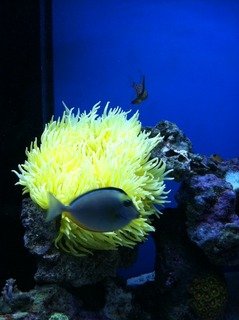
So I got a dyed ritteri anemone love this thing it is so big and perfect for my female maroon clown fish and her mate . I knew I was buying a dyed anemone I was ok with this . I am reaching out to any one that has dealt with this before what can I do to help it gets it color back ? I was looking at it yester day and I noticed it was not as bright as it was when I first got it last week . Do I need to just feed it really well to help it gain its color back ? Any help at all or tip would be greatly appreciated Thank you .
 

Attachments

  • yellownem1.jpg
    yellownem1.jpg
    21.9 KB · Views: 24
Hard to tell from that one picture, but that almost looks like an H. Crispa -- which are pretty common to find dyed that color.
 
The shape and distribution of tentacles.. Those long thin tentacles are not characteristic of H. Mag..

It isn't just one thing though.. After a while you just recognize what you are looking at.. TRex is right, can't make 100% definitive judgement from that picture, but to me it is surely appears to b H. crispa..
 
The shape and distribution of tentacles.. Those long thin tentacles are not characteristic of H. Mag..

It isn't just one thing though.. After a while you just recognize what you are looking at.. TRex is right, can't make 100% definitive judgement from that picture, but to me it is surely appears to b H. crispa..


I thought H. crispa likes the sand ? Mine has been on the same rock for over a week
 
Most of the ones I have seen are sand dwelling, but I have seen a few (( H. crispas )) on the rocks. And when you factor in the fact that it is dyed/starting to bleach, it could move anywhere.
 
CTC,

Just my opinion here, but you need to stop rescuing dying (and/or dyed) anemones from where ever you are buying them. Everytime you buy one, you convince the store that it was a good idea for them to purchase that stock and offer it their evidently-limited husbandry skills.

I understand that you may want to "make a difference" or feel like you can save an anemone's life, but these anemones really need to die in the store, so they'll stop ordering them (or at least order less).

FWIW,
Kevin
 
It may be a cripsa, but its tough to tell, the yellow though does mean its probably dyed. The anemone that I have bleached immediately in my tank and it did take about six weeks to recover, but stable water and feedings help. Just make sure the food is about the size of the mouth.
 
It may be a cripsa, but its tough to tell, the yellow though does mean its probably dyed. The anemone that I have bleached immediately in my tank and it did take about six weeks to recover, but stable water and feedings help. Just make sure the food is about the size of the mouth.


Thank you Chris for your input. I have been feeding the cripsa it is eating well i got it from are friend im happy with it my clowns love it . i just wish it was like yours oh well . is it possible to have a H.cripsa and a ritteri anemone next to each othere ?
 
Thank you Chris for your input. I have been feeding the cripsa it is eating well i got it from are friend im happy with it my clowns love it . i just wish it was like yours oh well . is it possible to have a H.cripsa and a ritteri anemone next to each othere ?

Glad to hear its eating, that is usually the first issue with those of us who dangerously dabble into anemones, plus the added bonus the clowns took to the nem as well.

You could have two in the same tank, but I woudnt advise doing that. First off its hard keeping an anemone happy and if yours makes it adding another one could start a chemical warfare in your tank in which each nem looses.
 
Back
Top