Flowerpot Anemone

Sfork

New member
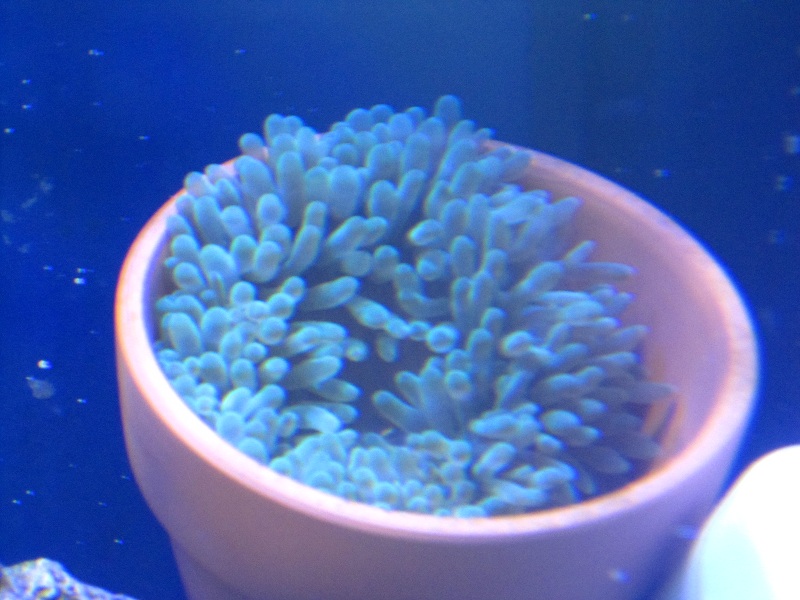
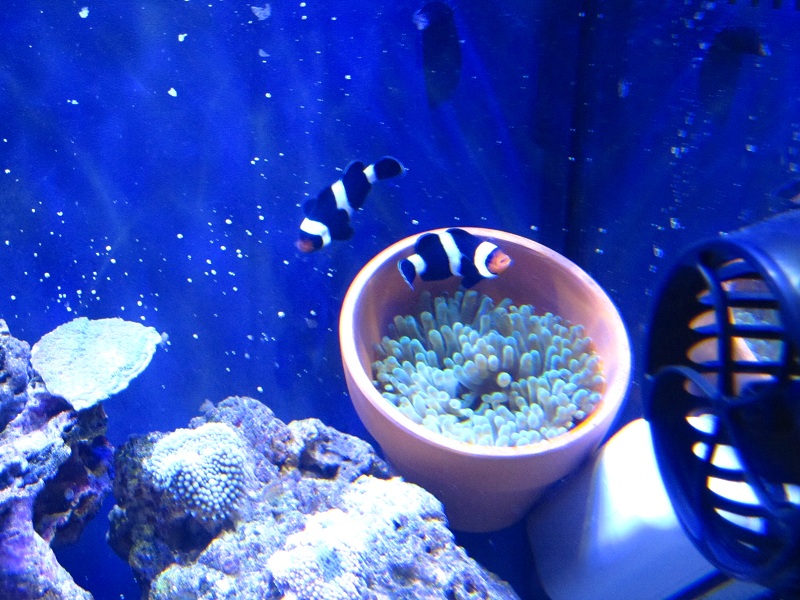
My clowns had no interest in my BTA so I gave them a pot and they took to it. The future(or current?) female quickly took over the pot. Earlier this week I found a nice gbta for $25, so I dropped it in their flower pot. The smaller male found it and kicked the female out of the pot. It took another 2 days before the female got up the courage to touch the GBTA.
IMG_0004.JPG

IMG_0151.JPG

IMG_0026.JPG
 
Yeah it's not reef-ish, but I was trying to get them to stop hosting the powerhead. The clowns are tank bred so they were too scared to touch even the most passive of corals. Since I've seen a few tanks with flowerpots for the purpose of egg laying I thought I'd give it to them early, and slowly move it towards a bta.

Dropping the nem in there was on a whim, and I didn't think it would actually stay in there. Plus, It looks pretty cool when the nem is fully expanded and the head is outside the pot. I'm sure it likes the fact that it's foot is fully hidden, if I knew the nem was going to stay I would have put it in a smaller pot that was easier to hide. You can tell by the fact that the pot is being supported by my magfloat how temp I thought this setup would be. :)
 
"flowerpot anemone" lol nice idea putting it on there though! my 2 clowns have no interest in my RBTA although they have only been in my tank about a week, and are pretty small...

your bta has nice color!
 
I never said anything about hosting? I said they were too scared to touch any coral, if food wandered too close to an xenia or a zoa they wouldn't even go near it. In fact i saw the exact moment they started to touch the BTA the male accidentally drifted into it, when he realized nothing bad happened he started dive bombing it like a maroon would. He has started acting very dominant because the female was too scared to go near it for another 2 days.

It seems obvious to me that something raised in a glass tank with nothing in it besides other clowns would be apprehensive about touching anything new, instincts or not.
 
Interesting look, not really reef-ish.:confused:

Yes, not too "reef-ish", but you can add rocks around the pot to keep it out of sight. The goal is to get the anemone through the tough transistion, "what ever it takes" should be done for the anemone's survival/betterment. I strongly recommend that this be the satandard way of acclimating a new anemone to a new system.
 
I like the flower pot. I think it looks cool. Maybe it will move one day but I think it's a cozy spot and it may never move.

Being tank bred has nothing to do with hosting behaviour.

Especially since the clowns aren't the ones doing the hosting.
 
That doesn't really follow, either.

When born with fish, surrounded by fish, and only seeing fish..what are you use to? Fish. Lots of studies say fish learn by sight, seeing surrounding fish doing something will cause them to adopt the habit, when no one has a habit, you don't develop one..
 
When born with fish, surrounded by fish, and only seeing fish..what are you use to? Fish. Lots of studies say fish learn by sight, seeing surrounding fish doing something will cause them to adopt the habit, when no one has a habit, you don't develop one..

Except we're talking about a creature for whom the hosting behavior is genetic and instinctive. In this case it is nature, not nurture.

There was a study linked here a few weeks back where tank-raised clowns were shown to be drawn to the smell of leaves in the water from islands in their home "range", because it is reefs around those islands that contain the anemone they are naturally hosted in.
 
Except we're talking about a creature for whom the hosting behavior is genetic and instinctive. In this case it is nature, not nurture.

There was a study linked here a few weeks back where tank-raised clowns were shown to be drawn to the smell of leaves in the water from islands in their home "range", because it is reefs around those islands that contain the anemone they are naturally hosted in.

I was just clarifying the point. :dance:
 
Well, habits are learned, while instinctual behavior is a response to a powerful biological drive, one that is present even in an unnatural environment. Captive clownfish who choose substitute hosts like toadstool leathers, xenia, zoanthids, hair algae, cleaning magnets, or powerheads didn't learn that behavior from observing other fish. ;)

Although you do make an interesting point, Moos3...I've frequently seen people swear that their clownfish began occupying an anemone host after their owners posted an image of clownfish using an anemone in a spot where the fish could see it. Sounds goofy, but stranger things have happened...
 
Last edited:
Back
Top