I may be able to pick up a brand new 75 gal glass aquarium with built in overflow and stand for less than 300.00, again all brand new. Not a bad price so my question is this. I am sure the pre-drilled overflow holes are the standard 1" in diameter. I would like to know if it is possible to increase the size of the hole to 1 1/2" (if room allows)? I am sure this is tempered glass as it is the bottom of the tank. If there is no way to enlarge the holes then the only way to achieve over 750 gph would be a external hang on back overflow.

You are using an out of date browser. It may not display this or other websites correctly.
You should upgrade or use an alternative browser.
You should upgrade or use an alternative browser.
Hole size
- Thread starter kckinwa
- Start date

sleepydoc
Team RC
If it is tempered then there is absolutely no way to increase the size of the hole. Are the holes 1" or are they made for a 1" bulkhead?
If it is the standard corner overflow, I would run a Herbie and have the return come over the back. If the back is not tempered, you may be able to drill the back for the return.
If it is the standard corner overflow, I would run a Herbie and have the return come over the back. If the back is not tempered, you may be able to drill the back for the return.
Yes it is drilled for a 1" bulkhead, and after many hours of research, 1 inch is in all cases for tanks above 15 gallons not enough flow for a quality reef.
I think your research may be flawed

Assuming your proposed purchase is a standard 75, the overflow will have a pair of 1 3/4 holes at the bottom intended for 1" bulkheads. Do as sleepydoc suggests, and set it up as a herbie-style drain. Not sure how much through sump flow you think you need, but dual 1" pipes will be more than sufficient for a 75. You should be thinking power heads for most of your in tank flow requirements.

woodnaquanut
Active member
I think your research may be flawed
+1
I have a 120G using 1" bulkheads. Lots of tank turnover. Internal powerheads for flow.
From days of research it appears that the suggested turnover from sump to dt should be at least 10 times the dt volume so essentially 750 gph, this was also the recommended flow rate suggested by several lfs for a healthy, vibrant reef tank. And gravity fed a 1 inch pipe drain rate is roughly 350 gph. Now sure you can go full siphon ie. Herbie overflow and achieve up to 950 gph, though this method is inconsistent, and impossible to keep stable long term with oto or manually topped off methods. Not to mention redundancy is the best prevention of wet carpet. Considering my 75 gallon clean up in my living room last week, I am looking for assurances. Here is a extensive study performed on bulkhead sizes. http://www.wetwebmedia.com/BulkheadFloRateArt.htm
please keep the feedback coming I appreciate all the help.
please keep the feedback coming I appreciate all the help.
If your days of research had included RC I think you will find that most experienced reef keepers run 3-5 times tank volume through the sump per hour. In fact, I actually run even less than that. As I said in my earlier response, better to provide in tank flow with power heads.
Not really getting your comments on the herbie; you appear to be contradicting yourself. Herbie is dead easy to implement, and provides important redundancy - as well as being silent.
Not really getting your comments on the herbie; you appear to be contradicting yourself. Herbie is dead easy to implement, and provides important redundancy - as well as being silent.

Wryknow
New member
2 x 1" drains are plenty for a 75 gallon. That's what I have on mine with Tunze 1073 return (I've also run it with an E-heim 1262.) I'm running Durso overflows and it''s very quiet with the right modifications. I did do a test and if one drain gets 100% clogged and verified that the other drain can handle the full return, but it does do the siphon/drain/fill/siphon cycle. Certainly acceptable in an emergency situation though as the noise is a pretty obvious sign that there's an issue and it keeps all of the water in the tank.
Lol I did actually research here at RC http://reefcentral.com/forums/showthread.php?t=2094775 And it appears to be a split decision in here as well. However I am not talking to in tank flow, this I am aware needs to very based on livestock in tank. I am however talking about turnover rate from tank to sump, and as I said even 4 out of 4 of the local fish stores (marine not fresh and definitely not big box stores) said the same thing, the more you can turn over your water from the dt to the sump/skimmer the better as you are clearing the living environment from bacteria, algae and detritus. In return for this your corals grow faster and more vibrant. Now that being said I do realize that a lfs job is to sell product, so yes it is in the stores best interest to recommend higher flow. And if all this information is snake oil to sell more product then shame on me for not listening to fellow reefers, but as I said even RC peeps seem to be split on this particular topic and with all the info gathered from all sources, it appears to be about 70 percent recommending higher is better with the magic number landing in the 7-10 times range. And I do understand that it makes no sense to send 750 gph through my sump if my skimmer can only handle 300 gph, which is why I have yet to purchase my skimmer, I first need to resolve my ignorance to turnover. Now as to the Herbie issue, I am still researching this and as I was trying to say without detail earlier is that there is several variables at play from my understanding to get a herbie to work correctly and I can not test those variables without the tank on hand. So with that being said my concern is can i get it silent without overflowing my sump. From my understanding you need your main line to be roughly 6 inches lower than your emergency line in the overflow to work properly and without the tank here I can not calculate the amount of water with power failure that would end up in the sump. Like I said, I am afraid of another flood in the living room, so I am not trying to be a pain in the rear, I am just trying to be extra cautious on my next attempt. Thanks again to all the help on these issues though I thank I may have drifted a bit out of the DIY arena.
Last edited:

Gorgok
New member
I have a DC12000 in my 40B sump on my 75... Probably running at about half its capacity (controller and head), which is somewhere in the area of 1000gph. I don't see any reason to slow it down.
If your skimmer was actually the means water goes from the drain section to the return section i could see a reason to try and match its processing rate, otherwise its gonna do what it does in its own time, either in nearly standing water or 'rushing' water...
If your skimmer was actually the means water goes from the drain section to the return section i could see a reason to try and match its processing rate, otherwise its gonna do what it does in its own time, either in nearly standing water or 'rushing' water...
sleepydoc
Team RC
Remember - just because the bulkhead is 1" doesn't mean the rest of the plumbing needs to be 1". You can (and in most cases should) upsize the plumbing to at least 1.25".
I have a 120 'reef ready' with a corner overflow Herbie, 1.25" pipes through the 1" bulkhead. I estimate I'm running about 5-600 gph through my sump, and I still have the main drain throttled back significantly.
In regards to the sump flow vs skimmer capacity, you don't need to worry about matching those exactly. Even if you do, the skimmer will end up 're-processing' a significant portion of the water anyway. It's not like a filter where you can flow all the water through it.
The Herbie is not that complicated. I posted a quick summary of it here. As people have said earlier, it's a great option for situations like yours. If you're really concerned about a failsafe system, you can drill the back and convert it into a Beananimal.
You can also get a rough idea how much water will drain back to your sump - std 75 gallon is 48 x 18 = approx 3.7 gallons per inch of depth. (48*18/231 cubic inches per gallon) If your return pump outlet is 2" below the surface, you will drain about 8 gallons of water into the sump.
There are many successful reefers who have done exactly what you are worried about doing; I think you're over-thinking the problem!
I have a 120 'reef ready' with a corner overflow Herbie, 1.25" pipes through the 1" bulkhead. I estimate I'm running about 5-600 gph through my sump, and I still have the main drain throttled back significantly.
In regards to the sump flow vs skimmer capacity, you don't need to worry about matching those exactly. Even if you do, the skimmer will end up 're-processing' a significant portion of the water anyway. It's not like a filter where you can flow all the water through it.
The Herbie is not that complicated. I posted a quick summary of it here. As people have said earlier, it's a great option for situations like yours. If you're really concerned about a failsafe system, you can drill the back and convert it into a Beananimal.
You can also get a rough idea how much water will drain back to your sump - std 75 gallon is 48 x 18 = approx 3.7 gallons per inch of depth. (48*18/231 cubic inches per gallon) If your return pump outlet is 2" below the surface, you will drain about 8 gallons of water into the sump.
There are many successful reefers who have done exactly what you are worried about doing; I think you're over-thinking the problem!
Lol yes I am over thinking this, only because many refers have successfully had acrylic dt's and my fist attempt at acrylic, my confidence, all 75 gallons of it ended up in my carpet, pad and subfloor, ha ha, I can laugh about it now but I am extremely leary. So needless to say my return to the hobby has been expensive and have not bought any live rock, fish or corals yet, lol nor do I even have a tank now. So I am just being cautious cause clearly I'm stuck in a streek of bad luck right now. Thank you for the herbie info, I think I got that part of my build squared away. I now need to decide if I will buy the glass tank or have a local professional build me exactly what I want from acrylic. I was thinking that if I have one built I would have the entire back side of the tank a toothless coast to coast overflow about 4 inches by the width and depth of the tank, this way I can run all drain and returns hidden behind the black back wall. Essentially if you look through the tank all you see is a black back wall with 1 return nozzle in the middle. The top of the overflow would have a hinged black acrylic lid that when closed it leaves a gap roughly 1/8 of an inch or just enough space for water to cascade into the box. (hinged for accessing the box for maintenance) and two small pumps, one in each corner to keep debris and detritus suspeded in the overflow so it can make it to the sump without being trapped in the box. What do you think?
Wryknow
New member
You're definitely over-thinking this. The drain/overflow calculator on the home page of this website is tried and true. More is not always better. At a certain point you're just spending a lot of money on moving a lot of water up and down from your tank to your sump. Trust us! This is my 5th saltwater tank. 5 times tank volume per hour is really more than adequate for a return flow. 2 x 1" drains really can handle that volume very easily and quietly with a number of different design options (Herbie, Bean Animal, or Durso!) You definitely want more water movement than just the return at 5 x volume, but you'll want to accomplish that through powerheads or a closed loop system.
sleepydoc
Team RC
A lot depends on whether you get glass, acrylic, custom built or off the shelf, etc. You initially said you were getting a 75 gallon pre-drilled glass, which typically means 2 holes in one corner of the bottom.
if you are building yourself, I would get a coast to coast with holes drilled for a Beananimal overflow. Like I said before, a Herbie is a great option if you have a 2-hole corner flow tank, but a Beananimal is by design easier to keep adjusted and more fail-safe.
The cheapest option would be for you to get a standard 75 gallon, drill it and install the overflow weir yourself.
if you are building yourself, I would get a coast to coast with holes drilled for a Beananimal overflow. Like I said before, a Herbie is a great option if you have a 2-hole corner flow tank, but a Beananimal is by design easier to keep adjusted and more fail-safe.
The cheapest option would be for you to get a standard 75 gallon, drill it and install the overflow weir yourself.
Lol I did actually research here at RC http://reefcentral.com/forums/showthread.php?t=2094775 And it appears to be a split decision in here as well. However I am not talking to in tank flow, this I am aware needs to very based on livestock in tank. I am however talking about turnover rate from tank to sump, and as I said even 4 out of 4 of the local fish stores (marine not fresh and definitely not big box stores) said the same thing, the more you can turn over your water from the dt to the sump/skimmer the better as you are clearing the living environment from bacteria, algae and detritus. In return for this your corals grow faster and more vibrant. Now that being said I do realize that a lfs job is to sell product, so yes it is in the stores best interest to recommend higher flow. And if all this information is snake oil to sell more product then shame on me for not listening to fellow reefers, but as I said even RC peeps seem to be split on this particular topic and with all the info gathered from all sources, it appears to be about 70 percent recommending higher is better with the magic number landing in the 7-10 times range. And I do understand that it makes no sense to send 750 gph through my sump if my skimmer can only handle 300 gph, which is why I have yet to purchase my skimmer, I first need to resolve my ignorance to turnover. Now as to the Herbie issue, I am still researching this and as I was trying to say without detail earlier is that there is several variables at play from my understanding to get a herbie to work correctly and I can not test those variables without the tank on hand. So with that being said my concern is can i get it silent without overflowing my sump. From my understanding you need your main line to be roughly 6 inches lower than your emergency line in the overflow to work properly and without the tank here I can not calculate the amount of water with power failure that would end up in the sump. Like I said, I am afraid of another flood in the living room, so I am not trying to be a pain in the rear, I am just trying to be extra cautious on my next attempt. Thanks again to all the help on these issues though I thank I may have drifted a bit out of the DIY arena.
I applaud you for taking the time to think this through ahead of time. Frankly there are many people who do lots of things without really thinking about why they do it. That 70% advocate higher flow through the sump does not mean that it is the right, or necessary, thing to do (average tenure in the hobby for RC members even is probably just a few years - listen to the ones who have been at it for a while). The only things that flow through the sump MUST accomplish are to adequately skim the display tank surface and ensure even heating. Both of these can be accomplished with 3-5 times tank turnover. Any more than that is simply heresay IME. Also, there is no relationship, nor correlation, between flow through the sump and skimmer pump capacity. One simply has no bearing on the other. If someone tells you there is, ask them to explain why and decide for yourself whether said explanation makes sense at all.

uncleof6
Active member
I applaud you for taking the time to think this through ahead of time. Frankly there are many people who do lots of things without really thinking about why they do it.
The number of people who do lots of things without really thinking about it, may be lower than one would imagine. That said, by far the larger number of those doing "anything" have very little understanding of how things actually work; the "why they do it" is very obvious: because they were told that is the way to do it. They were told to do it that way, by someone else with little understanding of how things actually work, who was also told to do it that way by... the very basic definition of hearsay.
Following this line of thinking, the 70% (actually it is much higher) that believe that the "skimmer" provides gas exchange for the system, are actually very wrong, and the minority that knows that it does not, are actually right. However, that is not how it is viewed. Those speaking against the absurd notion of "gas exchange" in the skimmer (C0<sub>2</sub> crosses the air water interface easily due to high solubility, O<sub>2</sub> does not due to very low solubility) are in the minority"”"shouted down" by the 70% insisting that they are right, regardless of the physics involved. Burn the heretic...That 70% advocate higher flow through the sump does not mean that it is the right, or necessary, thing to do (average tenure in the hobby for RC members even is probably just a few years - listen to the ones who have been at it for a while).

An individual's tenure on RC has absolutely nothing to do with the quality of the information presented. It goes both ways. In one case, the "tenured" minority, might be right, but in the next case, the "tenured" minority may be very wrong, and is actually not a minority, rather another part of the majority. I read one argument conerning flow rate (up above) where "Trust us!" was specifically stated. This from an individual that has had 5 marine systems. Experienced yes, but, all due respect, I have ~250 systems running currently, the oldest ones predate his entry into this hobby. My my rock culture tank, predates Calore1's entry into the hobby. (converted from the original display role.) So much for tenure having much to do with anything...
I think the OP has the numbers backwards though. From everything I see, the "low flow" proponents far outnumber the "high flow" proponents. That turns the table around. That is changing very slowly, over time; I am encouraged to hear that a few fish stores are finally grasping the concepts of multi-pass systems. The reason is rather simple, seperating folks from 40 year old rules of thumb, is the same as trying to seperate Linus from his blanket. But as Calore1 so graciously pointed out: That does not make it right. It does not even make it logical for a multi-pass system. In terms of a multi-pass system, there is only one argument for "low flow" that can't be shot full of holes, and that is the "energy" argument. However, with some modern pumps, that no longer holds water either; these pumps flow more and use less energy, than the old "majority" or "hearsay" pump recommendations. But again, is the majority right or wrong?
Interesting. Looking at this, what is the definition of "adequate?" Is a low surface renewal rate, that allows a higher level of dissolved organics to be mixed back down into the display tank due to the overwhelming "make make up the difference " of the power heads, thus remaining in the tank perhaps indefinately"”at all adequate, or something that could be considered adequate? Or is it simply one more piece of myth-information, based on hearsay, for which there is no logical explanation and a complete widespread misunderstanding (also based on hearsay) of the role of adjunctive power heads? The two cannot be additive (complimentary or supplementary) because they perform different functions in the system...The only things that flow through the sump MUST accomplish are to adequately skim the display tank surface and ensure even heating. Both of these can be accomplished with 3-5 times tank turnover.
The "heater" point also presents some interesting ambiguity. A 500watt heater will impart 500watts of "heat" into the water. How fast the water is moving around the heater is absolutely irrelevant. The distribution of that "heat" will be by mixing and advection (movement of a substance or conserved property due to the bulk movement of a fluid, water in this case.) The low flow to "ensure even heating" is a single pass system way of thinking. In a single pass system, a "packet" of water has one shot at "being heated." In a single pass system your logic is very true, the lower the flow rate, the better. In a muli-pass system, this is not true. Dealing with heat is not a simple process, there are inputs, and losses, output of the heater, and time it takes to raise a total volume of water by 1°C (dependent on the heat input, "watts" or "BTUs" whichever way you wish to express it. However, the flow rate around the heater has nothing to do with any of that. If looked at in a logical manner, the higher the flow rate, the more evenly distributed that temperture rise will be.
Heresy? Or Hearsay? Either circle the wagons, and burn the heretics, or... believing something that someone told you that has no logical, or valid reasoning behind it? In the aquarium hobby, 70% of the information is hearsay, and the other 30% is considered heresy. (Using numbers already in use.)Any more than that is simply heresay IME.
Very true, the efficiency of the "skimmer" is not connected to the flow rate through the sump... ...or is it? On the one hand, what is important is the bubble size, and contact time within the skimmer body, the latter influenced by the flow rate through the skimmer, what flows past the skimmer is irrelevant: and no matter what the flow rate, more water will pass right by the skimmer than will actually be processed by the skimmer.Also, there is no relationship, nor correlation, between flow through the sump and skimmer pump capacity. One simply has no bearing on the other. If someone tells you there is, ask them to explain why and decide for yourself whether said explanation makes sense at all.
But there is another factor that the 70% don't bother with, ignore, or simply don't know about. That is the concentration of dissolved organics in the skimmer influent. The higher the concentration of dissolved organics in the skimmer influent, the higher the skimmer efficiency. Right off the bat, this debunks the use of recirculating skimmers, reducing them to the status of marketing hype. Adding 2 + 2 will always = 4. It won't equal 3, nor will it equal 5. Adding surface skimming/renewal rate + flow rate, what would be the answer to the concentration of dissolved organics in the skimmer influent? What would be the overall effect on gas exchange? What would be the overall effect on TOC (acknowledging the fact that the skimmer will only remove ~ 30% of the TOC regardless)
At the bottom of this there is one basic principle which low flow arguments cannot touch: in a multi-pass system, the higher the recirculation, the more efficient the system is overall. All the anecdote, the "done it for years with no issues" comments cannot touch it. It simply is. There is no system (enclosed, seperated from the open ocean) that does not have issues. To what degree those issues present themselves, and what you have to do to mitigate them, covers a very wide "bandwidth."
The question is not about who is right and who is wrong, rather about do we accept adequate, or strive for excellence? Everyone is looking for excellence, the difference is in how you get there, and how many of what types of problems you have to deal with. Adequate vs more than adequate vs designed for maximum efficiency (corner overflow vs 18" back overflow vs C2C for instance, or durso vs herbie vs bean.)
The other thing is: if you have never done it, you simply don't know, and it is all hearsay. If you have done it, and "it made no difference" perhaps you weren't looking at the right things, rather what hearsay says to look for, or you did not do "enough of it" to make a difference, because it all works hand in hand.
OP: To get away from the emphasis on the "flow rate" that is being enforced in this thread... If you want to run 10x or 100x the system volume through the sump, there is no valid reason not too. Just make sure your system is designed to take advantage of it. Long overflows, with flat weirs, a wide sump, siphon drain system, etc.
I don't see what the problem is with the sump overflowing using a siphon system. If you want to know a relationship between the "herbie" modification and a "traditional" 2 pipe siphon system (using elbows) the herbie is going to create more power out drain down, and there is nothing that can be done about it. Sump overflows are prevented by a passive failsafe: enough space in the sump to contain all power out drain down, regardless of the amount of said drain down. The drain system type has nothing to do with that; it is a sump design question, not a drain system question.
WOW .....
I'd suggest that there is likely a correlation between 'tenure' and quality of advice; at least I have found it to be so.
70% was illustrative, not literal .... and FWIW I'm in that minority that rejects the notion that a skimmer has much if anything to do with O2 levels.
Also, I think perhaps you missed my point on heating. It's a somewhat academic one, I suppose, but if one takes flow to a low enough extreme it is certainly possible for a heater located in the sump, even if of adequate wattage, to fail to maintain a proper display temperature because heat loss exceeds heat input. I actually experimented with this some years ago. Clearly there are many variables, including ambient room temperature, but it is easy enough to demonstrate experimentally.
Probably more than than the OP was looking for, though ...... :lol:
I'd suggest that there is likely a correlation between 'tenure' and quality of advice; at least I have found it to be so.
70% was illustrative, not literal .... and FWIW I'm in that minority that rejects the notion that a skimmer has much if anything to do with O2 levels.
Also, I think perhaps you missed my point on heating. It's a somewhat academic one, I suppose, but if one takes flow to a low enough extreme it is certainly possible for a heater located in the sump, even if of adequate wattage, to fail to maintain a proper display temperature because heat loss exceeds heat input. I actually experimented with this some years ago. Clearly there are many variables, including ambient room temperature, but it is easy enough to demonstrate experimentally.
Probably more than than the OP was looking for, though ...... :lol:
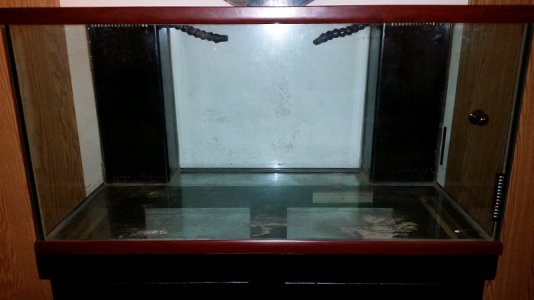
Wow! Lots of conversation, love it thanks for all the feedback. In the end I found a 120 gallon oceanic with dual corner overflows. The tank has a 1" bulkhead and a 3/4" bulkhead in each of the overflow boxes. My first step is to remove and re-seal all the seams. Then I will start my sump design as the current sump that I have I built for a 75 gallon that I started with back 10 years ago. The sump was perfect for power down and not overflow, I never had a flood and we lost power several times. Lucky for me I had a generator to keep the system going as we lost power for 4 days two different times. I also am in the process of constructing the stand using the DIY tank stand thread here. The stand is going to be roughly 48x24 so I should have lots of room in the cabinet for a significantly larger sump. I am also researching the use of a algae turf scrubber. I am in no hurry as I have lots of design and equipment research to still do. That being said, again thanks for all the input. If anyone has any suggestions they will be greatly appreciated. I will update with photos as I go.
Thanks,
Casey
Thanks,
Casey
Attachments
uncleof6
Active member
Yeah, sell the reef ready 120 and get a non reef ready 120. The reef ready tanks are just as obsolete as the 10 year old sump you wish to replace.
Does the tank need to be resealed? If not, don't mess with it. If the tank is leaking, resealing is not enough, and it must be rebuilt completely.
Does the tank need to be resealed? If not, don't mess with it. If the tank is leaking, resealing is not enough, and it must be rebuilt completely.
?????? I am not sure I understand.....reef ready....obsolete? Every lfs you go into sells reef ready. My understanding is that reef ready just means that it has built in overflows. I thought it was the other way around and that the hang on back style of setups was the old method. If I went with a non reef ready tank then I would have to come up with some other way of getting water from the DT to the sump, in other words make a non reef ready tank....reef ready. I am not sure if the tank leaks or not, I have just been told that anytime you buy a used tank it is a good idea to replace the seals.
Similar threads

- Replies
- 0
- Views
- 129
