i like having sand in as many areas as possible when dealing with dragonets. it helps give more surface area for pods to populate.
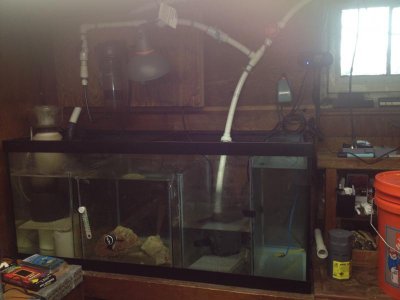
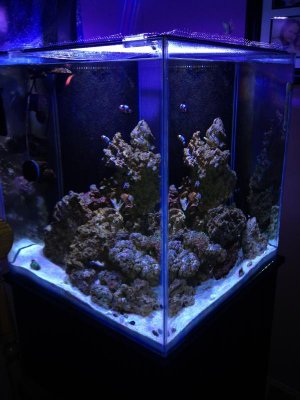
your tank size sounds promising, especially with the fuge. how do you look on rock in the display? i like to go fairly rock heavy for my mandy's feeding pleasure.
january 2015 is closing in on a year. that's my typical suggestion for "best practice" as far as length of time on a new tank.
your stock list seems good too. no major conflicts there as far as competition or aggression, with the exception of the pistol shrimp. i don't know enough about them to say whether they are OK or not with dragonets. my assumption would be that they're just fine, but since i haven't personally kept them together, you might want to get a better opinion on their compatibility from someone more familiar with keeping the two of them together.
you also might want to check out some supplementary feeding options like mandarin diners, pod condos, or PaulB's feeding station:
http://reefcentral.com/forums/showthread.php?t=2113800&highlight=feeding+station
it's never bad to have some of those techniques in your back pocket just in case.
all in all i'd say your system is making all the right noises, and if i were you, i would probably move forward with looking for a good specimen.
if you're not familiar with eyeballing a healthy mandy, there are a couple real important things to look for:
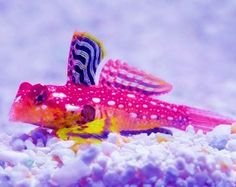
1. should be bright, alert, and responsive. moving around at a nice page, and pecking every few seconds at the substrate. the S. splendidus and S. picturatus i've seen tend to move methodically and smoothly. generally unaware/unconcerned about things going on around them. pectoral fins fluttering gently. where as S. ocellatus and S. stellatus typically seem to have a more stacatto type of motion to them.
2. should not have a pinched stomach, sunken stomach, sunken sides, or "sharp" lines visible on the side. these are indications of starvation, and it can be hard to bring them back from the brink.
3. coloration should be good. vibrant, and almost oily/shiny.
4. no visible paralysis, especially in the back/tail area. sadly sometimes these little jewels are collected with cyanide or harpoons. cyanide collection often manifests itself as lethargy and refusal to forage. which is covered under #1. the harpoon collection can present as partial or full paralysis of the back half of the animal.
it is also my preference to start towards the smaller end of the size scale if you have the choice. the smaller ones can be more difficult to ship, but if you can get them in good condition, it's reall nice to watch them grow in your tank.
good luck! under the right conditions these fish are some of my favorite animals to watch.