
You are using an out of date browser. It may not display this or other websites correctly.
You should upgrade or use an alternative browser.
You should upgrade or use an alternative browser.
Lets talk about Vodka/sugar dosing
- Thread starter stony_corals
- Start date
- Status
- Not open for further replies.

Frighteningly enough ... yes.<a href=showthread.php?s=&postid=12316052#post12316052 target=_blank>Originally posted</a> by Genetics
mesocosm does orthokeratology mean anything to you?

:thumbsup:

melev
Well-known member
Here's what I posted in my own thread tonight:
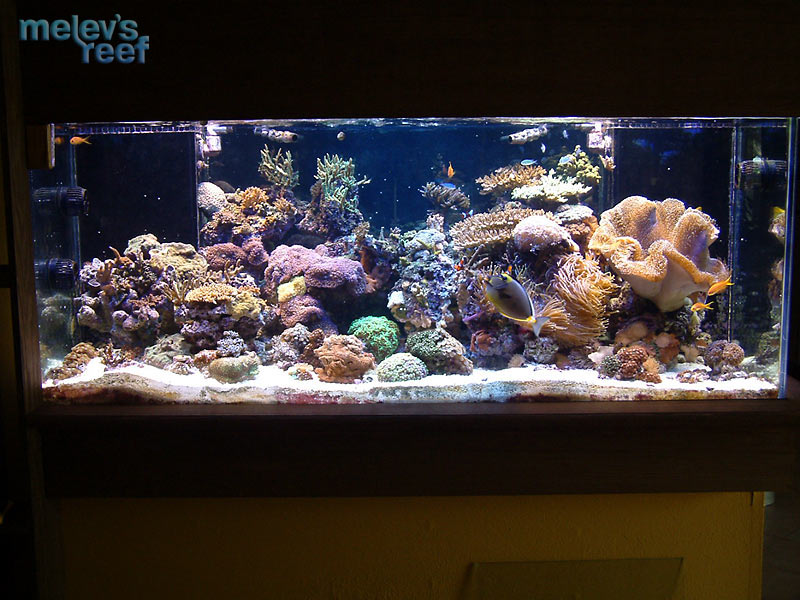
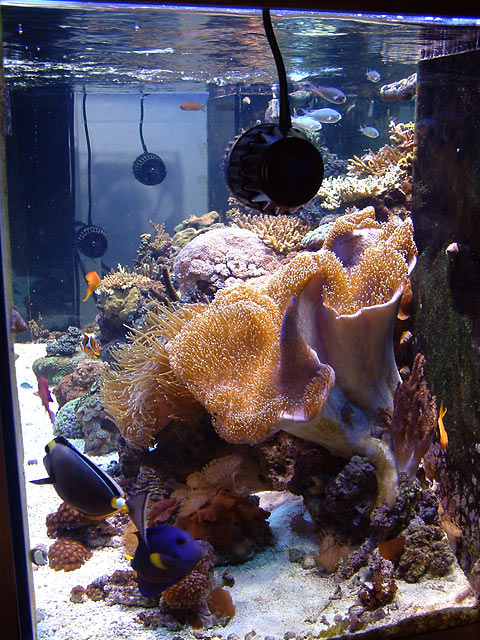
My system is roughly 330g of total water volume, a large sump, Euro-reef CS 12-2 skimmer, 29g refugium, two satellite tanks, calcium reactor, phosban reactor, top off with RO/DI. Salt is Kent Sea Salt for the past few months. I do not use kalkwasser. Flow is provided by three VorTech pumps and the return pump. No UV, no Ozone. Pretty much the Berlin system with a refugium.
Current 'issue' is NO3 and PO4 are always up higher than I'd like, but not nearly as bad as it has been in the past. And the main eye sore I see is cyano bacteria that likes to come back every couple of months.
Anything else you need to know?
Picture of reef from 3/31:
<a href=showthread.php?s=&postid=12316651#post12316651 target=_blank>Originally posted</a> by melev
While I've been testing some parameters from time to time over the past 6+ weeks, tonight I did them all at once.

My ORP probe is damaged, providing a false reading and needs replacing.
I tested Iodine (I2) and my tank is low on it. The recommended level in the kit was .06, and never higher than .08, and the kit showed my tank at .03
I tested PO4 with Salifert and Elos, and both matched at .1ppm or less. I am running GFO in a Phosban Reactor, but not as much as I've seen others use. I'd say there is maybe 3" of media in the reactor.
I tested Nitrate with an old and a new Salifert kit. The old tested at 25ppm, the new at 15ppm. The Algone pouches smell horrible again, and I'm going to replace them on the 15th instead of running them for 30 days. Maybe it is working after all.
Magnesium is finally coming down again.
Salinity is accurate, as I calibrated the refractometer with some Salifert Refractometer Cal. Solution.
Tank temperature is pretty steady. Two nights ago I noticed my fans were running to cool the tank to the point that my heaters turned on. I don't really like that I'm paying for both cooling at heating at once, so I changed the timer on the fans to shut them off around the time the lights cycle off. Soon I'll be running the window a/c unit non-stop for the summer months and the fans won't be on at all. I usually only use them as necessary in the fall and spring.
I checked the effluent of my Calcium Reactor's Alkalinity and it was 18 dKH. This is usually around the level I get when testing it, compared to others that state it should be around 30 dKH. Perhaps since mine is flowing and not dripping, that method works for my tank. I like to keep alk around 10, and as you can see for the past few months I've been trying to lock that in. The pH controller really protects my reef from any serious damage because I'm not testing daily and tinkering with it.
My system is roughly 330g of total water volume, a large sump, Euro-reef CS 12-2 skimmer, 29g refugium, two satellite tanks, calcium reactor, phosban reactor, top off with RO/DI. Salt is Kent Sea Salt for the past few months. I do not use kalkwasser. Flow is provided by three VorTech pumps and the return pump. No UV, no Ozone. Pretty much the Berlin system with a refugium.
Current 'issue' is NO3 and PO4 are always up higher than I'd like, but not nearly as bad as it has been in the past. And the main eye sore I see is cyano bacteria that likes to come back every couple of months.
Anything else you need to know?
Picture of reef from 3/31:

Melev,
It looks like you have everything together for a nice baseline to test vodka or sugar dosing. Any interest? You've cataloged your tank for many years online and would serve as a great page on your website.
On your test kits though, you're calcium seems higher than possible without supersaturation. Do you see precipitation at all in your tank? Around the heaters maybe? If you decided to start dosing a CS you should see if someone has a Hanna meter around as they are much better in measuring phosphates.
It looks like you have everything together for a nice baseline to test vodka or sugar dosing. Any interest? You've cataloged your tank for many years online and would serve as a great page on your website.
On your test kits though, you're calcium seems higher than possible without supersaturation. Do you see precipitation at all in your tank? Around the heaters maybe? If you decided to start dosing a CS you should see if someone has a Hanna meter around as they are much better in measuring phosphates.
melev
Well-known member
My calcium is always running rather high. To bring it down, I need my SPS to start growing. I don't see any precipitation, but coralline loves to grow in my sump, my skimmer, and the angled tank.
I have a D&D / Merck PO4 kit as well. I've been testing PO4 for years - I'm pretty good at testing it. Some might even say I'm a pro. :lol:
When y'all dose, what happens if you are out of town for a day or two and skip dosage? Does it collapse the bacterial process and you have to start all over again? I know you dose a tiny bit, but does it matter when exactly? AM vs PM? Before or after feeding the tank?
I have no idea what my potassium level is, and have to buy that kit. I know that gets talked about often in the Zeo world.
I don't see any precipitation, but coralline loves to grow in my sump, my skimmer, and the angled tank.I have a D&D / Merck PO4 kit as well. I've been testing PO4 for years - I'm pretty good at testing it. Some might even say I'm a pro. :lol:
When y'all dose, what happens if you are out of town for a day or two and skip dosage? Does it collapse the bacterial process and you have to start all over again? I know you dose a tiny bit, but does it matter when exactly? AM vs PM? Before or after feeding the tank?
I have no idea what my potassium level is, and have to buy that kit. I know that gets talked about often in the Zeo world.
stony_corals
New member
OnlyCrimson, food grade vinegar is fine....
Genetics, calcium/alkalinity is already supersaturated in the ranges that we keep... Though there are relative levels of supersaturation...
Mark, I never started all over again, just continued when I got back into town.... It is recommended to dose when your lights are on to limit the pH hit due to bacteria producing more CO2.
How is your macro growth? Just curious... You've got a refuge and an established tank... Where I'm going with this is the RR for macro is 550:30:1 (C:N ), it doesn't seem to be limited in N and P, are you dosing any Fe? I'd imagine that at these levels you'd need to be pruning your macro pretty often....
You're not running into N or P limitation, so I wouldn't worry too much about K right now... anecdotally, you'll see it in your Montiporas first...
Genetics, calcium/alkalinity is already supersaturated in the ranges that we keep... Though there are relative levels of supersaturation...
Mark, I never started all over again, just continued when I got back into town.... It is recommended to dose when your lights are on to limit the pH hit due to bacteria producing more CO2.
How is your macro growth? Just curious... You've got a refuge and an established tank... Where I'm going with this is the RR for macro is 550:30:1 (C:N
), it doesn't seem to be limited in N and P, are you dosing any Fe? I'd imagine that at these levels you'd need to be pruning your macro pretty often....You're not running into N or P limitation, so I wouldn't worry too much about K right now... anecdotally, you'll see it in your Montiporas first...
melev
Well-known member
I definitely need to learn your jargon in this thread. It's greek to me. :lol:
The macro algae is doing quite well, and I just had to harvest some from the refugium today as it was getting rather dense. Because it is in the back of my sump and relatively out of reach, I don't export as often as I should. It looks great, but it doesn't grow deeply. I get a good 3 or 4" layer of macro with space beneath. I do not dose iron. I don't like dosing what I don't test for.
Regarding montipora, I've had a real problem with montis in my tank for some time now. I noticed when Mg levels drop, it bleaches out. Raising it back up keeps them colored up, but they still don't look good. When my nitrates were down to 2ppm (using AZNO3), my M. cap plated out beautifully. And once I got off the product and the NO3 rose back up to 30ppm, it became the blob again with the plates bending down and reabsorbing into itself yet again.

I have several montis in my tank, and they are not happy corals at all. Potassium affects this coral? If so, I'm all over getting that resolved at last.
The macro algae is doing quite well, and I just had to harvest some from the refugium today as it was getting rather dense. Because it is in the back of my sump and relatively out of reach, I don't export as often as I should. It looks great, but it doesn't grow deeply. I get a good 3 or 4" layer of macro with space beneath. I do not dose iron. I don't like dosing what I don't test for.
Regarding montipora, I've had a real problem with montis in my tank for some time now. I noticed when Mg levels drop, it bleaches out. Raising it back up keeps them colored up, but they still don't look good. When my nitrates were down to 2ppm (using AZNO3), my M. cap plated out beautifully. And once I got off the product and the NO3 rose back up to 30ppm, it became the blob again with the plates bending down and reabsorbing into itself yet again.
I have several montis in my tank, and they are not happy corals at all. Potassium affects this coral? If so, I'm all over getting that resolved at last.
stony_corals
New member
Yeah, but most of the people 'on that other forum' have noticed this only when their nutrient levels get low... but that could be a gross generalization for a limitation of something (N, P, Fe), not sure really. I've personally experience the K issue with Monitporas, but only when P and N were low, and found that K levels declined and when dosing brought K up to NSW levels, the 'dry' looking Montiporas looked a lot better and started growing much more quickly.
Just being thinking through this a bit, K is an essential element for bacteria activity (where's Mesocosm when you need him, I'm being too vague here), and the second, in a zeolithe-based system, the zeolithe exchanging ions to reduce K levels. You think that with dosing vodka, we'd experience the 'dry' looking Montiporas as K would be depleted due to increased bacteria activity right? I've not found this to be the case (granted I am using KZ's Kalium testkit which many find 'challenging'). My best attempt to read the results of the K test, showed NO depleted K in my vodka tanks...
That's not to say that there could be some other process that is depleting K, ( meshmodded NWs?!?) I don't know.....
RR = Redfield ratio. Most often cited is the one for phyto 106:16:1 (C:N)... Wouldn't it be great to know what that ratio is for acroporids?!?
Just being thinking through this a bit, K is an essential element for bacteria activity (where's Mesocosm when you need him, I'm being too vague here), and the second, in a zeolithe-based system, the zeolithe exchanging ions to reduce K levels. You think that with dosing vodka, we'd experience the 'dry' looking Montiporas as K would be depleted due to increased bacteria activity right? I've not found this to be the case (granted I am using KZ's Kalium testkit which many find 'challenging'). My best attempt to read the results of the K test, showed NO depleted K in my vodka tanks...
That's not to say that there could be some other process that is depleting K, ( meshmodded NWs?!?) I don't know.....
RR = Redfield ratio. Most often cited is the one for phyto 106:16:1 (C:N
)... Wouldn't it be great to know what that ratio is for acroporids?!?Report for mesocosm
I am now at 1 teaspoon per day last 2 days on 150 gal of water. Previously it was 1/2 teaspoon for the last 3 weeks.
Nitrates started out at 160+ now have down to 80 after three weeks. Can not seem to get lower. Please see full tank pic. fig 1.
Reason why I started sugar is to get rid of brown stuff on gravel. I have not been able to accomplish this. See gravel fig 2
RTBA issue is no longer a problem and I suspect they must be more sensitive when a split first occurs. Reaction now to sugar is a reaction to close but immediately opens back up within minutes. see fig 3
I have noticed when adding sugar that white spots will show up on tank walls. I examined this with high power magnification and found the following Crystal structure. Looks like some type of crystallization. see fig 4 hand drawn of what I could see.
Acro coral tips are now starting to turn blue and this is normal for this particular coral. see fig 5. However I have continued to observe that GSP will not flourish as normal.
Main goal at this point is to get rid of the brown on the sand and it is light reactive. As can be seen by the normally shaded area to the lower right an the sand is white. Any ideas?
http://reefcentral.com/gallery/data/500/57859full_tank-med.jpg
http://reefcentral.com/gallery/data/500/57859gravel-med.jpg
http://reefcentral.com/gallery/data/500/57859rbta-med.jpg
http://reefcentral.com/gallery/data/500/57859sugar_crystal.jpg
http://reefcentral.com/gallery/data/500/57859acro-med.jpg
I am now at 1 teaspoon per day last 2 days on 150 gal of water. Previously it was 1/2 teaspoon for the last 3 weeks.
Nitrates started out at 160+ now have down to 80 after three weeks. Can not seem to get lower. Please see full tank pic. fig 1.
Reason why I started sugar is to get rid of brown stuff on gravel. I have not been able to accomplish this. See gravel fig 2
RTBA issue is no longer a problem and I suspect they must be more sensitive when a split first occurs. Reaction now to sugar is a reaction to close but immediately opens back up within minutes. see fig 3
I have noticed when adding sugar that white spots will show up on tank walls. I examined this with high power magnification and found the following Crystal structure. Looks like some type of crystallization. see fig 4 hand drawn of what I could see.
Acro coral tips are now starting to turn blue and this is normal for this particular coral. see fig 5. However I have continued to observe that GSP will not flourish as normal.
Main goal at this point is to get rid of the brown on the sand and it is light reactive. As can be seen by the normally shaded area to the lower right an the sand is white. Any ideas?
http://reefcentral.com/gallery/data/500/57859full_tank-med.jpg
http://reefcentral.com/gallery/data/500/57859gravel-med.jpg
http://reefcentral.com/gallery/data/500/57859rbta-med.jpg
http://reefcentral.com/gallery/data/500/57859sugar_crystal.jpg
http://reefcentral.com/gallery/data/500/57859acro-med.jpg

when you use vodka do you put it in the sump or main tank?
will this work with the use of a uv?
will this work with the use of a uv?

glassbox-design
New member
melev,
I wouldn't worry about K depletion. Judging by the coloration on the monti's it does not look like K related. Like Matt said, I have not yet heard of any non-zeo users report issues from low K. Even with heavy C dosing it has not been a problem for us, but FWIW we do use Seachem Reefsalt.
If you plan on dosing, I'd suggest dropping your alk and cal (or have the acro's catch up ) we have not had any STN/RTN issues when params are not on point with NSW, but coloration and growth has been best at those levels.
I wouldn't worry about K depletion. Judging by the coloration on the monti's it does not look like K related. Like Matt said, I have not yet heard of any non-zeo users report issues from low K. Even with heavy C dosing it has not been a problem for us, but FWIW we do use Seachem Reefsalt.
If you plan on dosing, I'd suggest dropping your alk and cal (or have the acro's catch up
) we have not had any STN/RTN issues when params are not on point with NSW, but coloration and growth has been best at those levels.
Reefflections
New member
I've been reading threw this thread,which is rather long.But confused here.Maybe someone can chime in here.I've been dosing sugar(only).for removal of the nitrates,in my system.This has worked great from 20 range now down to around 10.My target is zero,just going at it slowly.Now nitrates does have a direct impact on these.So how does Vodak,and Vingear come into play here.Does any of these other 2 have a direct reduction of PO4 levels.If so which one?,Or all these 3 plays the role of PO4 and Nitrates?It seems everyone of these PO4 tests kits there are problem with a true reading.When I get to zero with sugar dosingdDon't have a clue the dosage of the other 2 and how often?It's a 240 gallon with a barebottom.I dose 1 teaspoon of sugar per day,and it's getting really close.What I've saw here once you get zero,then from there on it's half your dosage.
I'm not looking for what takes place as for the chemistry end of it.Just trying to find out,where to go from here ,in simple terms.Will the sugar alone,do the job?Or a need to kick the system with Vodka,and Vinegar also.
Or better yet just sitting back and wait awhile with daily dosing of the sugar,with zero nitrates.And the sugar will take care of the algae issues?
Thank guys for all your help.
I'm not looking for what takes place as for the chemistry end of it.Just trying to find out,where to go from here ,in simple terms.Will the sugar alone,do the job?Or a need to kick the system with Vodka,and Vinegar also.
Or better yet just sitting back and wait awhile with daily dosing of the sugar,with zero nitrates.And the sugar will take care of the algae issues?
Thank guys for all your help.
melev
Well-known member
<a href=showthread.php?s=&postid=12320438#post12320438 target=_blank>Originally posted</a> by glassbox-design
melev,
I wouldn't worry about K depletion. Judging by the coloration on the monti's it does not look like K related. Like Matt said, I have not yet heard of any non-zeo users report issues from low K. Even with heavy C dosing it has not been a problem for us, but FWIW we do use Seachem Reefsalt.
If you plan on dosing, I'd suggest dropping your alk and cal (or have the acro's catch up
The montipora issue I don't really understand, but I've had the problem for about 1.5 years or more. I used to keep gorgeous M. digitata in my reef in a variety of colors, but now if I add one, it doesn't do well at all.
This is an ORA Sunset Monti that looks happy today, but looked ragged two days ago. The only change I've made is another thread entirely, Vitamin C dosing. I don't know if fresh carbon makes it happy, or the Vitamin C (Calcium ascorbate).

I have several montis, such as Superman, Pokerstar, and the blue polyped encrusting kind. All of them has had the base lose all of its color, and the polyps are what remain. I don't know why, and its frustrating.
What interests me more about this thread is the coloration. Dropping NO3 or PO4 is great; I'm all for it. But if the corals I have now look even better, that's very appealing. And if it resolves the monti issue, that would be a huge perk.
when you use vodka do you put it in the sump or main tank?
will this work with the use of a uv?
anyone?
will this work with the use of a uv?
anyone?
glassbox-design
New member
Melev,
Sorry to hear that, especially with the collection you have of them. Maybe it would be best for you to try some. Warner Marine's potassium is inexpensive and shouldn't hurt anything. Regarding test kits, Psam did a nice write up on the Fauna Marin kit [here.]
Richie-
Adding directly to the tank is fine. I would not suggest using UV.
Sorry to hear that, especially with the collection you have of them. Maybe it would be best for you to try some. Warner Marine's potassium is inexpensive and shouldn't hurt anything. Regarding test kits, Psam did a nice write up on the Fauna Marin kit [here.]
Richie-
Adding directly to the tank is fine. I would not suggest using UV.
Greetings All !
Yours is a timely post azgard ... my accountant did some things I didn't expect, so I've been buried in tax analysis all day. Anything that takes me away from this irritation is more than a little welcome. :lol:
BTW ... the pictures are extraordinarily helpful. :thumbsup: :thumbsup:
JMO ... HTH
:thumbsup:
Yours is a timely post azgard ... my accountant did some things I didn't expect, so I've been buried in tax analysis all day. Anything that takes me away from this irritation is more than a little welcome. :lol:
BTW ... the pictures are extraordinarily helpful. :thumbsup: :thumbsup:
This is a "plateau" thing that many folks who sugar/vodka dose, but don't use any form of "reactor", often report. The bad news is that nutrient reduction from this point seems to become much slower. The good news is that, while much slower, nutrient reduction usually continues to progress. Some folks report that changing their usual feeding practices can influence the reduction rate.<a href=showthread.php?s=&postid=12320258#post12320258 target=_blank>Originally posted</a> by azgard
I am now at 1 teaspoon per day last 2 days on 150 gal of water. Previously it was 1/2 teaspoon for the last 3 weeks. Nitrates started out at 160+ now have down to 80 after three weeks. Can not seem to get lower. Please see full tank pic. fig 1. ...
I've been fooling around with a variety of vitamin, AA, and proprietary supplements, and my anemones show much the same type of reaction. Even so, I'm still unconvinced of the utility of sugar dosing in a dedicated anemone system. At some point I'm going to get around to NH4Cl dosing ... we'll see.<a href=showthread.php?s=&postid=12320258#post12320258 target=_blank>Originally posted</a> by azgard
... RTBA issue is no longer a problem and I suspect they must be more sensitive when a split first occurs. Reaction now to sugar is a reaction to close but immediately opens back up within minutes. see fig 3 ...
Interesting. Many folks report varying degrees of tolerance with regards to soft corals ... GSP seem to be near the top of the list as not being particularly pleased when their ecosystem manager decides to start dosing sugar.<a href=showthread.php?s=&postid=12320258#post12320258 target=_blank>Originally posted</a> by azgard
... Acro coral tips are now starting to turn blue and this is normal for this particular coral. see fig 5. However I have continued to observe that GSP will not flourish as normal. ...
Not sure what we're looking at ... the growth pattern you've drawn reminds me of the type displayed by capitate hydroids. One of the things that's surprised me about my dedicated anemone tanks is the persistence of certain bacterial colonies, cyanobacteria, and dinoflagellates. It's very different than what I would expect from a "normal" microflora & microfauna succession pattern in a "typical" reef system. Is it sugar dosing related? ... I'm inclined to guess so.<a href=showthread.php?s=&postid=12320258#post12320258 target=_blank>Originally posted</a> by azgard
... I have noticed when adding sugar that white spots will show up on tank walls. I examined this with high power magnification and found the following Crystal structure. Looks like some type of crystallization. see fig 4 hand drawn of what I could see. ...
You have my sympathies. I believe the Reef Gods have inflicted you with one of those annoyingly persistent cyanobacteria & dinoflagellate synergies that just sometimes refuses to go away. The only thing that I've ever found to be completely effective is physical removal of the localized outbreak via siphoning, and replacement of whatever sand was lost. Having babbled about "succession patterns" ... how old is the system? On a related tangent ... what kind of Si inputs might be happening? Some succession patterns are just more annoying than others, and I've found that sometimes removing Si inputs can help to extinguish dinoflagellate populations ... JMO.<a href=showthread.php?s=&postid=12320258#post12320258 target=_blank>Originally posted</a> by azgard
... Reason why I started sugar is to get rid of brown stuff on gravel. I have not been able to accomplish this. See gravel fig 2 ... Main goal at this point is to get rid of the brown on the sand and it is light reactive. As can be seen by the normally shaded area to the lower right an the sand is white. Any ideas?
JMO ... HTH
:thumbsup:
<a href=showthread.php?s=&postid=12322195#post12322195 target=_blank>Originally posted</a> by glassbox-design
Sorry to hear that, especially with the collection you have of them. Maybe it would be best for you to try some. Warner Marine's potassium is inexpensive and shouldn't hurt anything. [/URL]
It shouldn't but like most anything too much of a good thing can be horrible. In small doses we can be around many metals that in high doses are detrimental to our health. If you dose try to keep your potassium around 50ppm.
<a href=showthread.php?s=&postid=12322044#post12322044 target=_blank>Originally posted</a> by richierich2000
when you use vodka do you put it in the sump or main tank?
will this work with the use of a uv?
UV works to sterilize pathogens present in the water. By having one you may be working counter intuitively against dosing. Though I doubt their will be a noticable effect unless you have a rather oversized UV sterilizer hooked up.
<a href=showthread.php?s=&postid=12321558#post12321558 target=_blank>Originally posted</a> by Reefflections
Will the sugar alone,do the job?Or a need to kick the system with Vodka,and Vinegar also.
Or better yet just sitting back and wait awhile with daily dosing of the sugar,with zero nitrates.And the sugar will take care of the algae issues?
Thank guys for all your help.
If you use a single source of carbon you will get the same results as multiple sources. I started with vodka to get to zero on both phos and nitrates. I've since switched to a sugar/vodka mix. Is there any added benefits? Not if you're looking at the end results but the intermediates could be interesting. I would've also added vinegar but I dose through my auto-topoff and I don't want the vinegar affecting the pH of the kalk reactor.
<a href=showthread.php?s=&postid=12321816#post12321816 target=_blank>Originally posted</a> by melev
I have several montis, such as Superman, Pokerstar, and the blue polyped encrusting kind. All of them has had the base lose all of its color, and the polyps are what remain. I don't know why, and its frustrating.
What interests me more about this thread is the coloration. Dropping NO3 or PO4 is great; I'm all for it. But if the corals I have now look even better, that's very appealing. And if it resolves the monti issue, that would be a huge perk.
You stated earlier that you have an ORP meter. Do you run ozone with that? If so do you run carbon on your outflow?
The color change is noticable. And it can make an amazing difference in color.
<a href=showthread.php?s=&postid=12316750#post12316750 target=_blank>Originally posted</a> by mesocosm
Frighteningly enough ... yes.
:thumbsup:
It's amazing (slash frightening) what the internet can find these days.
- Status
- Not open for further replies.


