Nine peppermint angels!!!!

Attachments

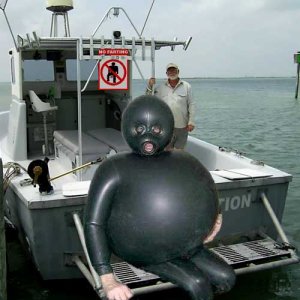
  • WetSuit.jpg
    WetSuit.jpg
    29.2 KB · Views: 7
Does anyone know how common/rare they are in the wild? I know their range is relatively small, but how many are encountered in collection efforts? Are divers seeing 50, but only able to catch 10 in their limited bottom time or are they catching almost everything seen?
 
You know what NYA is asking? I think over a number of days he must of seen a few as each dive probably lasted about 15 - 20 mins maximum.
 
if they are so rare shouldnt we keep them in the ocean? so we dont over fish these and make them even more rare..

just playing devils advocate

this question seem to come up periodically....in reality this fish perhaps numbers in lakhs down there(in two known range) in the deep...and i bet there are other places in South Pacific holding it,which is yet to be discovered...
 
What Rufus does is amazing. His ability is top in the industry. To do a dive that deep requires alot of training and is still physically taxing. The amount of equipment and support needed is unbelievable. When you down there and something goes wrong, sh*t needs to be sorted out quickly. You dont just die at those depths, you die ugly!

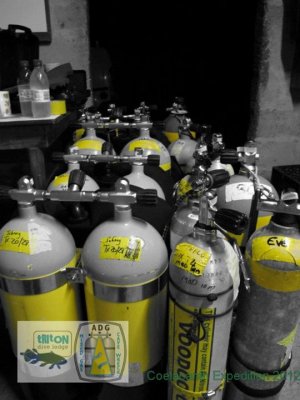
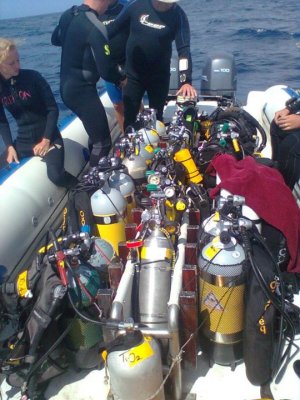
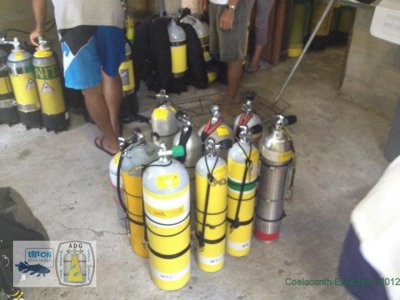
Here is some pics of the 2012 Coelecanth dive that my team did. 113 m dive in Sodwana Bay on trimix. Special mixes, special surface support team, additional cylinders and still a daunting dive.

People may b*tch about the price asked for these deep sea fish but it is extremely dangerous at those depths. Rufus may be one of the most experienced rebreather divers but still things can go wrong and he risks his life everytime he goes to those depths to collect beautiful specimens for this industry.
 

Attachments

  • .facebook_-2144194400.jpg
    .facebook_-2144194400.jpg
    58.9 KB · Views: 5
  • .facebook_1307724001.jpg
    .facebook_1307724001.jpg
    83.7 KB · Views: 9
  • .facebook_130762839.jpg
    .facebook_130762839.jpg
    61.5 KB · Views: 5
You need alot of different mixes at those depths. There is alot of factors that go into a deep dive. You can only use oxygen up to a certain depth before it becomes toxic, then you would introduce nitrogen and then finally you will use helium. Helium is used because it enters and leaves the body more rapidly than nitrogen.
 
wow... i never knew that. then again ive never went deeper then a 9ft swimming pool :D... i really want to go scuba diving next summer
 
Lol. Different mixes are for different depths. Do a google search on Trimix, Heliox and Nitrox. They all have great advantages and some have disadvantages as well. You should definitely, once you start diving it becomes addictive. We are in Cape Town, South Africa so we dont get the deepest and nicest dives here but in Kwazulu Natal we get awesome dives. Here in the Cape we get big a$$ great whites. Not fun at all.
 
Back
Top