Reasoning behind six month wait for nems??

Alright.... to both bonsai and Todd.... I really did not mean to offend either of you or disregard your opinions for that matter. I think my point was harshly mis-communicated. I AM NOT adding a magnifica to the tank until it has matured more. The BTA's were added because my 55g was doing poor, that is the only reason.

Todd, you may not have a "scientific background" but your experience gives you the insight required to answer most anyone's questions in this forum, and I know that. I am not discounting any of the inputs I have received from anyone. I only meant to say that I was hoping someone who knew the science behind it would respond. If that exact information doesn't exist than that is a different situation. (As for my poor grammar, I wrote that from my phone, I apologize if it made me sound uneducated, while asking for someone educated to answer a reply)

Bonsai... You said I have received a lot of good information in this thread and you are completely correct, but I have received just as many responses "it's just things you can't see". I also have not dissagreed with anyone, I never said these reasons were wrong, or that I was going to ignore the rule and just add everything right now. I was just seeking deeper answers. That is the only reason that I asked for the science, I know there are things happening I can't see and that my however many test sets do not test for. I was trying to figure out what those things were. Reefing may not be an exact science but it is definitely science.

I really do apologize if my intentions were misguided, that wasn't my intention, I am only seeking to learn information to become a more successful reefer. There are a lot of things that "can be done" in this hobby that shouldn't, but I can only assume that there is always a reason behind this. Please do not take my comments as insults to anyone here.
 
"it's just things you can't see"

Let me try to express myself a slightly different way. A reef aquarium is an extremely complex system with many variables. Changes to one variable may have dramatic impacts on another. Advice that works in some cases may not be valid in others. There are MANY scientific studies that deal with individual parts of this complex system, but none (that I know of) that deal with the system as a whole - because it is too complex and too variable. Does that mean panic? No - you should follow general rules and be patient and your tank will go through an initial phase of rapid change until it gradually matures and becomes stable. Then you can add critters who need the most stable environments in order to thrive.

To give you an example. You said you only had diatoms for a short period of time. Wrong. You still have them. It's just that their population is being held in check by other systems. Diatoms are one of the most (if not THE most) common organism in the ocean. Some scientists believe they supply half of all the ocean's bio energy. They are ALWAYS there if you have a living reef tank.

You said that you accelerated your pod population by adding adult pods from another tank. Not exactly. Yes, you need to seed amphipods, but they will only thrive when conditions have matured to provide them with the environment they need. So you might have adults pods, but until you see TONS of tiny baby pods, you can take it as a sign that your system isn't dialed in yet. You can add all the pods in the world, but they won't multiply until your system is ready.

As far as a dark cycle on maturing tanks goes, you need to understand that you are not actually accelerating anything - you are trying to SKIP a potentially bad step during the tank conditioning process where bad microflora/microfauna can take over your tank before it matures from one stage to the next. This is usually only necessary if you are trying to rush a tank by adding a TON of live rock at the very beginning, by not fully curing your rock, etc. It is actually better if you DON'T have a dark stage and just slowly add nutrients to your tank as your system develops the ability to cope with them.

Now these are general guidelines, and I'll guarantee you that there exists at least SOMEONE who will disagree with each and every one of the things I have just said. But the best way to be successful in this hobby (at least starting out) is to take the things that work 95% of the time, IGNORE the shortcuts that work 5% of the time, and do everything more slowly, and more cautiously than recommended.
 
Last edited:
I fully agree with Todd and Bonsainut. Our systems take time to build up and fully stabalize for bioloads. That is why it has always been better to add fish in slowly and corals etc instead of putting a tank together and than packing it full instead of just adding one or a couple at a time when the tank is just starting to mature. All you did with your 55G bioload when you switched it over is give it more volume which is why everything seems better when in reality it doesn't take as much effort to keep a large volume in check as it takes longer and is a lot harder to have large swings with EVERYTHING including temperature hence why experienced Hobbyists state bigger is always better. I waited 8 months before adding my gigantea anemone and than waited almost another 5 months before adding my mag which both have done and still are doing excellent. Don't reinvent the wheel when it already has been done as its just nonsense.

Conrad
 
No help needed.

No help needed.

The OP has made some pretty BOLD statements considering the experienced company he/she is in.

Title of the thread "œReasoning behind six month wait for nems??" . When "œReasoning" comes, no effect. Now we need some scientific formulas to explain this time frame. Good luck on that.

I'm not even wasting my thoughts on the subject in this thread.
 
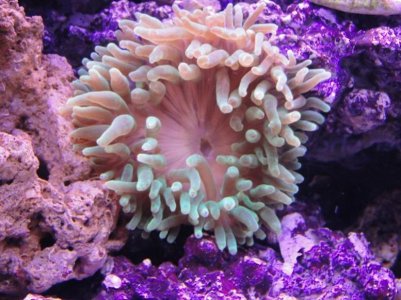
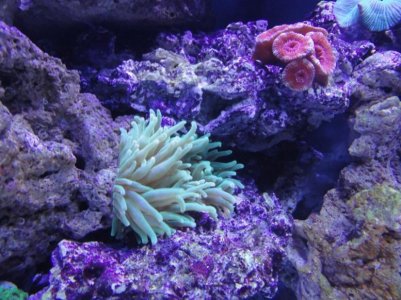
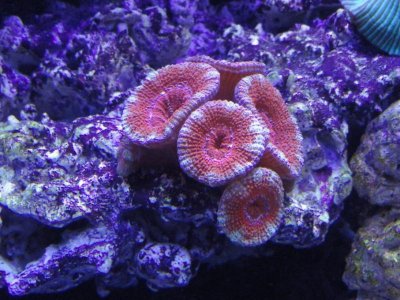
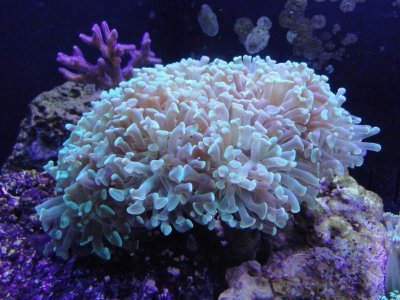
At the risk of stirring up the hornets nest I am gonna post an update and a few pics of my BTA in my tank at week number 8.

Before the daggers come, please uderstand I added my BTA before reading this thread, and I agree there is alot of good info above and I welcomed the explanations given by the seasoned reefers. Thank you all, and your advice is well founded and proven. I am sure there are more failures than successes in this hobby by over eager people buying 'too much too fast." I know because I am one of them :spin2:

That being said, if you are out there like me and bought a BTA early and are wondering if it is doomed maybe my current status can help you sleep better.

My BTA seems to be doing great so far. He has not moved more than 3 inches from where I placed him, except to withdrawl into the rock for 24 hours and then to pop back out. He eats a piece of raw shrimp quickly when I feed him, which is about once a week. Hopefully he will thrive and continue to be a centerpiece in my tank.

My current parameters are as follows:

Temp 78 (less than 1 degree flux day and night)
Salinity 1.025 Syben Refratometer
PH 8.2-8.3 API
Nitrite O API
Nitrate 5ppm API ( I addeed two fish this week, raised bioload?)
Ammonia .25 API ( I know API is often false positive people say, this level has been same since day one, same "mountain dew" tint.)
DkH 9-10
Calcium 440 API
Magn- 1280 ( Red Sea kit- trying to raise to 1400)

Running two Hamilton 175 Watt 14K bulbs and two 46.5" Super actinic VHO bulbs, dusk to dawn stagger for VHO

This week I added a phosban reactor and phosphates are at zero.

I add 15ML Sea Balance once per week and one cap full of Seachem coral FUEL once per week. I am starting to get coraline alge in various parts of the tank.

I have added tiger copepods from local reefer who sells them by the bag to my fuge a month ago and just added another bag to boost population.

I feed frozen formula one and two, mysis, marine cuisine, little dab of frozen cyclopeze as well as green alge sheets. I mix it up and slice down cubes of each food and give a little of each most days. I do not over feed.

My corals seem to be thriving and local reef club members say the tank is off to a great start. Luckily since I have sold a lot of stuff from a former hobby to jump start this hobby, I was able to start with good equipment. Maybe that has helped in my success thus far.

 

Attachments

  • Nem.jpg
    Nem.jpg
    82.3 KB · Views: 10
  • Nem2.jpg
    Nem2.jpg
    87.7 KB · Views: 5
  • Red.jpg
    Red.jpg
    90.7 KB · Views: 4
  • Hammer.jpg
    Hammer.jpg
    74.7 KB · Views: 6
At the risk of stirring up the hornets nest I am gonna post an update and a few pics of my BTA in my tank at week number 8.

Before the daggers come, please uderstand I added my BTA before reading this thread, and I agree there is alot of good info above and I welcomed the explanations given by the seasoned reefers. Thank you all, and your advice is well founded and proven. I am sure there are more failures than successes in this hobby by over eager people buying 'too much too fast." I know because I am one of them :spin2:

That being said, if you are out there like me and bought a BTA early and are wondering if it is doomed maybe my current status can help you sleep better.

My BTA seems to be doing great so far. He has not moved more than 3 inches from where I placed him, except to withdrawl into the rock for 24 hours and then to pop back out. He eats a piece of raw shrimp quickly when I feed him, which is about once a week. Hopefully he will thrive and continue to be a centerpiece in my tank.

My current parameters are as follows:

Temp 78 (less than 1 degree flux day and night)
Salinity 1.025 Syben Refratometer
PH 8.2-8.3 API
Nitrite O API
Nitrate 5ppm API ( I addeed two fish this week, raised bioload?)
Ammonia .25 API ( I know API is often false positive people say, this level has been same since day one, same "mountain dew" tint.)
DkH 9-10
Calcium 440 API
Magn- 1280 ( Red Sea kit- trying to raise to 1400)

Running two Hamilton 175 Watt 14K bulbs and two 46.5" Super actinic VHO bulbs, dusk to dawn stagger for VHO

This week I added a phosban reactor and phosphates are at zero.

I add 15ML Sea Balance once per week and one cap full of Seachem coral FUEL once per week. I am starting to get coraline alge in various parts of the tank.

I have added tiger copepods from local reefer who sells them by the bag to my fuge a month ago and just added another bag to boost population.

I feed frozen formula one and two, mysis, marine cuisine, little dab of frozen cyclopeze as well as green alge sheets. I mix it up and slice down cubes of each food and give a little of each most days. I do not over feed.

My corals seem to be thriving and local reef club members say the tank is off to a great start. Luckily since I have sold a lot of stuff from a former hobby to jump start this hobby, I was able to start with good equipment. Maybe that has helped in my success thus far.

Is this your first saltwater tank? And this is week 8 since you first added water or since it has cycled? Keep us posted on how the anemone is doing.
 
Many things change over time in reef tanks that we cannot or do not measure. Among the lists of things that reefers do not measure in reef tanks that can easily be expected to have effects on tricky organisms such as certain anemones are bacterial populations and organics.

It is not even really possible for lab scientists to measure these things in a reef environment, so if they are the types of things that impact certain organisms, then one cannot expect that the information will be available beyond the experiences of reefers. And those experiences are results only, not reasons for the results.

I would caution, most importantly, that reefers really need to understand that reef tanks are very complex environments that vary quite considerably from one situation to another. That is, one tank is not like another tank. So if something works for one person (whether it is a supplement, a creature, or a husbandry technique), we cannot and should not assume it will work in other cases if we do not understand it well enough.

Sadly, that allows all sorts of marketing crap to take place, and leaves reefers hungering for explanations, which in many cases are just not available.

In this case, folks should note that some anemones are potentially much hardier than others. It is widely believed, for example, that some of the large carpet anemones are prone to bacterial infections after transport, but others, like RBTA, are not so prone. Extrapolating to reef tank age, the types and populations of bacteria and organics (i.e., food for bacteria) in a tank will change over time, and could be theorized to impact new anemone survival by impacting the ability of bacteria to thrive on or in a new anemone.

So there are clear reasons why anemones might do better in longer established tanks, but proving which (if any) of the possible effects is the causative agent is difficult if not nearly impossible at this time.
 
@rizon 25....

Yes this is my first SW tank....that being said I work at a job that permits me to read for almost 8 hours a day. For a month prior to filling my tank, I read and read everything I could on the subject, especially books and articles written by Bob Fenner.

We filled my tank with water on Sept 26th. I used 100 pounds of cured live rock from a huge holding tank/sump at a local supplier that had been curing for months in his system. I added two clowns after 5 days and fed sparingly.

I recorded no "cycle" per se and the LFS owner who help me set up everything and brought 100 gal of saltwater to my house, said I likely would not see a big cycle. He said with the 60 pouunds live sand, rock, and 30 gal sump with 20 pounds sand, rubble, cheato, calerpa I have a lot of beneficial bio filtration going on.

Here is a PDF of my spreadsheet I created to track paramters.
 

Attachments

I wanted to post an update and some pics to show the current status of our tank. After about 13 weeks everything is showing great extension and coraline alge is starting to spread nicely. Our green BTA is doing fine, but the clowns ignore it. They seem to sleep in the same corner of the tank so I recently added a small sebae nem to that corner and they have taken up to sleeping in it.

My experience has shown with careful tank management and weekly water changes keeping an anemone in a three month old tank hasn't created any problems.

We are running a 90 gal display with 30 gal sump containing live rock, sand, cheato/calerpa, as well as carbon in a sock and a phosban reactor. I dose with Seabalance A and B every sunday as well as 10 MG of Seachem coral FUEL.

I do a 12 gallon water change every sunday morning and dose in the evening.

I know a lot of these rules about waiting so many months before doing this or that get repeated over and over. I have consulted with many members of our local reef keeping club. The verdict seems to be that if your water is stable at 8 weeks, then there is no reason that an anemone cannot live in your tank. In my opinion the idea that you need to wait a year before getting an anemone is not based on facts, but rather old habits that dont take into account modern filtration,skimmers and diligent water changes.


Here are a few new pics:

Timszoosandgorgonian.jpg


GreenNem.jpg


Reef.jpg


swollenacan.jpg
 
Last edited:
Back
Top