Silent and Failsafe Overflow System

Silent and Failsafe Overflow System

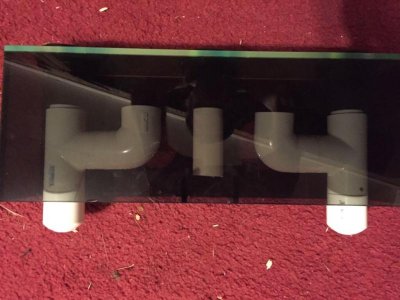
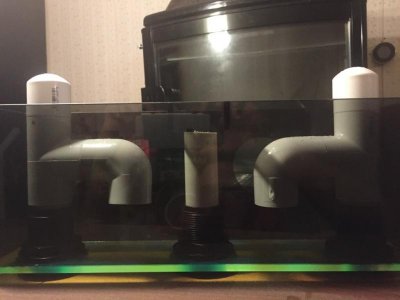
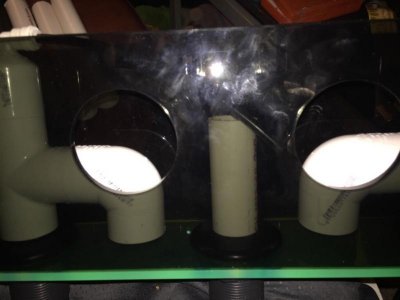
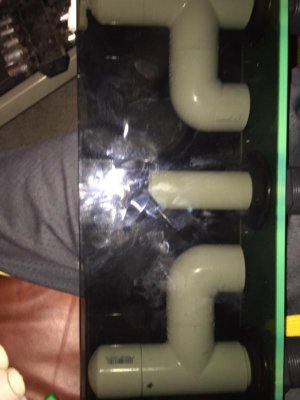
Soo.... I thinking I did this right?
I show I have to add the air tube to one of these (nervous about drilling and tapping to be honest)
Then I'm painting them black

Input welcome PLEASE

View attachment 320395
ImageUploadedByTapatalk1434159703.588467.jpg
ImageUploadedByTapatalk1434159713.592838.jpg
View attachment 320398

From left to right open channel, straight channel, backup channel(will be drilled and tapped for the air tube)
 
That doesn't really help me fix it at all...

Well at this point there is no "fixing". It seems you bought this from Advance acrylics? I'm guessing just due to the green neon color I see at the bottom. Truth is, this system might work as is. You won't know till you try it. You certainly can't add more vertical space as a safety area, and it doesn't seem like you can lower your plumbing any more. I'll give you this, it looks sleek, but again, I'd be nervous about it overflowing. No pun intended.
 
Silent and Failsafe Overflow System

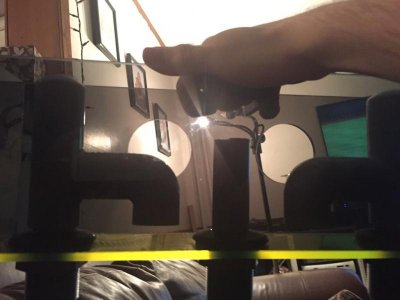
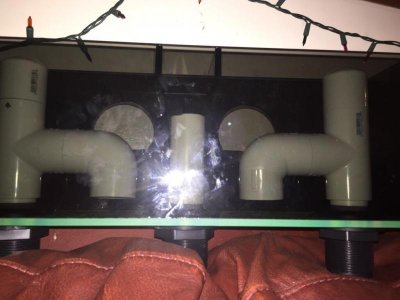
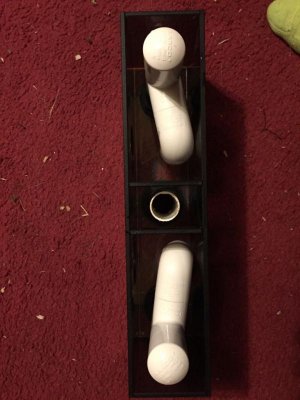
I figured it out. I was dumb and had the bulkheads with the threads inside. Should I add height to these or is this fine now? ImageUploadedByTapatalk1434166159.675353.jpgImageUploadedByTapatalk1434166478.567354.jpg
 
Last edited:
in general, it's a good idea to have the top of an external overflow box even with the top of the tank to minimize the risk of the box overflowing. Looks like you have about 1-1.5" between the dry emergency and the top of the box - that should be enough.

As far as drilling and tapping - why are you nervous? You'll be drilling and tapping a $0.79 PVC cap. If you mess it up, buy a new one.

The siphon line doesn't necessarily have to have the tee and elbow on it. Bean had the elbow on his design to use in an internal coast to coast overflow and the tee on the outside to allow for cleaning. With an external, the only potential advantage is that it may limit critters getting into it if it's close to the floor of the box. Either way, you don't need to glue the fittings in place inside the overflow. With an internal overflow, an imperfect seal on the siphon will lead to it entraining air and increase noise from bubbles. That's not a risk with the bulkhead connection on the bottom in an external overflow.

Why do you have cross bracing around the dry emergency? that will only serve to limit flow into the pipe if you should be approaching a flood.
 
in general, it's a good idea to have the top of an external overflow box even with the top of the tank to minimize the risk of the box overflowing. Looks like you have about 1-1.5" between the dry emergency and the top of the box - that should be enough.

As far as drilling and tapping - why are you nervous? You'll be drilling and tapping a $0.79 PVC cap. If you mess it up, buy a new one.

The siphon line doesn't necessarily have to have the tee and elbow on it. Bean had the elbow on his design to use in an internal coast to coast overflow and the tee on the outside to allow for cleaning. With an external, the only potential advantage is that it may limit critters getting into it if it's close to the floor of the box. Either way, you don't need to glue the fittings in place inside the overflow. With an internal overflow, an imperfect seal on the siphon will lead to it entraining air and increase noise from bubbles. That's not a risk with the bulkhead connection on the bottom in an external overflow.

Why do you have cross bracing around the dry emergency? that will only serve to limit flow into the pipe if you should be approaching a flood.


I'm just not 100% comfortable with drilling and tapping that's all... But I was thinking of leaving it non glued together. Just pressed together pretty well.
I'll get a drill and tap tomorrow at harbor freight.

But it looks like it should.. I guess I'll see
 
Hi all, was hoping for some advice. I'm setting up a 900 gallon system and would like to go the bean animal route. I'm trying to size the overflow box and figure out how many bulk heads are needed.

Tank is 10' x 56" x 33" and my overflow will be an external box (current design is 60" long overflow). I was going to use a reeflo hammerhead for the sump ~5,000 gph) and current plan is a closed loop with eductors for flow (another 5,000 gph into the sump). I"m still researching the eductors but when sized properly, it looks like I could get ~25,000 gph water movement out of them.

Anyways, anyone able to make suggestions on what size pipe under full suction can handle 10,000 gph? I assume even though the tanks a monster, i would still want to go with the 3 pipe bean animal design?
oh, sump will be about 3' underneath overflow
Thanks!
 
If I wanted to run my bean animal through a wall in a fish room how.much would a 6 foot run slanted at about 60 degrees affect the drain? Would it cause major issuess?
 
I'm just not 100% comfortable with drilling and tapping that's all... But I was thinking of leaving it non glued together. Just pressed together pretty well.
I'll get a drill and tap tomorrow at harbor freight.

But it looks like it should.. I guess I'll see


Drilling & tapping is like a lot of things - not too tough once you get the hang of it. Buy a couple extra fittings to practice on and you'll be good.
 
If I wanted to run my bean animal through a wall in a fish room how.much would a 6 foot run slanted at about 60 degrees affect the drain? Would it cause major issuess?


Should be good - horizontal runs can cause air to stay trapped in the plumbing, but 60° should be fine. The longer run adds a bit of resistance, but you won't be running it wide open anyway.
 
I figured it out. I was dumb and had the bulkheads with the threads inside. Should I add height to these or is this fine now?

That looks much better.

As sleepyd mentioned you don't need the tees. You can make the U shape out of two elbows or even better two street ells. This will take up much less space.

The reason I mention this is I notice the intakes seem to be right in line with the two holes coming from the tank. That tank flow might have some bubbles in it and if so could cause some noise in the siphon line. Two street ells would set them a bit off center of that flow.

Also you'd have room for a cover!

Since all the plumbing will be below water line you don't need to glue it. Then it's easily removed to clean.
 
. But I was thinking of leaving it non glued together. Just pressed together pretty well.

The risk you run there is if it leaks any air you won't get a full siphon when it's needed, which is the whole purpose of that tubing. Drill, tap, and use a non-hardening thread sealant.
 
The risk you run there is if it leaks any air you won't get a full siphon when it's needed, which is the whole purpose of that tubing. Drill, tap, and use a non-hardening thread sealant.

I believe we are talking about different things. I'm speaking to the large PVC fittings connected to the bulkheads. They don't need to be glued together.

If you are going to tap a Guest or other fitting into the OC, you can seal it with either NHTS or teflon if you feel the need.

If you get air sucking into the fittings, revisit the possibility of gluing.
 
SpikeDangles, can you post some pics of your set up? i am planning a very similar bean with c2c and would love to see how yours turned out and how well it functions
 
Back
Top