Silent and Failsafe Overflow System

Not possible to slope it . Looks like no choice but have to manually purge
The air. I read in another forum on bean animal but cannot remember which one.
They mentioned a small hole on top of siphon so that when immersed in water
The air bubbles will purged out from the hole

I have yet to find something "not possible" when plumbing under the tank. To do something that may require manual starting is begging for a flood, a burned out pump, and dead animals, etc. Such things are not acceptable. Redesign, turn the sump around, replace the sump, improvise overcome adapt, whatever, till the system works the way it is supposed to—or you are just wasting your time. Return line configuration affects perfromance, but drain line configuration affects both performance and safety. Which would you rather compromise?

BTW, a hole in the top of the siphon, will prevent the siphon from starting altogether, as the water level should not be higher than the top of the siphon when running... so what you will have is another durso (or open channel) and a lot of headaches.
 
Is it better to drill the holes on one side of the back glass versus just in the middle? I plan on have an internal/external overflow design. I have a 46? Gallon bow front aquarium.
 
My tank is being built, a 300 gallon. I meant to ask for 1-1/2" bulkhead holes but I guess that topic never came up so they drilled for 1" bulkheads. Would that be enough or should it be redone with 1-1/2 bulkheads?

edit: the drop will be about 4 ft.
 
Last edited:
Is it better to drill the holes on one side of the back glass versus just in the middle? I plan on have an internal/external overflow design. I have a 46? Gallon bow front aquarium.

It depends on your setup; if you're planning on an internal weir with external plumbing, you need to have enough holes to allow free flow of the water from one compartment to the next. I don't know that it matters that much where the holes are. Some configurations may lead to more stagnation in some parts of the overflow, increasing cleaning frequency.
 
My tank is being built, a 300 gallon. I meant to ask for 1-1/2" bulkhead holes but I guess that topic never came up so they drilled for 1" bulkheads. Would that be enough or should it be redone with 1-1/2 bulkheads?

edit: the drop will be about 4 ft.

How much flow are you hoping for? Is this just for the overflows, or for returns too? In his original setup, Bean used 1" bulkheads and upsized the plumbing to 1.5" after the bulkhead. He got 2000 gph with that setup.
 
How much flow are you hoping for? Is this just for the overflows, or for returns too? In his original setup, Bean used 1" bulkheads and upsized the plumbing to 1.5" after the bulkhead. He got 2000 gph with that setup.

Yea I remember reading that but I didn't know what size his tank was.

edit: This is just for the overflows. The return hole is 1-1/2

I am deciding between a reeflo super dart which would give me about 3000gph, a Vectra L1 about 2000gph or a RE RD3 230 which would give a lot but I would dial it down to about 2500 or so.

I guess if I keep the 1" bulkheads I would have to dial it down to 2000.
 
Last edited:
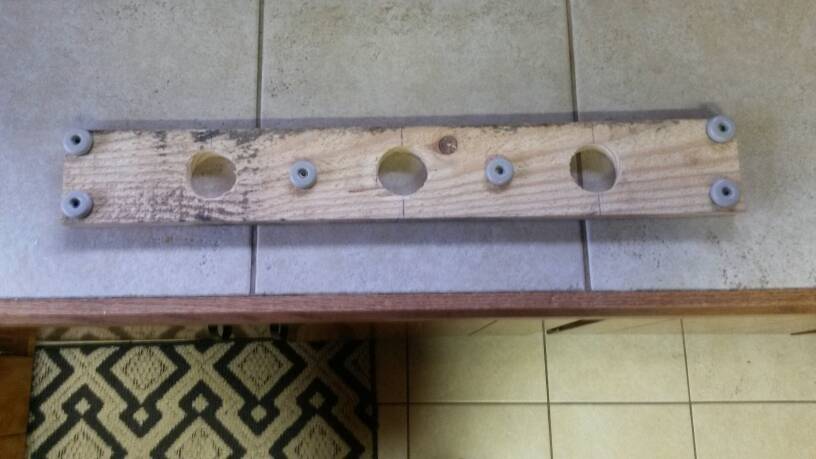
I've decided to just keep it like the original BA. so I'll have only an internal overflow. I'm drilling 1" bulkheads. I've made a ghetto template (should do the job still) the top of my holes are measuring 1 3/4 from the top of the glass. It's a trimmed tank but I've measured from the inside lip on the trim to get a better (top of glass) measurement.

Any suggestions before I put the bit to the glass?

0d6ef4e564e060c195bf34ecee1f249c.jpg


The pads are to keep it off the glass so I can allow water to get to the bit.
 
I've decided to just keep it like the original BA. so I'll have only an internal overflow. I'm drilling 1" bulkheads. I've made a ghetto template (should do the job still) the top of my holes are measuring 1 3/4 from the top of the glass. It's a trimmed tank but I've measured from the inside lip on the trim to get a better (top of glass) measurement.

Any suggestions before I put the bit to the glass?

The pads are to keep it off the glass so I can allow water to get to the bit.

- minimum safe distance is 1 diameter between glass edges (most 1" bulkheads are a bit less than 1 ¾", so this should be fine)
- Plan out your overflow with the elbows, etc before drilling. You need also need to worry about the position of the upturned emergency overflow. If it's above the top of the tank it won't do you any good!
 
Yea I remember reading that but I didn't know what size his tank was.

edit: This is just for the overflows. The return hole is 1-1/2

I am deciding between a reeflo super dart which would give me about 3000gph, a Vectra L1 about 2000gph or a RE RD3 230 which would give a lot but I would dial it down to about 2500 or so.

I guess if I keep the 1" bulkheads I would have to dial it down to 2000.

Maybe - I don't know how much flow you could get with 1" bulkheads and 1.5" plumbing. If you're hoping for 3000 gph, I'd check to see if they can make the holes larger. Also, post a new thread with your question - you might get more people looking at it as a separate thread than under the BA thread.
 
I'm 99.9% sure my glass is not tempered after testing it with a Polarized lense and lcd.

With that being said, I didn't want to build the actual overflow before drilling just in case it decides to shatter.

I've mocked plumbed the 1" elbow facing upwards and it lands just a tad above the inside trim tab marking the top of glass but I still have about 1/2" before going over everything. So I think I'll be clear of my emergency not doing any good. Should I drop my holes further down?
 
I'd move it down a bit - I learned to use the inner lip of the frame as the edge of the glass and assume that the seal wasn't perfect (and the tank would therefore leak) above that.
 
sounds good, ill move it down 1/2 inch so no matter what i shouldn't be over the glass or dealing with an imperfect seal under that frame. I cant see an 1/2" making to big of change with the overflow being that much further down inside the tank. Thanks for the suggestions :beer:
 
I have a 48x28x24 tank with a overflow centered on the back wall. I have 3 drains and 1 return.

How high should the drains be in the overflow?
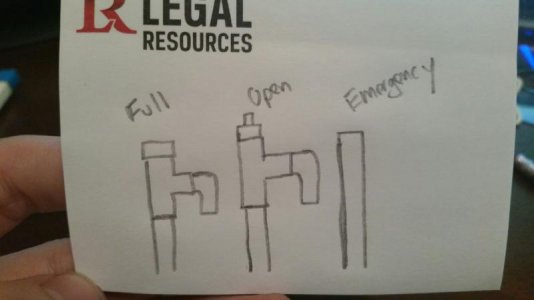
1) Emergency standpipe
2) Siphon standpipe
3) Open channel standpipe

I guess I am asking how many inches down from the top of the overflow do I place the top of the standpipes? I am having trouble finding info for bean animals in a normal box overflow.
 
I have a 48x28x24 tank with a overflow centered on the back wall. I have 3 drains and 1 return.

How high should the drains be in the overflow?
1) Emergency standpipe
2) Siphon standpipe
3) Open channel standpipe

I guess I am asking how many inches down from the top of the overflow do I place the top of the standpipes? I am having trouble finding info for bean animals in a normal box overflow.

Many would consider a 'normal' box to have holes on the side ;)

There are no fixed rules as to depth; it depends on your setup, flow, pipe sizes, etc. Below are some general guidelines:

Siphon Standpipe:
For a full-depth overflow like you have, the siphon can be pretty much anywhere but there are a few things to keep in mind. If you have it too lose to the top, it will create a vortex and entrain air from the surface. This can occur even if you put an upside down 'U' on it so the opening faces down, it will just occur at a deeper level if it is facing up.

The higher you have it in the box, the more dead space you will have in the bottom of the box where water will tend to stagnate. The lower you have it in the box, the larger the volume of water that will drain down to the sump when the power is cut. Having it dow lower also gives you room to mount the durso-elbows on the open channel pipe.

In most side-mounted or coast to coast overflows, people place the downturned elbow fairly close (~¾") to the bottom of the overflow to minimize the risk of fish or snails getting into it. Frequently, there isn't enough room to do this in a full depth overflow. Maintenance is also more difficult simply because of the difficulty reaching all the way to the bottom.

Open Channel Pipe:
This ultimately determines the height of the water in the overflow box, so you should have it close to the top as to minimize splashing of the water as it flows into the overflow.

Dry Emergency Pipe:
This needs to be above the durso and below the lip of the frame. Typically on startup, the water level rises above the open channel to the level of the emergency and stays there a bit until the air is purged from the siphon. At this point, the siphon capacity increases and the water level drops to its steady state level. This process takes extra water from the return chamber in the sump. If your return chamber is smaller than the volume of water needed to raise the level up to the emergency pipe, you return pump will start to suck air and pump the display full of bubbles. Depending on the size of your display and size of your return chamber, having it lower than or at the same level as the overflow may be desirable.

 
Many would consider a 'normal' box to have holes on the side ;)

There are no fixed rules as to depth; it depends on your setup, flow, pipe sizes, etc. Below are some general guidelines:

Siphon Standpipe:
For a full-depth overflow like you have, the siphon can be pretty much anywhere but there are a few things to keep in mind. If you have it too lose to the top, it will create a vortex and entrain air from the surface. This can occur even if you put an upside down 'U' on it so the opening faces down, it will just occur at a deeper level if it is facing up.

The higher you have it in the box, the more dead space you will have in the bottom of the box where water will tend to stagnate. The lower you have it in the box, the larger the volume of water that will drain down to the sump when the power is cut. Having it dow lower also gives you room to mount the durso-elbows on the open channel pipe.

In most side-mounted or coast to coast overflows, people place the downturned elbow fairly close (~¾") to the bottom of the overflow to minimize the risk of fish or snails getting into it. Frequently, there isn't enough room to do this in a full depth overflow. Maintenance is also more difficult simply because of the difficulty reaching all the way to the bottom.

Open Channel Pipe:
This ultimately determines the height of the water in the overflow box, so you should have it close to the top as to minimize splashing of the water as it flows into the overflow.

Dry Emergency Pipe:
This needs to be above the durso and below the lip of the frame. Typically on startup, the water level rises above the open channel to the level of the emergency and stays there a bit until the air is purged from the siphon. At this point, the siphon capacity increases and the water level drops to its steady state level. This process takes extra water from the return chamber in the sump. If your return chamber is smaller than the volume of water needed to raise the level up to the emergency pipe, you return pump will start to suck air and pump the display full of bubbles. Depending on the size of your display and size of your return chamber, having it lower than or at the same level as the overflow may be desirable.


thank you!

Here is what I am thinking. I am using 1 '' piping so I would use a Tee and a elbow to create the standpipe. I will cap the full siphon, then cap and drill a hole for the airline for the open channel. How does this look? Should I just use a coupler to join the Tee and elbow?
 

Attachments

  • 20150829_233731.jpg
    20150829_233731.jpg
    24.3 KB · Views: 5
thank you!

Here is what I am thinking. I am using 1 '' piping so I would use a Tee and a elbow to create the standpipe. I will cap the full siphon, then cap and drill a hole for the airline for the open channel. How does this look? Should I just use a coupler to join the Tee and elbow?

Assuming you have the room in the overflow that should work fine. Not sure what you mean by a coupler to join the tee and elbow. Usually people either use a short piece of pipe or get a street/spigot elbow.

For the siphon standpipe, you can either use a tee, or 2 elbows. I would just leave the connection between the pipe and the tee/elbow unglued. Since it will be under water, it doesn't matter if it's 100% tight or not, and then you can take it off for cleaning if necessary. Bean used the tee with a threaded cap to allow for cleaning, but if you can slip the top assembly off the pipe, that won't be necessary.

Another idea/suggestion - leave the internal bulkhead connection unglued, or use a threaded connection so you can easily disconnect the internal section of pipe in case a snail or something gets stuck. If you leave a slip connection unglued, be aware that it may have a slow leak that allows the entire overflow contents to drain into the sump, so if this will be an issue I would recommend gluing it for safety's sake.
 
Back
Top