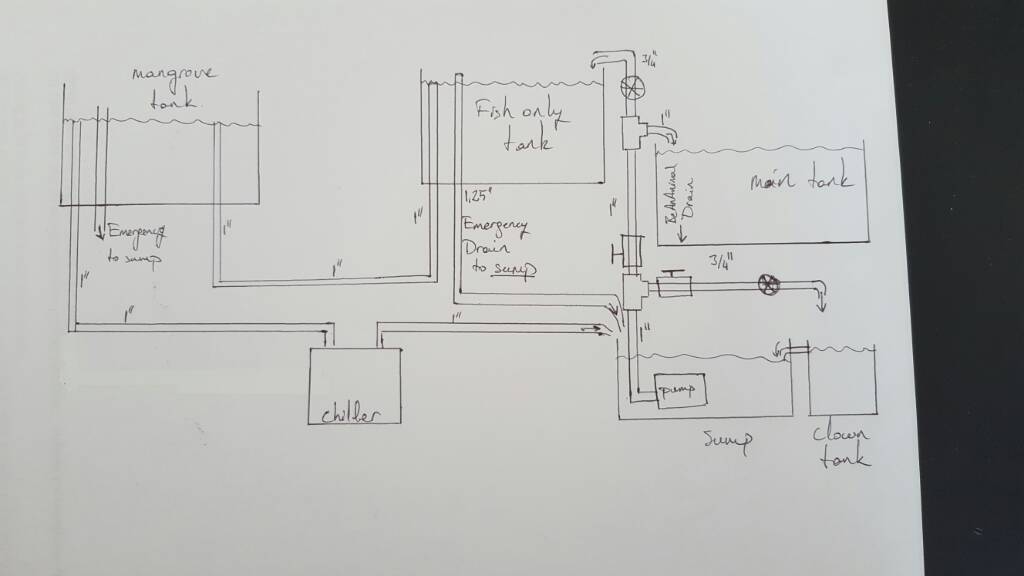
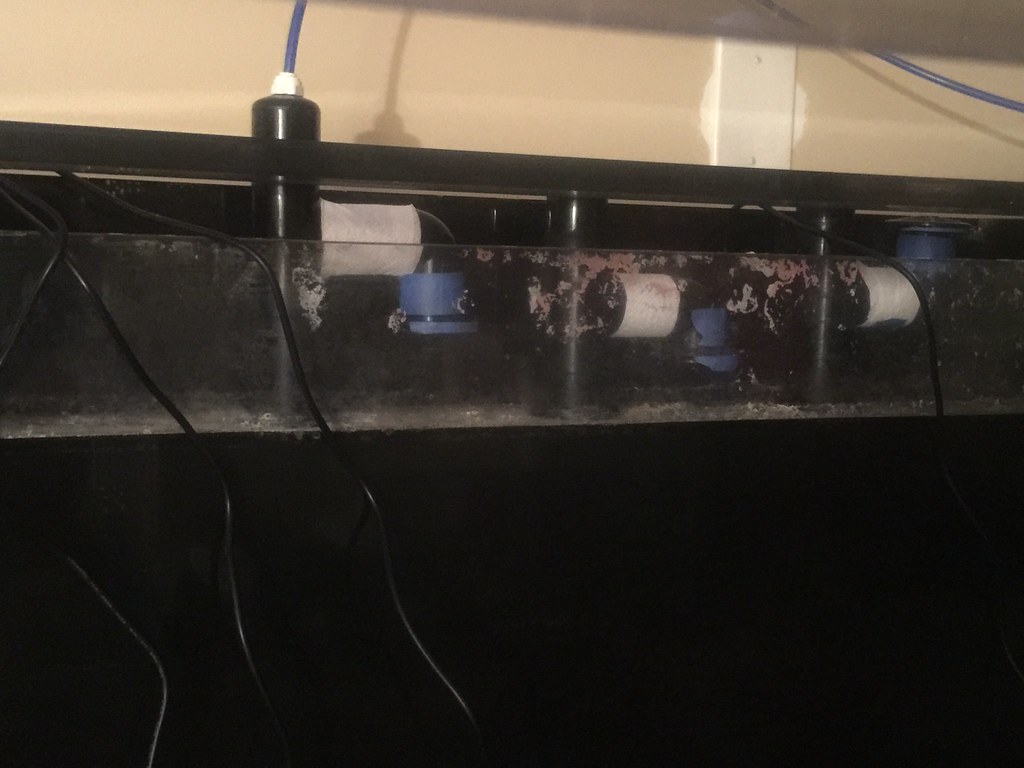
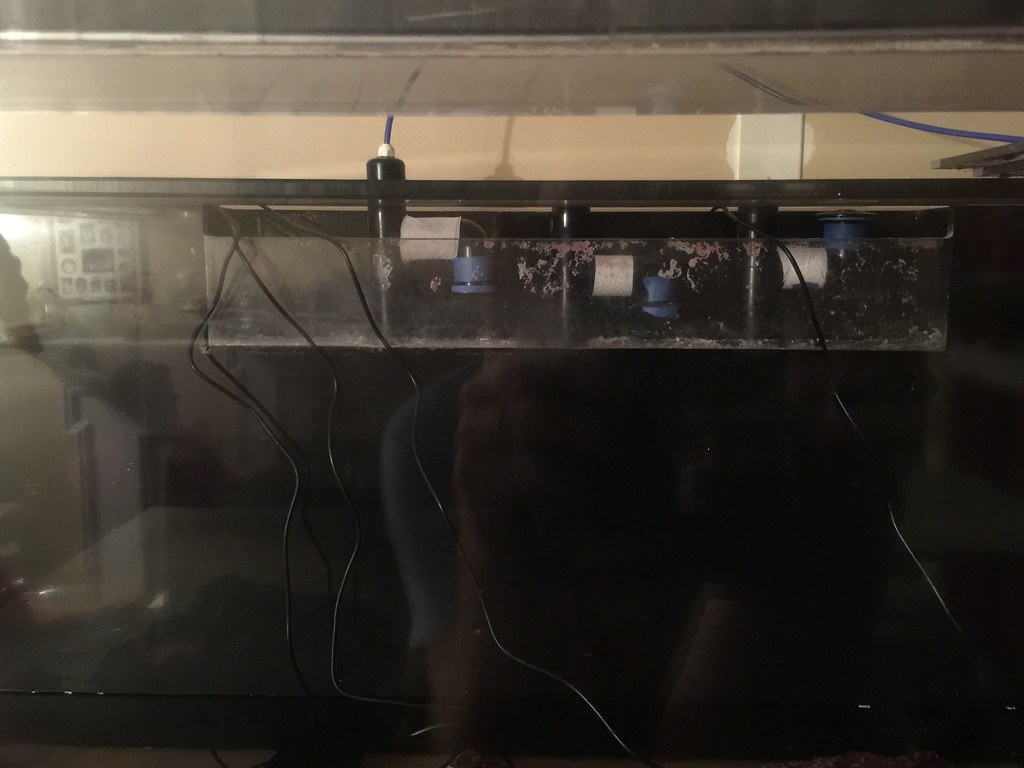
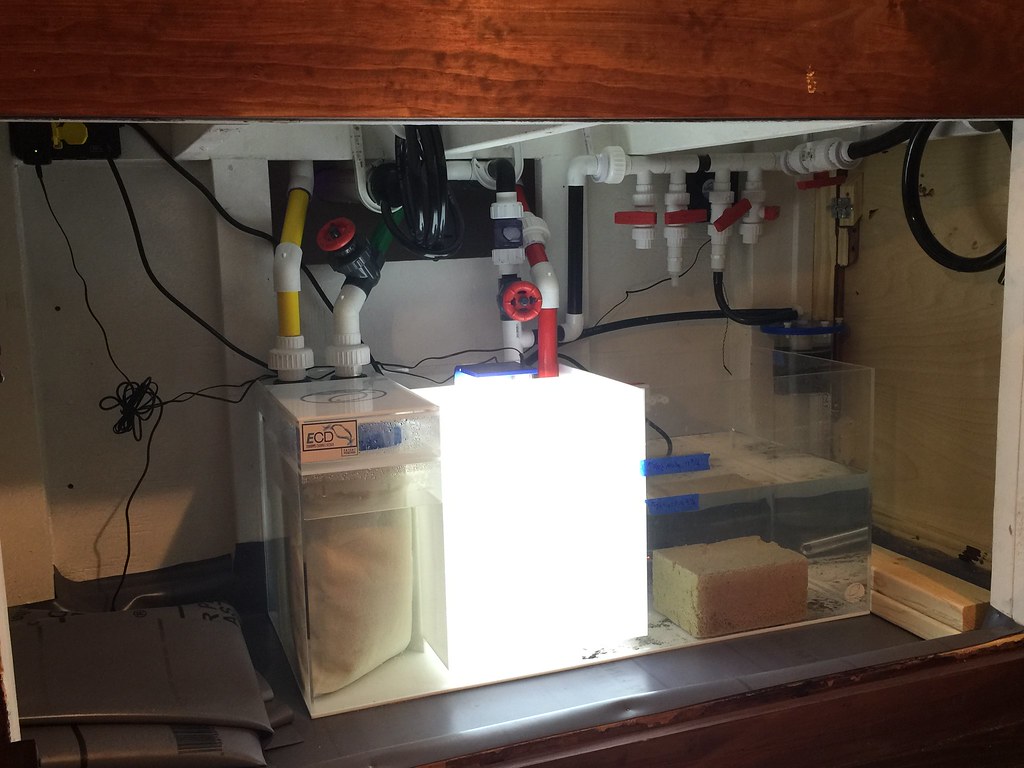
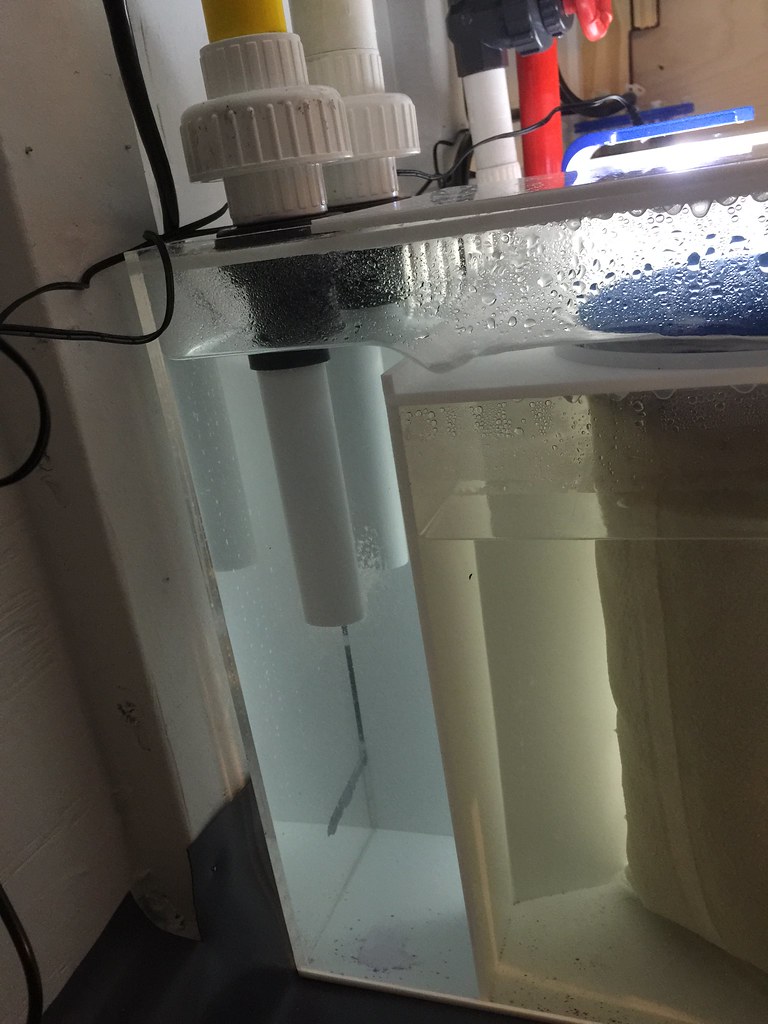
Yes - bean's original setup was with a coast to coast and had the siphon and open channels at the same height. An external overflow box allows for some changes in the configuration.
The siphon can be anywhere at or below the open channel level. (I suppose it could be above, but you may encounter difficulties starting up, and there's no reason I can think of to do so.) There is no reason it can't be 12" below the open channel if your overflow allows; it just needs to stay submerged and maintain a full siphon.
The open channel is at or above the siphon level. As Jason said above, on startup the water level rises significantly higher and approaches the level of the emergency. The typical startup sequence is:
- Pump turns on. Water starts to flow and the water level in the overflow rises.
- As the water rises, the siphon channel initially has air in it, reducing the amount of water it can carry. As a result, the water level continues to rise above the normal operating level.
- The open channel carries the rest of the water. Air in the open channel also limits its capacity and the water level generally continues to rise (this depends on the total flow and the pipe capacities.)
- The water approaches the emergency drain level, or possibly goes over and stays at this level until the air is purged from the siphon.
- At this point the siphon capacity increases and drains the water out of the overflow down to its steady state level.
A couple of other details to note:
If the air intake for the open channel gets occluded, it converts to an unrestricted siphon with no gate valve and will rapidly drain the overflow box until it entrains enough air to break the siphon. If the open channel and siphon are at the same level, the siphon will also entrain air. The water level will increase and the system will never start up properly. This is part of the reason the air line is placed
above the level of the emergency drain in Bean's original design. Doing so keeps the water level stable at a higher level until air is purged from the siphon.
This placement also means that in case of failure and rising water levels, the order of backup operation is:
- open channel takes more water
- dry emergency kicks in
- open channel airline tubing occludes and converts the open channel to a full siphon.
The setup that BRS uses has a potential flaw in that since the air intake for the open channel is a simple hole, it will occlude and convert to a siphon before the dry emergency kicks in. If the siphon is at a lower level than the open channel, the water may not drop enough to cause an issue and the siphon will still purge air as it should, but that depends on the flow and pipe characteristics. For their setup, the order of backup operation is:
- open channel takes more water
- open channel opening occludes and converts the open channel to a full siphon.
- dry emergency kicks in