
You are using an out of date browser. It may not display this or other websites correctly.
You should upgrade or use an alternative browser.
You should upgrade or use an alternative browser.
Silent and Failsafe Overflow System
- Thread starter JohnL
- Start date

Hey guys! I'm doing a 29 gallon with a 29 gallon sump and would like to set up a bean animal. Would this box work for it?
http://www.ebay.com/itm/800-gph-LOW...912999?hash=item2eddeed727:g:9HcAAOSwbqpT59Y6
Or should I just go with a normal glass-holes overflow. I want to be fancy with this stuff, but I feel Kermit the Frog is more accomplished in technical skills like this!
http://www.ebay.com/itm/800-gph-LOW...912999?hash=item2eddeed727:g:9HcAAOSwbqpT59Y6
Or should I just go with a normal glass-holes overflow. I want to be fancy with this stuff, but I feel Kermit the Frog is more accomplished in technical skills like this!
Last edited:

C Dog
New member
I am wanting to make a coast to coast over flow out of glass. The tank is a 24 x 24 x 24. I have a few questions. I plan on making a interior coast to coast overflow, drill 2 bulkheads and then make a exterior overflow box for the 3 drains to the sump. The reason why I am making a box outside of the tank is because I don't want a 3-4" overflow box inside the tank for the bulkheads and elbows.
1. What size should the interior overflow be? I was thinking 23 1/2" L x 5 3/4" T x 1 3/8" deep.
2. How L x W X T should the exterior overflow box be?
3. How thick of glass do I need for the interior AND exterior overflow boxes?
4. What size bulkheads should I use. I probably run a 1,200 GPH pump....
5. Should the weir be angled or straight up and down? If it's angled would it be less noise?
1. What size should the interior overflow be? I was thinking 23 1/2" L x 5 3/4" T x 1 3/8" deep.
2. How L x W X T should the exterior overflow box be?
3. How thick of glass do I need for the interior AND exterior overflow boxes?
4. What size bulkheads should I use. I probably run a 1,200 GPH pump....
5. Should the weir be angled or straight up and down? If it's angled would it be less noise?

sleepydoc
Team RC
Hey guys! I'm doing a 29 gallon with a 29 gallon sump and would like to set up a bean animal. Would this box work for it?
http://www.ebay.com/itm/800-gph-LOW...912999?hash=item2eddeed727:g:9HcAAOSwbqpT59Y6
Or should I just go with a normal glass-holes overflow. I want to be fancy with this stuff, but I feel Kermit the Frog is more accomplished in technical skills like this!
Either one should work fine
sleepydoc
Team RC
Long enough to be a coast to coast. The height depends on where your holes are drilled. The depth should be enough that you can get in to clean it and/or attach any bulkheads you may need.I am wanting to make a coast to coast over flow out of glass. The tank is a 24 x 24 x 24. I have a few questions. I plan on making a interior coast to coast overflow, drill 2 bulkheads and then make a exterior overflow box for the 3 drains to the sump. The reason why I am making a box outside of the tank is because I don't want a 3-4" overflow box inside the tank for the bulkheads and elbows.
1. What size should the interior overflow be? I was thinking 23 1/2" L x 5 3/4" T x 1 3/8" deep.
Wide and tall enough to contain your plumbing, wide & deep enough to let you drill the holes without the glass cracking (3~4x hole diameter deep, 7-9x diameter wide2. How L x W X T should the exterior overflow box be?
¼"/6mm is usually sufficient.3. How thick of glass do I need for the interior AND exterior overflow boxes?
1" is plenty for the siphon channel but 1 ¼" might be better for the open channel4. What size bulkheads should I use. I probably run a 1,200 GPH pump....
Either5. Should the weir be angled or straight up and down? If it's angled would it be less noise?
joshua_00030
New member
That's pretty awesome! Gonna have to reread it several times
ClownsRCoo
New member
With an external overflow box that has all holes drilled in the bottom and has returns coming up through the bottom too does everyone glue the returns into the slip bulkheads and leave the drain pipes up top loose? Can I get away with not glueing the returns into the bulkheads? They fit in there pretty tight.


sleepydoc
Team RC
With an external overflow box that has all holes drilled in the bottom and has returns coming up through the bottom too does everyone glue the returns into the slip bulkheads and leave the drain pipes up top loose? Can I get away with not glueing the returns into the bulkheads? They fit in there pretty tight.
General rule is to glue any fitting that causes a problem if it leaks. The only concern with the internal fittings leaking is that they may allow more water to drain down to the sump, essentially emptying the entire box. If your sump can handle that then it should be fine.
ClownsRCoo
New member
On my other tanks I don't normally glue the drain pipes into the inside of the box. On this new tank I should have plenty of room too to be able to drain the overflow into the sump as well. I have never had the returns go up and through the overflow like this as well and wasn't sure if gluing them was a must. I fed don't want them to come shooting off. I wasn't sure how much pressure these hobby pumps out out anyway on the plumbing. After it gets all the way to the return bulkheads I wouldn't imagine it's much. The plumbing takes some finessing to get in there right and I'm worried the cement will set before I can get them positioned just right.
ClownsRCoo
New member
Maybe I should just swap those bulkheads out with threaded ones then to make it easier
MarineLife1113
New member
How do i create a new post?

woodnaquanut
Active member
With an external overflow box that has all holes drilled in the bottom and has returns coming up through the bottom too does everyone glue the returns into the slip bulkheads and leave the drain pipes up top loose? Can I get away with not glueing the returns into the bulkheads? They fit in there pretty tight.
I would not glue in the returns.
ClownsRCoo
New member
Silent and Failsafe Overflow System
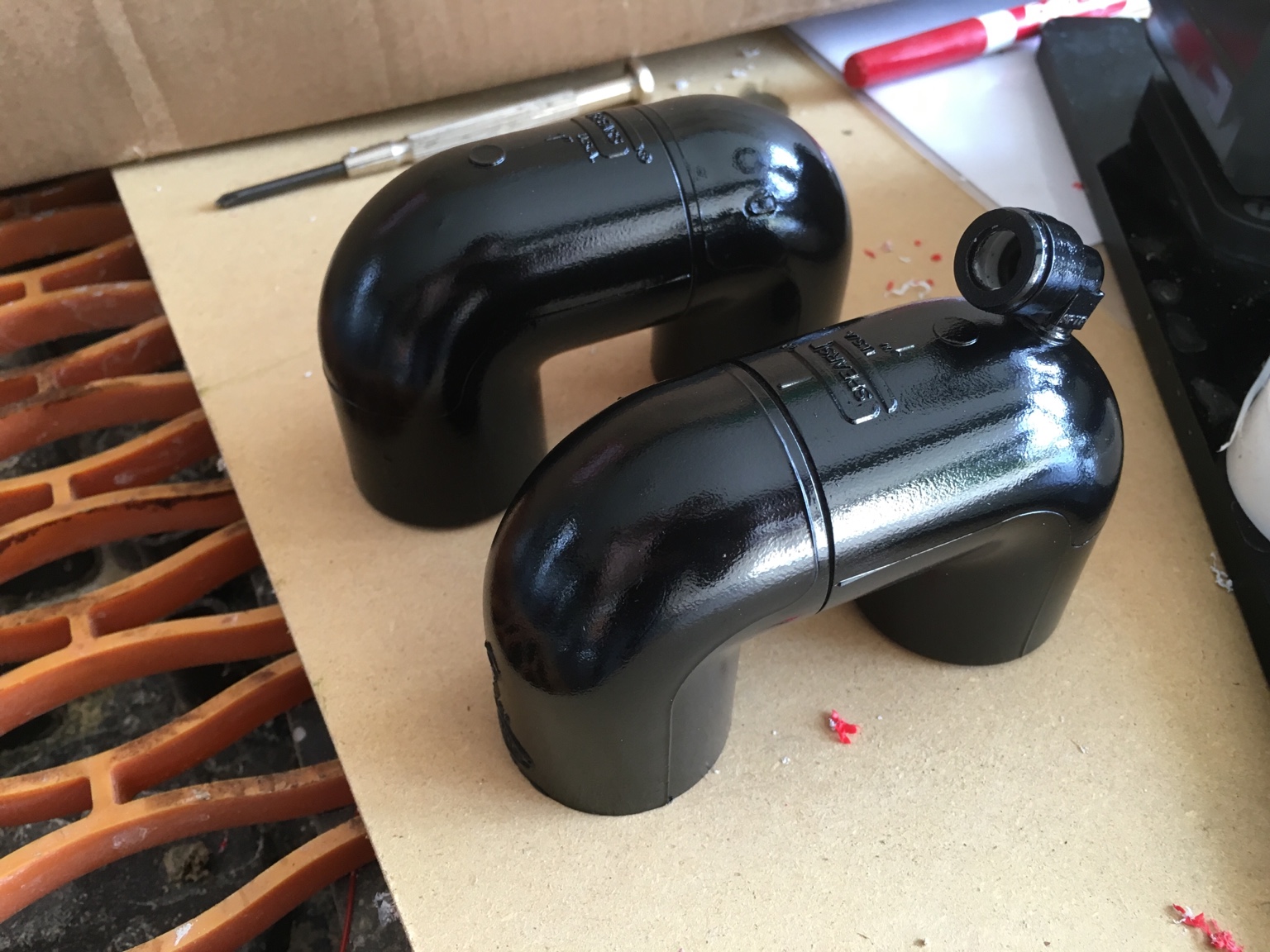
I got 1 of the drains dry fitted. Does this look too restrictive?


I got 1 of the drains dry fitted. Does this look too restrictive?


Last edited by a moderator:
sleepydoc
Team RC
I got 1 of the drains dry fitted. Does this look too restrictive?
I think it would be hard to do it with fewer fittings from what I can see. The other way would be to use flex PVC, but I doubt it would be worth it. I think we over-obsess about getting every last bit of flow out of our pumps. The difference between 1000 and 1100 gph in terms of coral growth & health is probably impossible to tell.
ClownsRCoo
New member
I'm thinking so too. I have an oversized pump too (Vectra L1) so I can always just crank it up higher
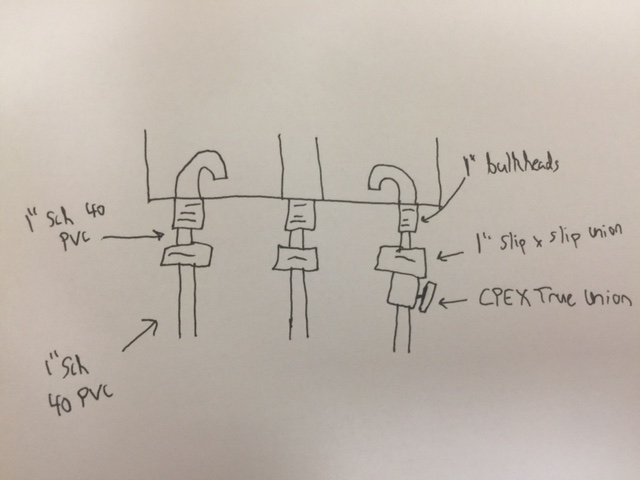
Hey guys, this is my plumbing layout for the bean animal for my 29 gallon aquarium. The overflow is 800 gph.
This is a bit embarrassing because I'm not really technical when it comes to stuff like this. Will a union go directly into the bulkhead, or do I need to have some PVC in between the union and the bulkhead? Can I use a threaded union to attach to the bulkhead? Like I said, embarrassing.
Either way, please take a look at my plumbing plan and let me know how it looks. I appreciate all the help I can get!
Attachments
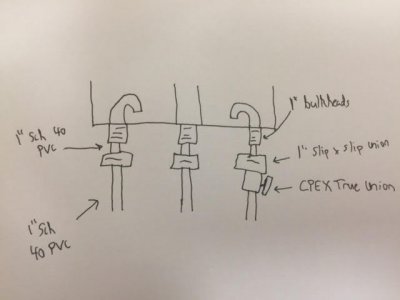
Hey guys, this is my plumbing layout for the bean animal for my 29 gallon aquarium. The overflow is 800 gph.
This is a bit embarrassing because I'm not really technical when it comes to stuff like this. Will a union go directly into the bulkhead, or do I need to have some PVC in between the union and the bulkhead? Can I use a threaded union to attach to the bulkhead? Like I said, embarrassing.
Either way, please take a look at my plumbing plan and let me know how it looks. I appreciate all the help I can get!
Nevermind, I figured it all out.
I read the entire first 40 page portion of this thread, then started reading this 300 page portion, but I don't think I'll make it through all 8000+ posts in my lifetime. So I searched this thread, and all of RC, for similar situations to mine, found a few, but none that specifically answers my question ... so here I am.
I am planning a 220g tank with a bean overflow and a 180g sump in the basement. I have about 11' of vertical drop, and about 14' of horizontal (which can be sloped in the basement). I am trying to design for flow through the sump at about 1200-1400gph.
I understand the issues with horizontal runs and the siphon channel. I used the calculator on bean's page to find that 1" pipe and my vertical drop will give me a theoretical siphon of almost 4000gph, and 1.25" pipe bumps that to about 6000gph.
Now, my questions:
1. Given that 1" will flow at least 2x what I need, is it better to use this smaller pipe for the siphon vs. 1.25"? Is there a potential benefit to the smaller pipe because it will help overcome the issues related to my horizontal runs (less air in the smaller pipe means easier to start siphon?).
2. With a siphon that is 2x the desired flow, any idea how much tuning is available via the gate valve? Might I find that I need to run the gate almost wide open? That would push me to run the larger pipe, but then am I losing the potential benefit of the easier to start siphon? How much wiggle room do I need to leave myself?
3. Does anyone have practical experience with around 11' vertical drop and 14' horizontal - what size pipe did you use for your siphon, are you happy with what you have?
Thanks for reading ...
Tom
I am planning a 220g tank with a bean overflow and a 180g sump in the basement. I have about 11' of vertical drop, and about 14' of horizontal (which can be sloped in the basement). I am trying to design for flow through the sump at about 1200-1400gph.
I understand the issues with horizontal runs and the siphon channel. I used the calculator on bean's page to find that 1" pipe and my vertical drop will give me a theoretical siphon of almost 4000gph, and 1.25" pipe bumps that to about 6000gph.
Now, my questions:
1. Given that 1" will flow at least 2x what I need, is it better to use this smaller pipe for the siphon vs. 1.25"? Is there a potential benefit to the smaller pipe because it will help overcome the issues related to my horizontal runs (less air in the smaller pipe means easier to start siphon?).
2. With a siphon that is 2x the desired flow, any idea how much tuning is available via the gate valve? Might I find that I need to run the gate almost wide open? That would push me to run the larger pipe, but then am I losing the potential benefit of the easier to start siphon? How much wiggle room do I need to leave myself?
3. Does anyone have practical experience with around 11' vertical drop and 14' horizontal - what size pipe did you use for your siphon, are you happy with what you have?
Thanks for reading ...
Tom
Similar threads

- Replies
- 3
- Views
- 298
- Replies
- 2
- Views
- 2K

- Replies
- 4
- Views
- 1K

