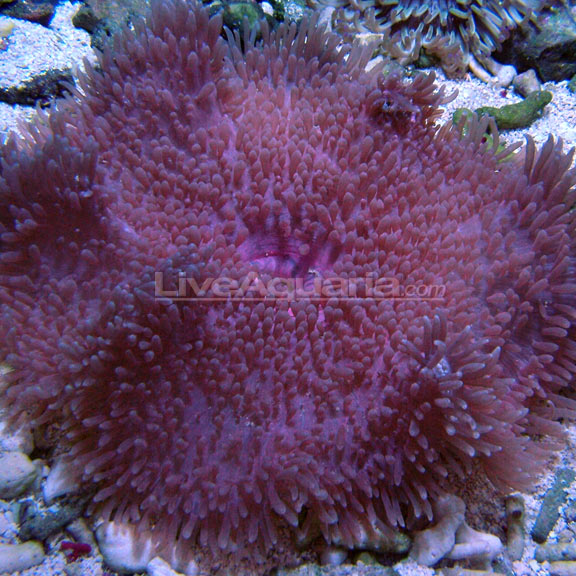
Upside down anemone

SpyderSpy6

New member
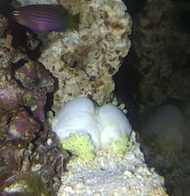
I have a small sebae anemone in my aquarium. I recently added it about 4 weeks ago. It found a spot and was sitting their nicely for a few weeks and then tonight when my wife came home she called me and said that he looked upside down.

Is it common for an anemone to turn itself over? I was thinking maybe it found something to eat, but I'm not sure.
 
It is not normal, and only common in anemones that are in poor shape.

Any chance of getting a picture of it? (( Or at least what color is it? ))

What size tank?
What lights?
How long has the tank been set up?
Water parameters -- with numbers.
 
I do have a picture... The last upload did not work though. Let me try again...
 

Attachments

  • upsidedown.png
    upsidedown.png
    95 KB · Views: 1
Tank parameters...

78 degrees
Salinity: .025
ph: 8.3
Alk: 3 meg/L
dKH: 9
Mg: 1280
Ca: 430
Ammonia: hardly detectable
Nitrate & Nitrate: maybe .1 ppm (both come out really close)

The tank is only a 20 gallon that I am running before I set up a 120 due to a move in the near future. So everything in this system will be going in to a much larger system in about 4 months. The tank has been running for just about 8 months. Lighting is a PC 96W daylight bulb with 2 current 20W actinic lights. The 96W runs 8-10 hours per day. I alternate it to keep algae down.

The anemone has been doing fairly well although I have recently read that they can struggle in small unestablished aquariums and now think I may have rushed this. The color of the anemone has been extremely vibrant, nice bright greenish white tentacles with purple tips. When my wife turned it over she said nothing was under it and it looked normal again.

I'm more concerned that it had been in the same spot for a while and then all of a sudden seemed to have lost its grip and flipped over. The flow has not changed and nothing has been done to the aquarium except for a couple frag additions and water changes in the past month.

Thanks for the help!
 
From what I could tell (( the picture is a bit on the small size )), it is an H. Crispa -- looks either bleached and/or the last stages of being dyed (( seems to have a slight yellow tint to it )). Unfortunately, it is fairly common for H. Crispas to be sold in this condition, but it is a condition that should be avoid.

Lights are on the low side, and wouldn't work long term (( and actually the size of the tank wouldn't either, H. Crispas get HUGE -- the last one I had took up 1/3 of my 75 )). But, the biggest concern right now is the condition of the anemone. Will have to make sure your parameters stay spot on, run some fresh carbon, and the like.

If this one doesn't make it (( and to be honest, I would be surprised if it does, nothing against you, just the history of H. Crispas in this condition )), I would just wait until the other is ready to go before getting another one. If you go for an H. Crispa again avoid any white and/or yellow ones.
 
Well that sucks! I was told that they were suppose to look yellowish green. Hopefully he will come around. What should it look like when it's completely happy?

I have carbon running and I'm fairly religious about my water changes. Hopefully it will come around.
 
And unfortunately, most people in LFS tell people thats how they look because they dont know any better... 90% of all H. crispas I see in the trade are either horribly bleached or dyed.
 
What the others are saying is correct when it comes to your sebae.
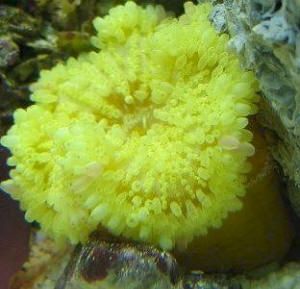
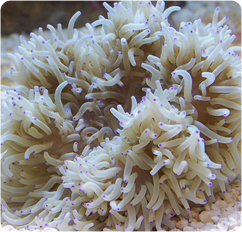
It is definitely very bleached and may have been dyed at one time.

Please take the information people are giving you here to your LFS and inform them they anemones they are getting in are bleached and unhealthy and ask them to get the dark colored ones in.


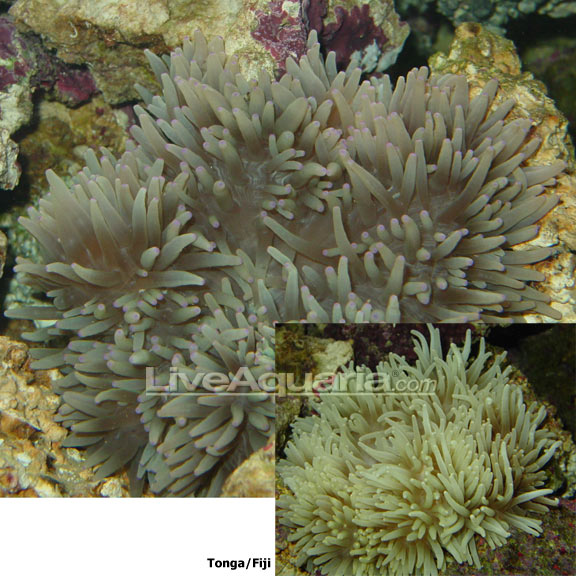
I have compiled a list of images for you to show what is healthy and what is not.

Unhealthy BLEACHED sebeas: Avoid as best as possible.
SebaeAnemone1.jpg

sebae_anemone.jpg

Sebaeinquarantine.jpg

ddembachclarkiclown_400.JPG


VERY unhealthy DYED sebaes: AVOID AND RUN AWAY IN THE OTHER DIRECTION
EDFP.h1.jpg

34084364-80822214200.jpg

34084364-80822214612.jpg

34084364-80822214002.jpg

wcclownsabae_400.JPG
 
Healthy Sebae Anemones:

ClarkiiAndSebaeAnemone_300px.jpg

Sebae_Anemone_ps.jpg

lg-81481-anemone.jpg

lg-81039-anemone.jpg

Heteractis_crispa-7583.jpg


Now, bringing a sebae back to health can be done, but it is not easy. At least 80% of the time the anemone is going to die because the owner doesn't have the right equipment or system to do it.

When I purchased my sebae back on June 30th, 2010 It was in extremely rough shape. It was the size of a toonie or silver dollar. White with purple tips and the tentacles were pulling in on themselves.
sabae06-30-2010.jpg


I placed it in my tank, a 58g on a rock about 8-9 inches from the surface of the water to allow it to get as much lights as possible. My lighting is a 6x39w Tek T5 unit.
It took more than 48 hours for it to adhere itsself to my rock work.
I fed the anemone every other day at first and when the color started coming back I backed it off a little bit.
As of Oct 27th, 2010 the anemone is twice the size it was and half of it's color has returned. It still has a lot of healing to go.
sebaewjigsaw10-20-2010.jpg


This is why we are saying you do not have the right set up to keep this anemone healthy and the fact it has let go and flipped over is an indication of this.

I would suggest that you get either a 2-4 bulb t5 unit with individual reflectors. The later one better one. Or, a par38 led bulb to give this anemone the light it needs.
Additionally, you will need to feed this anemone meaty foods every other day for a good month.
Because you will need to feed this anemone so often, you will also need to have a skimmer on this tank to keep it as clean as possible, or do daily water changes.

Once this anemone starts growing, it can grow fast and can get up to and over 20 inches in size.

I hope this information helps you.

 
Back
Top