
You are using an out of date browser. It may not display this or other websites correctly.
You should upgrade or use an alternative browser.
You should upgrade or use an alternative browser.
Anemone ID #2
- Thread starter bradleym
- Start date

elegance coral
They call me EC
LOL. I still say it's M. doreensis. Look at the verrucae in post #14, then look at the verrucae in post #11. Those are doreensis verrucae. Not crispa verrucae. look how the light shines through the thin delicate tissue of the anemone in the second pic. Light doesn't shine through the thick leathery tissue of crispa like that. Even the way it holds its tentacles makes it look like doreensis.
I hope you're feeding it and acclimating it to bright lights. We need to see this thing once it's happy, healthy, and colorful.
Look at the verrucae in post #14, then look at the verrucae in post #11. Those are doreensis verrucae. Not crispa verrucae. look how the light shines through the thin delicate tissue of the anemone in the second pic. Light doesn't shine through the thick leathery tissue of crispa like that. Even the way it holds its tentacles makes it look like doreensis. I hope you're feeding it and acclimating it to bright lights. We need to see this thing once it's happy, healthy, and colorful.

bradleym
Premium Member
LOL. I still say it's M. doreensis.
I hope you're feeding it and acclimating it to bright lights. We need to see this thing once it's happy, healthy, and colorful.
Fair enough. I can't say much for the ID as I have no prior experience with either species.
It has been in this tank for 2 months, so I'd say it's light acclimated, and it gets target fed twice a week plus daily scooping up all the excess from feeding my clowns, so I'm pretty confident that its well fed also.
It has grown more than pictures indicate. In the first picture it is 4-6 inches across. In the most recent, 12+ inches. And the color has noticeable deepened from grey/tan to reddish purple.

wicked_NaCl_h2o
New member
Looks like a H.Crispa to me. It has too many tentacles, and the tentacles aren't long enough to be M.doreensis.
In the first pics I assumed it was a mag. Then, with mounting evidence, I realized it was not a mag but a sand dweller. I recently went to a shop here in LA that had what looks like the same anemone. I saw it and thought it was a mag. Then I noticed it was digging in. I asked the staff person if I could put my hand in the tank, I wanted to see the column. It had adhesive verrucae and a leathery, characteristically crispa column. I immediately thought about this thread and just how much this anemone is doubling as a mag, though it's a crispa.
Last edited:
bradleym
Premium Member
Update - Lots of pics
Update - Lots of pics
Ok, so this one came to the forefront of my attention so I thought I would update it some more. I cleared all the caulerpa and most of the rock in front of this anemone to help get a better view of it. If there is some angle or view that would be helpful in IDing this anemone just ask and I'll get a pic tomorrow. One thing to remember here is that I don't have any actinics over the tank, so the color it appears may be different than in most reef tanks. Here's what I got today:
A pic of it with its immediate surroundings so you can get an idea of how it's situated:
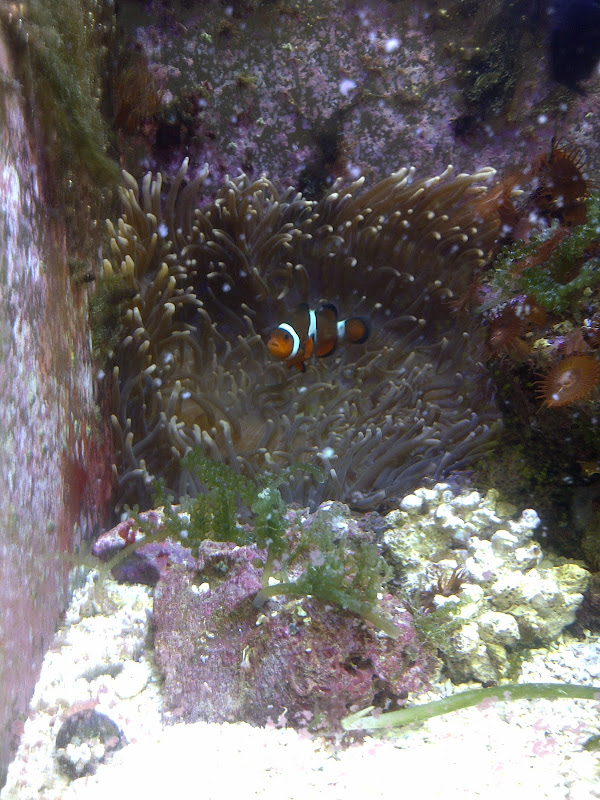
Some random pics with the clown that has recently found it worth while:
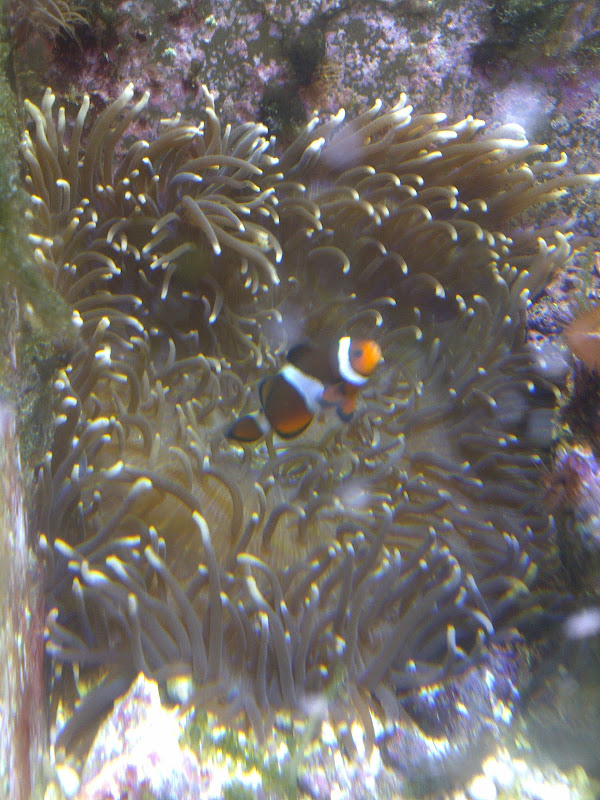
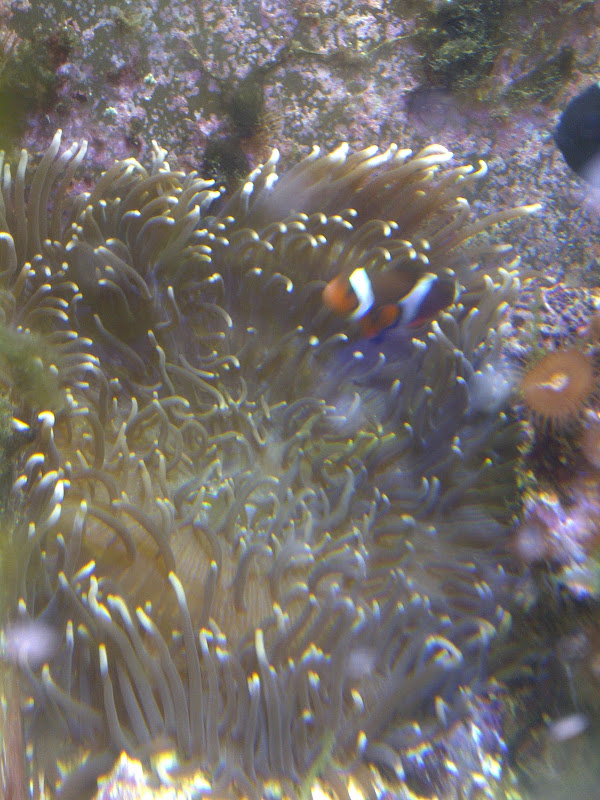
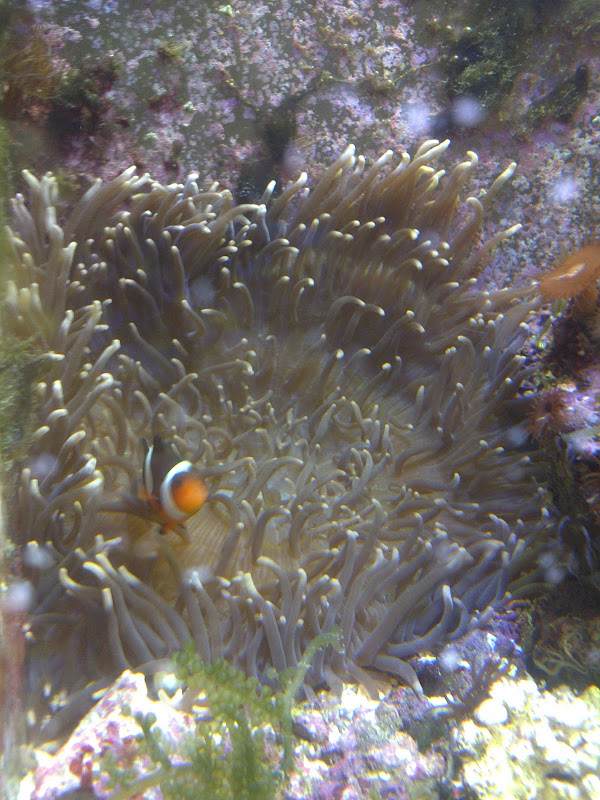
The underside:
The last pic was taken before I moved everything around, but it wouldn't curl up again today since I had done the moving. If you need a better shot of the underside I will take a pic tomorrow when I feed it. Just let me know if it would be helpful. Thanks.
Update - Lots of pics
Ok, so this one came to the forefront of my attention so I thought I would update it some more. I cleared all the caulerpa and most of the rock in front of this anemone to help get a better view of it. If there is some angle or view that would be helpful in IDing this anemone just ask and I'll get a pic tomorrow. One thing to remember here is that I don't have any actinics over the tank, so the color it appears may be different than in most reef tanks. Here's what I got today:
A pic of it with its immediate surroundings so you can get an idea of how it's situated:
Some random pics with the clown that has recently found it worth while:
The underside:
The last pic was taken before I moved everything around, but it wouldn't curl up again today since I had done the moving. If you need a better shot of the underside I will take a pic tomorrow when I feed it. Just let me know if it would be helpful. Thanks.
elegance coral
They call me EC
The anemone in this link is H. crispa. Compare the upper collumn of this anemone to the one in this thread. http://www.google.com/imgres?imgurl...age=2&ndsp=15&ved=1t:429,r:4,s:13&tx=80&ty=75

bradleym
Premium Member
The anemone in this link is H. crispa. Compare the upper collumn of this anemone to the one in this thread. http://www.google.com/imgres?imgurl...age=2&ndsp=15&ved=1t:429,r:4,s:13&tx=80&ty=75
First off, WOW! Thanks for posting that. I've always wondered what they meant by "leathery" and I finally get it. Mine is nothing like that. But now I'm more confused than ever.
These 2 shots are the best I can get of the anemone in question:
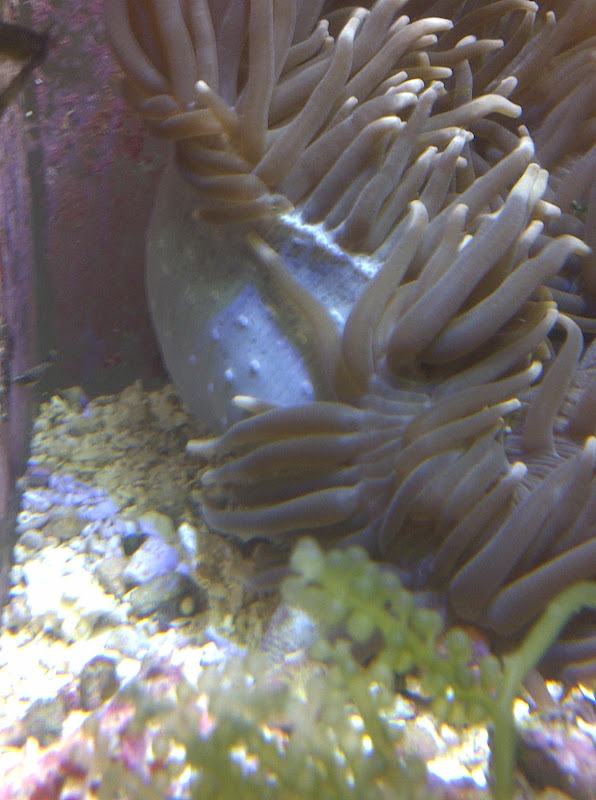
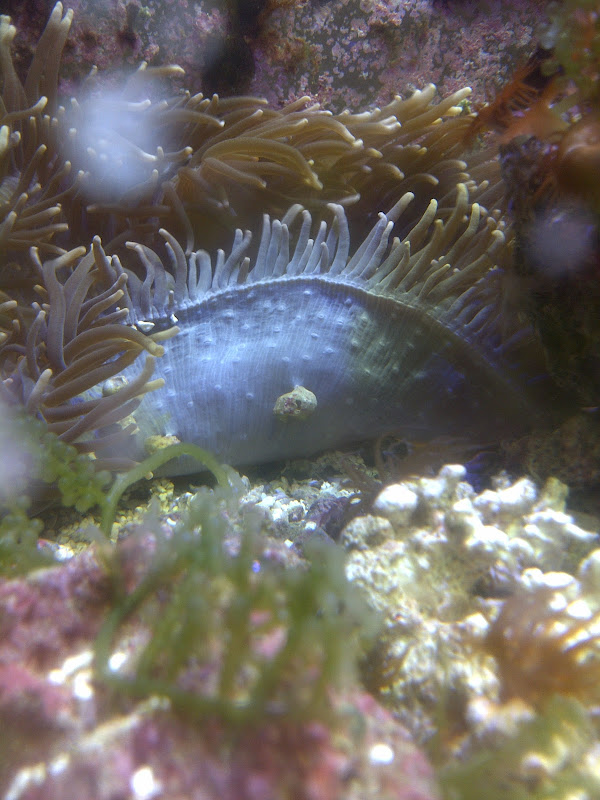
VERY different. But then I went over to this guy for a comparison (these are top-down shots if it matters):
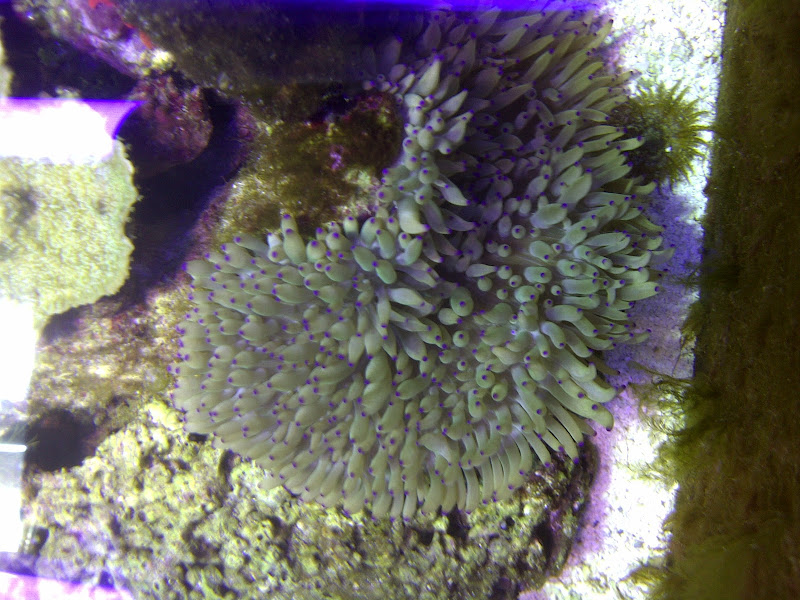
And this is what his underside looks like:
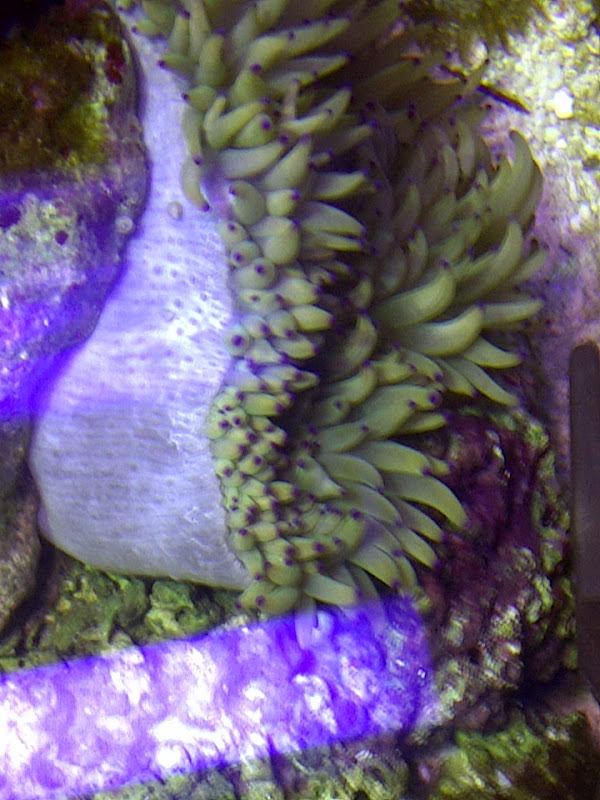
And this one I'm pretty convinced is a sebae. So IDK what to think now...
If I need to show more of the underside I will hafta dig him up, and I'd like to avoid that, but seriously the rest of him is in the sand bed. Just let me know what you guys need to see.
Thanks again, elegance coral, that pic was a huge help for me regardless.
elegance coral
They call me EC
And this one I'm pretty convinced is a sebae. So IDK what to think now...
Thanks again, elegance coral, that pic was a huge help for me regardless.
You're welcome.
There is no such thing as a "sebae" anemone. Sebae is a common name given to anemones when people in the trade don't know the actual species. It's typically used for crispa and malu, but I've also seen doreensis, magnifica, and aurora listed as "sebae".
If we rule out doreensis, it still can't be crispa. It simply lacks the leathery tissue and has to few tentacles. If we say it's a Heteractis species, the only option would be malu, not crispa. Just to add to the confusion, we can't rule out hybridization, either.:spin1: :lmao:
Just to keep things interesting.:hmm3: Here's a malu I recently gave away.

bradleym
Premium Member
You're welcome.
There is no such thing as a "sebae" anemone. Sebae is a common name given to anemones when people in the trade don't know the actual species. It's typically used for crispa and malu, but I've also seen doreensis, magnifica, and aurora listed as "sebae".
Yea sorry I meant the green one is H. Crispa, it was late lol.
If we rule out doreensis, it still can't be crispa. It simply lacks the leathery tissue and has to few tentacles. If we say it's a Heteractis species, the only option would be malu, not crispa. Just to add to the confusion, we can't rule out hybridization, either.:spin1: :lmao:
I'm not ruling out anything, just sharing my absolute confusion.
Just to keep things interesting.:hmm3: Here's a malu I recently gave away.
LOL! So now the green one might be a H. Malu, too? It looks a lot like your picture. Ugh...
I can't help with the Id, but I did want to compliment you on the care you are giving it. It looks so much better in your recent photos compared to the original ones you posted back in November. Well done.
Also, congrats on your clown finding it and nice pics of it playing.
Cheers,
K.
Also, congrats on your clown finding it and nice pics of it playing.
Cheers,
K.
elegance coral
They call me EC
LOL! So now the green one might be a H. Malu, too? It looks a lot like your picture. Ugh...
If I had to guess, based solely on the pic, I'd say your friend's anemone is H. malu. If it has a skinny little column and pedal disk, then it's malu.
bradleym
Premium Member
I can't help with the Id, but I did want to compliment you on the care you are giving it. It looks so much better in your recent photos compared to the original ones you posted back in November. Well done.
Also, congrats on your clown finding it and nice pics of it playing.
Cheers,
K.
Thanks for the encouragement. I may not know what it is, but I know what it likes, lol. And the clowns were originally enamored with some BTAs for months, I have no clue why they "suddenly" found this one recently.
bradleym
Premium Member
If I had to guess, based solely on the pic, I'd say your friend's anemone is H. malu. If it has a skinny little column and pedal disk, then it's malu.
First, some background - both anemones (green and brown) were rescued, at the same time, from the same friend, from the same tank. And he said they were both "sebaes".

They are both mine now. I got them together for $30 and didn't care what they were, I just didn't want them to die.
If you mean the green one, I have't seen the actual foot because of the rockwork since I put it in. If you mean the brown one, the foot is less than 2 inches wide, there's a pic back on the first page where it's digging in.
bradleym
Premium Member
Whatever mine is, it's a dead ringer for this nem:
http://www.liveaquaria.com/diversden/ItemDisplay.cfm?c=2733+4&ddid=109900
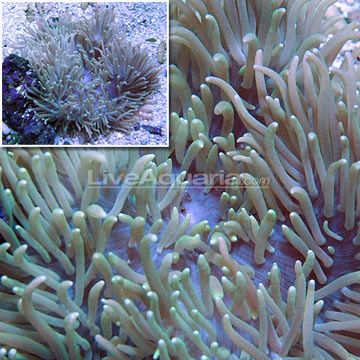
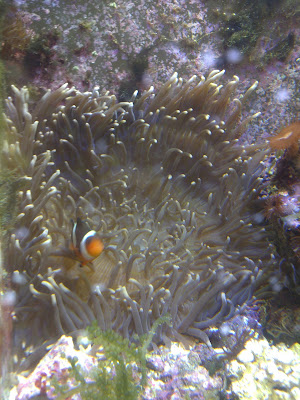
Aside from coloring it's almost identical. The appearance of the oral disc surface. The tentacle length, shape, thickness and sizing(the white is continuing to slowly fade out of the tips by the way). The fact that it's in the sand. And in the description, the pedal disc is only 1" compared to a 6" anemone. With mine being 12" with a 2" foot. It also says that the column and foot are white, and that it has dots on the underside of the oral disc.
Am I missing something or does this seem like a reasonable comparison?
http://www.liveaquaria.com/diversden/ItemDisplay.cfm?c=2733+4&ddid=109900
Aside from coloring it's almost identical. The appearance of the oral disc surface. The tentacle length, shape, thickness and sizing(the white is continuing to slowly fade out of the tips by the way). The fact that it's in the sand. And in the description, the pedal disc is only 1" compared to a 6" anemone. With mine being 12" with a 2" foot. It also says that the column and foot are white, and that it has dots on the underside of the oral disc.
Am I missing something or does this seem like a reasonable comparison?
bradleym
Premium Member
No, the strongest current is across the top of the rock work. I set it up this way because I also have BTAs and it is my understanding they would like the flow to go across the tips of their tentacles. The flow up there is strong enough to move things around, but I have kenya trees in the full blast that aren't hurt by it.
Down at the bottom, the flow is just enough to move the tentacles lazily.
Down at the bottom, the flow is just enough to move the tentacles lazily.
Fishy_Clown
New member
+1 Malu


