
You are using an out of date browser. It may not display this or other websites correctly.
You should upgrade or use an alternative browser.
You should upgrade or use an alternative browser.
Can I house two Copperband Butterflyfish in same tank??
- Thread starter sensei
- Start date


ThRoewer
New member
I kept a pair in a 750 liter tank and it worked fine.
I'm pretty sure that they are capable of sex change, though when I put that pair together I sexed them.
After looking at a few hundred of them I found that there is a slight difference in the snout angle and "forehead" profile between male and female.
Sent from my XT1254 using Tapatalk
I'm pretty sure that they are capable of sex change, though when I put that pair together I sexed them.
After looking at a few hundred of them I found that there is a slight difference in the snout angle and "forehead" profile between male and female.
Sent from my XT1254 using Tapatalk

sensei
New member
On a 470 gallon tank (that is mature), it should work.
Steve,
by mature you mean how old? why do you need a mature system?
my 470g is 6 months old now and BB.
I have 18 fish in dt now:
8 tangs: 3 yellow tangs, 1 purple tang, 1sailfing tang, 1 Naso tang, 1 kole eye, 1 powder blue tang
2 dwarf angels: potters and flame dwarf
7 fairy wrasses
1 clownfish
I plan to add 2 magnificent foxface, 1 pepermint candy cane hogfish and the 2 Copperbands if you do not see any incompatibility with the fish I have
Thanks for your answer
sensei
New member
I kept a pair in a 750 liter tank and it worked fine.
I'm pretty sure that they are capable of sex change, though when I put that pair together I sexed them.
After looking at a few hundred of them I found that there is a slight difference in the snout angle and "forehead" profile between male and female.
Sent from my XT1254 using Tapatalk
Thanks
I am a little unsure on how to recognize their sex. can you explain a little more?
Thanks again

You have a huge tank so it will probably work.
Sometimes WC juvenile pairs are collected as such from the northern GBR. As juveniles the fish are often same sex, and when you try to keep them in a tank they fight. Large M/ F pairs are different, but not many people have a tank big enough to take them, you probably do.
That aside there needs to be enough foraging food too, otherwise it's quite possible that they too will argue.
HTH and GL!
:wave:
Sometimes WC juvenile pairs are collected as such from the northern GBR. As juveniles the fish are often same sex, and when you try to keep them in a tank they fight. Large M/ F pairs are different, but not many people have a tank big enough to take them, you probably do.
That aside there needs to be enough foraging food too, otherwise it's quite possible that they too will argue.
HTH and GL!
:wave:
ThRoewer
New member
Thanks
I am a little unsure on how to recognize their sex. can you explain a little more?
Thanks again
It's the forehead profile. When I searched for pictures I found this:
...
i was thinking about the same thing. so i searched a lot to see if there are any external signs to tell the sexes apart. well it appears you can tell (difficult) by the way the beak and forehead are relative to the body of the fish. the males forehead is a bit steeper (more vertical) and the beak is more horizontally, the females tend to have the forehead a bit more inclined and the beak pointing down just a little. you can already see these differences at a young age. it is easier to tell when you can compare (eg in a group)
...
This is in general what I found.
If the forehead is more sloped and has a smooth and continuous profile it's a female. Females' beaks may also seem to be rather angled down.
If the forehead is rather steep going up and the profile has rather steps or bends it's a male. Males also seem to have the beak rather horizontal or slightly angled up
It's best to compare a good number to pick a pair. When in doubt go by the rather by the forehead profile than the beak angle.
I would say the one to the left is the male and the one to the right is the female.
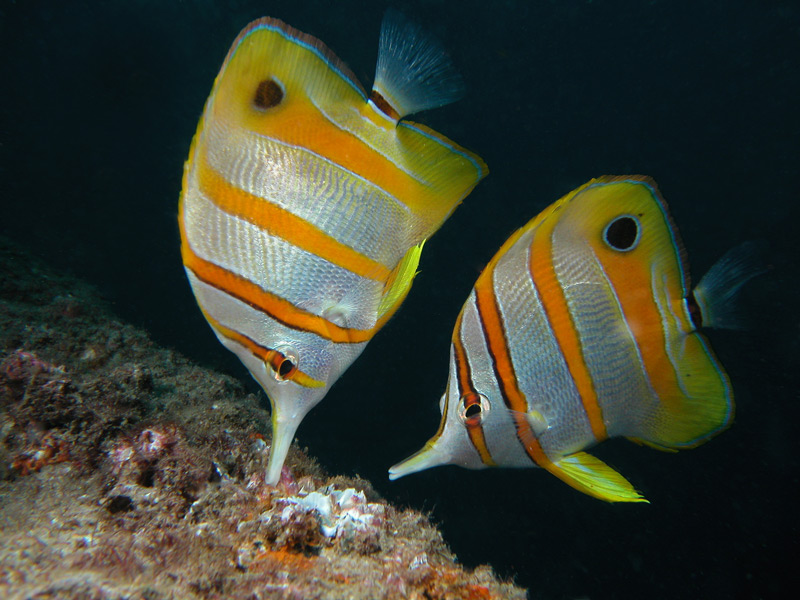
The male also seems to be a little more "stretched".
My vote on this picture: top male, bottom female
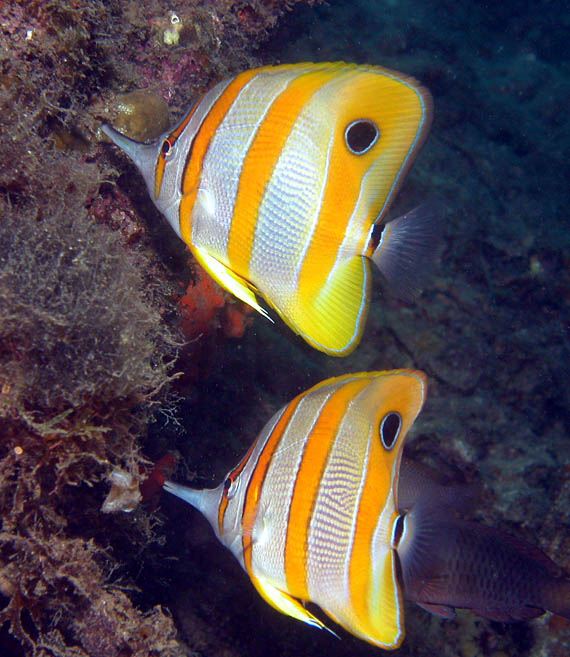
Front: male, back: female

Male

Female
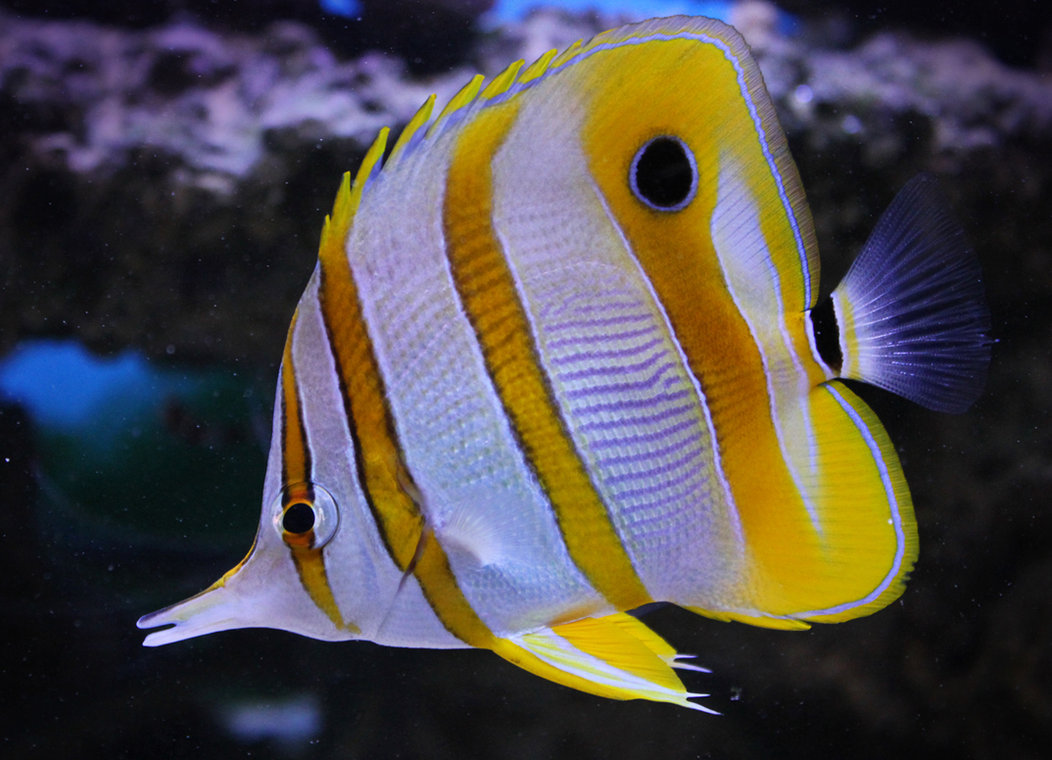

Achilles Torben
Member
Is this a pair? Can't see a different
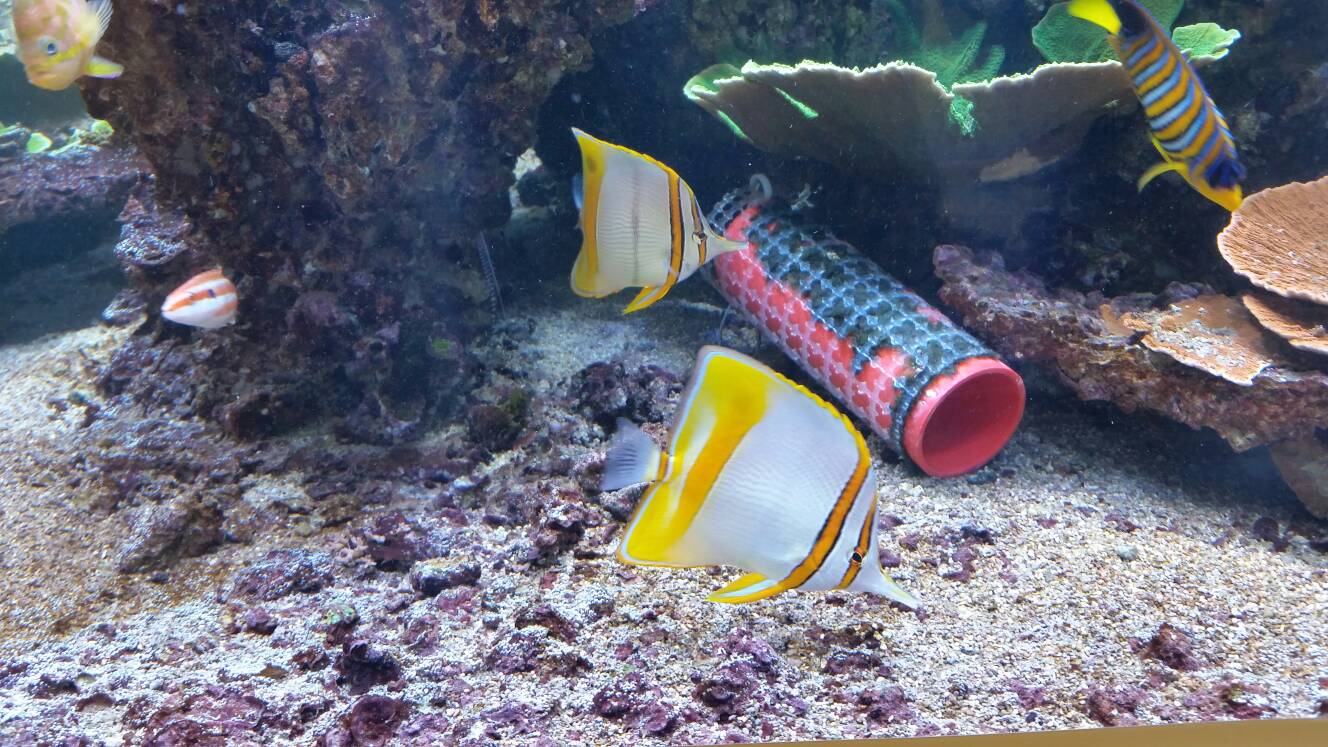
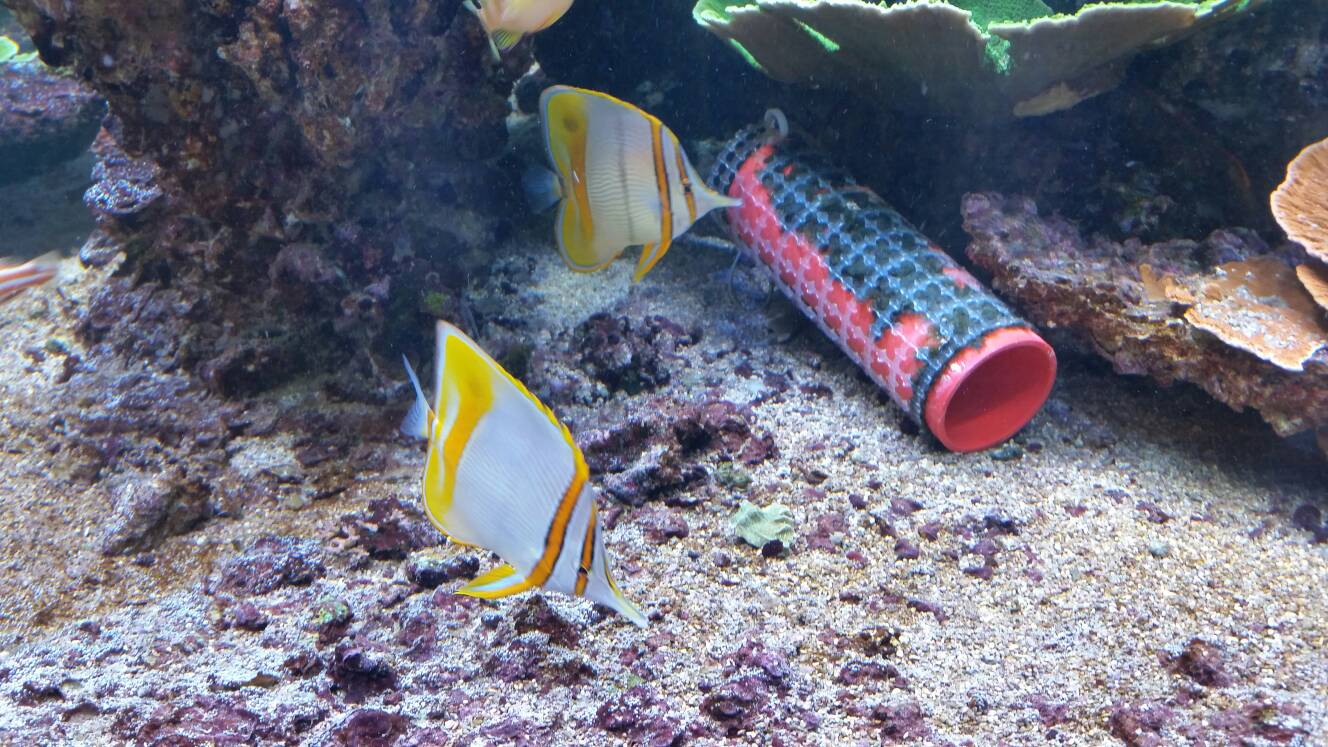
Grüße Torben
Gesendet mit Tapatalk
Grüße Torben
Gesendet mit Tapatalk
ThRoewer
New member
What's their size? They may not yet be mature. From the picture I would think that the one in the front is (or is going to be) the male.
After looking at a lot of pictures I found that seemingly mature males will develop a little bump on their forehead. In the topmost picture you can see it best. The Alamy picture shows it as well, it's just a bit obscured by the second "a" of the "alamy" name across the male's head.
After looking at a lot of pictures I found that seemingly mature males will develop a little bump on their forehead. In the topmost picture you can see it best. The Alamy picture shows it as well, it's just a bit obscured by the second "a" of the "alamy" name across the male's head.
Achilles Torben
Member
Their really big. Never seen so big Chelmon
Grüße Torben
Gesendet mit Tapatalk
Grüße Torben
Gesendet mit Tapatalk

DamonG
New member
If your considering them, I would snatch them up! I'd for no other reason, those aren't copperbands! Those are the hardier and rarer in the market species.. I can't remember their name, but I know, because I wanted one, and my local fish guy couldn't get them(seasonal).. From everything I read and remember reading, if you have a chance, you want to grab these!Is this a pair? Can't see a different
Grüße Torben
Gesendet mit Tapatalk
From note 5.. rip note 7
sensei
New member
Roewer,
how do you know if they are mature with sex defined? What size would they be?
I have two in quarentine now. each copperband is alone in a 15g TTM. They are both eating. one is 2" long and the other is 3" long.
here are the pictures of each.
please tell me if you can see their sex
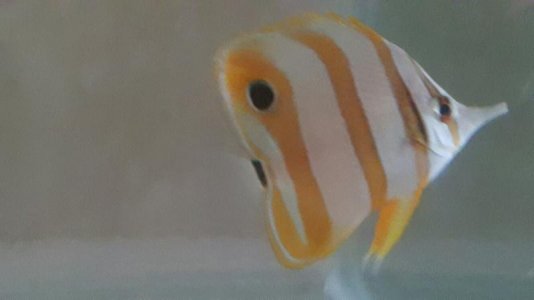
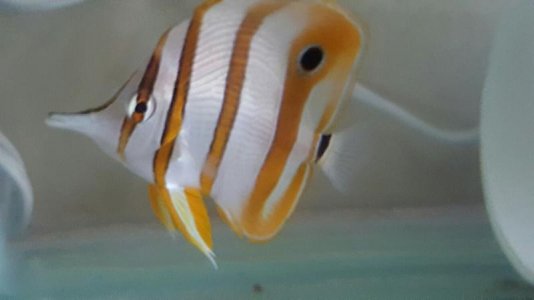
Thanks
how do you know if they are mature with sex defined? What size would they be?
I have two in quarentine now. each copperband is alone in a 15g TTM. They are both eating. one is 2" long and the other is 3" long.
here are the pictures of each.
please tell me if you can see their sex
Thanks
sensei
New member
Do you have them together in the same QT? In that case I would assume that they either are or later become a pair.
Sent from my XT1254 using Tapatalk
NO, I have them in different Quarentine tanks and each one is alone with no other fish during TTM because I wanted to minimize stress so that they start eating and both are eating so that is good.
please tell me what you think
Achilles Torben
Member
Hi,If your considering them, I would snatch them up! I'd for no other reason, those aren't copperbands! Those are the hardier and rarer in the market species.. I can't remember their name, but I know, because I wanted one, and my local fish guy couldn't get them(seasonal).. From everything I read and remember reading, if you have a chance, you want to grab these!
From note 5.. rip note 7
Yes these fish are Chelmon marginales. I need 3 fish to build a pair. First I introduce the smaller one in DT. After a few weeks I introduce the bigger one. The smaller one attacked the bigger one about a week. After that swimming together. Introducing together doesn't work. Bigger one killed smaller one. Marginales have not such a big problem for pick up frozen food like Chelmon rostratum. So marginales is much more easier to introduce in tank
Grüße Torben
Gesendet mit Tapatalk
Just some background information:
The margined butterfly is a west Australian fish caught in WA through to the Northern Territory. Then the copperbands take their place, collected all the way down the Queensland coast on the GBR. The two species don't really interlap.
Fwiw, Australian copper bands are just as hardy as Maginalis. Some local collectors sell them already feeding on pellets at time of shipping.
:wavehand:
The margined butterfly is a west Australian fish caught in WA through to the Northern Territory. Then the copperbands take their place, collected all the way down the Queensland coast on the GBR. The two species don't really interlap.
Fwiw, Australian copper bands are just as hardy as Maginalis. Some local collectors sell them already feeding on pellets at time of shipping.
:wavehand:
ThRoewer
New member
To me they look like they could be male and female. After quarantine I would give it a try and put them together by adding the larger to the smaller ones tank.NO, I have them in different Quarentine tanks and each one is alone with no other fish during TTM because I wanted to minimize stress so that they start eating and both are eating so that is good.
please tell me what you think
Sent from my XT1254 using Tapatalk
Achilles Torben
Member
That way works by mine pair in past. Smaller one attacked bigger one few days. Later swim together
Grüße Torben
Gesendet mit Tapatalk
Grüße Torben
Gesendet mit Tapatalk
Similar threads

- Replies
- 10
- Views
- 1K


- Replies
- 3
- Views
- 993
- Replies
- 2
- Views
- 365