Captive bred vs wild caught: saving the reefs?

pufferish

New member
Do you think it really makes a difference in the long run? I've heard people say that it's pointless because the real problem is habitat loss but it makes sense to me.

I've yet to get any saltwater fish or any corals but when I do, I plan on going the captive bred route if it is at all possible.


Your opinions and feelings?
 
Last edited:
It does help but some fish don't need it, for example, the masked angel was bred in captivity and it was one of the rarest fish in the ocean, we can help make sure it doesn't go extinct, but many fish it doesn't really make a difference as much to the overall population in the ocean but they are much hardier and easier to keep if they are captive bred, for example clownfish are much easier to keep if they were captive bred because they were grown up on prepared food and they are exposed to a lot less diseases
 
I agree with the above. I guess if the question is 'does it help' then yes it always helps, but 'is it significant?' is another story altogether. Which yeah as above depends on rarity.
 
Captive bred are often in better shape then the comparable wild caught, making them a better value for your dollar. In some cases (not all, just some), populations are heavily enough fished that aquacultured specimens will relieve some fishing pressure. As for habitat loss, that is indeed a large problem, but not the only one, so every little bit helps ;)
 
Fish which have restricted territories and highly regulated capture rates when bred in captivity are excellent buys.
 
When I started keeping fish in the early 60's most freshwater fish where wild caught too. Now only a few still are. Look at how easy freshwater fish are to keep nowadays. If we support captive breeding we can get to that point with both fish and corals.
 
Do captive bred fish still need to be quarantined?


Every fish should be quarantined but captive bred fish have a much better record of being disease free, but they could still have diseases so if you have. a quarantine system I would use it on any fish you add to the tank
 
Do captive bred fish still need to be quarantined?

Once they leave the producer and hit either a wholesaler or the LFS, they are often placed into the same systems housing wild caught fish. At this point, they cannot be considered parasite free, and therefore should be QT'd just like anything else.
 
Always go with captive bred if it's an option. Not only are you reducing over fishing stresses on the species, but a captive bred species will typically be healther, less likely to have any sort of parasites, far more adaptable at eating non-live foods, and typically live a longer life span.

One such example would by buying a wild caught seahourse vs. a captive bred. Wild caught SH usually will carry a bacteria (vibrio) and some other parasites. When caught and/or introduced into one of our tanks, they get really stressed and the infection reveals itself. In addition, the wild caught SH will only take live foods. Which is an expensive undertaking. Lastly, the chances of it living for any decent length of time is low.

However, if you bought a captive bred SH, you're most likely getting a health specimen. It'll eat frozen with gusto, and live quite a few years under the proper care.

A bit of an extreme example, but one of which clearly illustrates the benefits of captive bred.
 
I wish every fish could be tank raised, just not an option with lots of species.

Given the choice, if there is captive raised option of a species, go with it...
 
Knowing that wild-caught fish have been taken from their wonderful reef home, tormented through the whole ordeal, moved from one tank to another, to be settled in a tiny aquarium, will make me choose captive-bred over wild-caught every time I have the choice.
 
Captive bred is great if what you want is captive bred but even then the availability may not be enough so you could easily purchase said fish. Collection of wild caught fish helps sustain the fish populations through responsible practices and also helps fuel the captive breeding attempts of new fish that aren't currently captive bred.
 
Just don't have the diversity with captive bred. Never gonna see captive bred anthias or fairy wrasses, etc. For clownfish or dottybacks yes I would never buy wild.
 
Personally I'm leaning heavily towards pro wild caught when done in an ethical and sustainable manner.
This is due to the fact that the wild caught trade provides a very powerful incentive for coastal people to preserve and care for the reefs, as their livelyhood depends on it.

That said, there are still problem regions where destructive colleciton methods such as cyanude is used, and it has to end.

Tank raised is also an interesting middle ground to seriously consider, where eggs, larvae and juveniles are harvested from the wild and allowed to grow and mature in a captive environment.
 
I always try to buy tank bred when available, however the options are limited, with additional research more species will be mastered
 
There's are very good arguments for sustainably collected wild livestock. For one, as pointed out in this UN report, http://www.unep.org/PDF/From_Ocean_To_Aquarium_report.pdf wild livestock and live rock collected for the aquarium trade has a much much higher profit margin than the same things collected for local consumption. By buying wild we are reducing collecting pressures in many cases.

Another example of where we need to be collecting wild is the situation with yellow tangs in Hawai'i. We know one of the things that screws up the fish population on reefs and leads to their decline is when sharks are over fished and the small herbivore populations get out of balance. Hawai'i conducted a shark control program from the 50's to the 70's that indescrimanatelly killed all sharks. Our yearly population counts for yellow tangs didn't start until after Hawai'i stopped killing sharks so we have no idea what the population should be on a healthy reef but research elsewhere argues it should be lower then it was then. Certainly not at the levels we're seeing now (2013 "young of year" head count was 400% above previous record!!!). What is alarming is the yearly population counts being conducted by researchers with NOAA besides showing the burgeoning yellow and kole tang populations is the decrease in other species of tang, notably the achilles tang. The current conservation steps are only favoring a few species, not the overall ecosystem. Since we have removed the apex predator from the Hawaiian reef systems we have to take steps to maintain healthy populations until the sharks are reestablished and the only economical way is to collect the overabundant species.

 
Another prime candidate for wild capture would also be Pterois Lionfish in the Caribbean which do not belong there and are an extremely invasive species.
They could easily supply the demands of the entire ornamental fish trade world wide for Pterois lionfish while at the same time contributing to eradicating their destructive presence on the ecosystem.
 
There's are very good arguments for sustainably collected wild livestock. For one, as pointed out in this UN report, http://www.unep.org/PDF/From_Ocean_To_Aquarium_report.pdf wild livestock and live rock collected for the aquarium trade has a much much higher profit margin than the same things collected for local consumption. By buying wild we are reducing collecting pressures in many cases.

Another example of where we need to be collecting wild is the situation with yellow tangs in Hawai'i. We know one of the things that screws up the fish population on reefs and leads to their decline is when sharks are over fished and the small herbivore populations get out of balance. Hawai'i conducted a shark control program from the 50's to the 70's that indescrimanatelly killed all sharks. Our yearly population counts for yellow tangs didn't start until after Hawai'i stopped killing sharks so we have no idea what the population should be on a healthy reef but research elsewhere argues it should be lower then it was then. Certainly not at the levels we're seeing now (2013 "young of year" head count was 400% above previous record!!!). What is alarming is the yearly population counts being conducted by researchers with NOAA besides showing the burgeoning yellow and kole tang populations is the decrease in other species of tang, notably the achilles tang. The current conservation steps are only favoring a few species, not the overall ecosystem. Since we have removed the apex predator from the Hawaiian reef systems we have to take steps to maintain healthy populations until the sharks are reestablished and the only economical way is to collect the overabundant species.

sounds like the lower 48 treatment of the gator gar almost 100 years back

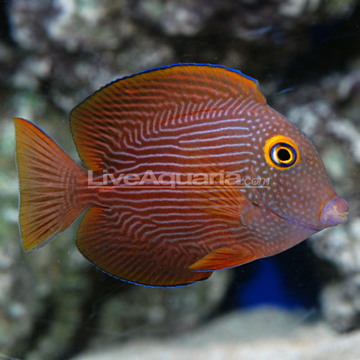
is tnhis the kole tang your talking about

p-74643-kole-tang.jpg


Another prime candidate for wild capture would also be Pterois Lionfish in the Caribbean which do not belong there and are an extremely invasive species.
They could easily supply the demands of the entire ornamental fish trade world wide for Pterois lionfish while at the same time contributing to eradicating their destructive presence on the ecosystem.

That was my thoughts exactly but logic reasoning is never the governments strong suit as lionfish are now banned to keep in florida so i doubt capture and send to wisconsin is an option

i also heard from one of my friends in the trade that depending on prep there good eating and they now are sold in many restaurants in florida all caught from the waters of florida there also doing this in panama as well for them

also i read somewhere they have been discovered in the mediterran as well most likely ""imported"' through the suez canal kinda like the sea lamprey in the great lakes
 
That was my thoughts exactly but logic reasoning is never the governments strong suit as lionfish are now banned to keep in florida so i doubt capture and send to wisconsin is an option

It's not illegal to keep lionfish that have been captured in Florida. It is illegal to import, sell, and keep ones that have come from elsewhere. So no problem with capturing the ones in Florida and sending them elsewhere ;)
 
Back
Top