dino experiment

oh damn i just missed a chance to send a sample as i had guests from maryland :( this world is too dam*n small if you ask me :D

next time they come they might bring you some as long as i have not won the battle, and it does not look good.

lights out and no waterchanges killed almost all of my sps, with only the green monti digi surviving. all others, including the gorgonians which are affected worst, still make it and i have just finished another 2 days without light. lets see where this is going... still dosing microbe-lift special blend accordingly.

i also had a look at them through my fathers microscope, although i was only able to do 20x, i am pretty sure they are dinos as they almost look like your avatar, pants! will get some new objectslides for the scope and might invest in an eyepiece cam, or is there a cheaper way to take microscopic photos? that way i could share them here...
 
Phone cameras often can take pretty good pictures (each generation of phones gets better at it. The iPhone4S is much better than the 4 for example). Lots of point and shoot digital cameras also can take nice photos through scopes. While you can always get fancy attachments to connect a camera to a microscope a steady hand and a phone or point and shoot will do a pretty good job.

If the cells are big enough that you could tell shape from a 20X lens then you probably have a prorocentrum or gambierdiscus. The 3rd group wouldn't look like much with that magnification. Was there movement? How would you describe the way they moved?
 
the movement was hard to judge as i had just some old objectslides and no cover glasses, i will buy those and try photographing today with my camera. i just try to take a photo through the ocular? they were visible quite good through 20x, and i also found some cyano and diatoms in the strains, quite impressive whats going on on that scale :D
 
Yup just press the camera op to the ocular. The camera lens should be where your eye is, so not right up against the glass but maybe half a cm back.
 
<a href="http://www.flickr.com/photos/79369833@N07/7153287687/" title="DSC04286 by martin.nehrer, on Flickr"><img src="http://farm6.staticflickr.com/5462/7153287687_20a722a2ec.jpg" width="500" height="375" alt="DSC04286"></a>i guess some random algae, also sucked up when doing water change

<a href="http://www.flickr.com/photos/79369833@N07/7153290301/" title="DSC04291 by martin.nehrer, on Flickr"><img src="http://farm6.staticflickr.com/5466/7153290301_f672147ea3.jpg" width="500" height="375" alt="DSC04291"></a> they were hard to take, to my excuse :) i do not know why i cannot find them on 40x when i find them in 20x... spent hours at university staring in microscopes, i thought id handle this... maybe tomorrow with proper objectslides and coverglasses..
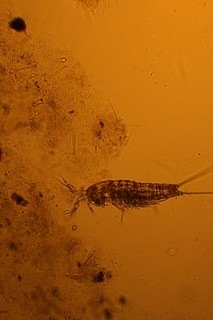
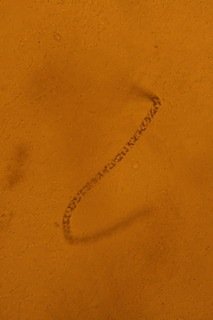
 
Here are some images I was supposed to get to Pants, but didn't...

I had some cyano/dino problems recently realated to biopellets. I took these at home at about 400x...

Any IDs?
 

Attachments

  • photo 1.JPG
    photo 1.JPG
    25.4 KB · Views: 20
  • photo 1a.JPG
    photo 1a.JPG
    20.2 KB · Views: 17
  • photo 2.JPG
    photo 2.JPG
    30.2 KB · Views: 24
  • photo 2a.JPG
    photo 2a.JPG
    24.4 KB · Views: 18
  • photo 3.JPG
    photo 3.JPG
    22.9 KB · Views: 26
<a href="http://www.flickr.com/photos/79369833@N07/7007512000/" title="DSC04295 by martin.nehrer, on Flickr"><img src="http://farm9.staticflickr.com/8002/7007512000_3feeb83d53.jpg" width="500" height="375" alt="DSC04295"></a>
<a href="http://www.flickr.com/photos/79369833@N07/7007511370/" title="DSC04297 by martin.nehrer, on Flickr"><img src="http://farm8.staticflickr.com/7079/7007511370_fc872ace88.jpg" width="500" height="375" alt="DSC04297"></a>
<a href="http://www.flickr.com/photos/79369833@N07/7007509708/" title="DSC04292 by martin.nehrer, on Flickr"><img src="http://farm8.staticflickr.com/7248/7007509708_e544401896.jpg" width="500" height="375" alt="DSC04292"></a>
took some more, this time better because i used smaller waterdrops..
 
burnah - That looks like Ostreopsis sp. There is a lot of information (even youtube videos) about it so google. Its a neat (and very bad) dino. Do the seem to spin around like tether balls? (Oh and that blueish filament is some sort of synthetic fiber - perhaps a bit of your shirt?)

DBSAM - Its really hard to ID anything from your photos. Most of it looks like random detritus. Not the best magnifying device (definitely not 400x). What are you using? You might get a bit better with some more light.
 
thanks. glad to have a bad dino ;) yes they spin under the microscope. any ideas on how to eradicate this specific dino? what does "neat (and very bad)" mean? ive read that they produce toxins :( some of them seem to be epiphytes on algae

lights out diminished them to almost not visible but when the lights come on, only 2 days pass until theyre almost back to their old strength. they sit on top of algae, for example the spots on the glass and hairalgae on rocks. they also love my gorgonias.

still wondering why my refugium is almost not affected (yet)

greetings
 
DBSAM - DO you have something more like 30-40x you could use? Can you show me a shot just with a normal camera that can help too (a shot of both what it looks like in the tank and then a shot of some of it out in a petri dish (or something similar) could be helpful. The zooxanthellae-like dino I've found I can identify in person with the naked eye simply because it is so mucousy.

burnah - Ostreopsis can make a variety of toxins, but one that some varieties seem to make is palytoxin which I think most reefers have read something about. After talking to some colleagues I've decided your sample would be worthwhile enough for me to get that I'd be willing to pay to have it shipped to the states if you are willing. I need to check with our safety people since it could potentially be toxic but if you could let me know if yo'd be willing to scoop some up into a container and take it to fedex (or similar shipper) let me know.
 
i am very willing and pay it myself if you dont mind. just PM me adress and packaging requirements.

so far i have not experienced any symptoms that could indicated poisoning, but i am in medschool at the moment so i am equipped.

thank you for all your effort!
 
Hi there Pants. It looks like I have Dinos again! :(

I had them last time, and I restarted my tank with dead rock this time, with all new corals and fishes. All equipment was washed in bleach etc.

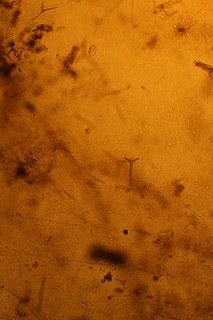
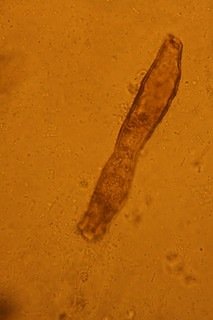
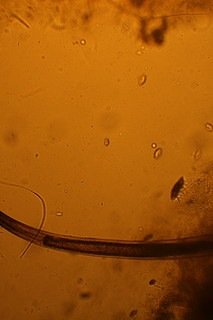
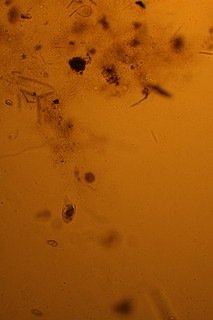
Here are photos i took from a 7 year olds microscope...it says 600x and 900x on it, but I highly doubt the resolution. I used my Iphone to take the photos.

There appears to be two main life forms here, the long tube like, and the oval kind of shape ones. Its the oval shaped ones that I suspect are Dinos...

Took me more than 3 hours of fiddling around to get some decent photos:

IMG_0897.jpg


IMG_0899.jpg


IMG_09001.jpg


IMG_0904.jpg


IMG_0906.jpg


IMG_0908.jpg


IMG_0911.jpg


IMG_0912.jpg


Some of the images may appear similar, but they are in fact slightly different focus.

I would have shipped a sample to you, but I live in the UK. I used to have access to a university microbiology lab many years ago, but that was whilst I was doing my degree.

If these images are usesless then let me know and I will buy a decent microscope.

I dont know what to do...how to battle these things. I really feel like giving up this hobby. :(

I also dont know what the long thread-like things are, and if they are responsible for most of the Dino like fuzz.

The only thing is that I dont get the airbubbles (which I did previously). Also, previously, the stuff used to recede during the dark hours. This time, it doesnt. At first I thought it was Diatoms but upon looking at the microscope images, I think they are Dinos?
 
OK, doing a bit of research online, it appears the long tube like structures could actually be Diatoms according to this website: Have a look there as they have decent photos:
http://iws.collin.edu/jbeck/ProtistaHtml/Page0002.html

AND...the spherical shaped structures could also be Diatoms? - From looking at the photos on the website linked above...

The thing is, I didnt notice any of the Spherical/oval shaped things moving...

Do all species of Dinos move?
 
Let me add for the record about my tank conditions:

Ca: 420
Alk: 8 dKH
SG: 1.026
Mg: 1250ppm
PO4: Less than 0.01ppm - Using Hanna ULR Photometer
NO3: Used to be detectable when my tank first started, but no longer

I dont have any algae etc. I also only have a bit of this Dino stuff, maybe covering 40% of the rockwork. Its not anywhere else.

I have 80x water turnover provided by 2 x Vortech MP10's and 1 x Tunze Nanostream 6025.

Light: T5 tubes are only a few months old.

I dont use any GFO or GAC because my parameters ie PO4 and NO3 show nutrients to be low.

Now I know you will say well there are these Dinos, but like I said, its only on 40% of the rocks upper surface, and its a very light layer.

Please help. :hmm2:
 
Sahin we can cure this with peroxide not a problem, just mentioning an easy kill method. Try other methods and then right before you tear down your tank to either start over or take down for good let's roll another cure w before and after pics. Via pm the last Dino issue we cured was in Feb and it took five days, is totally gone (until next reimport on substrate/new frag)

It is a for sure kill btw, there is no reason for this to wipe out tanks like it does. Not using a known cure has now become a chief component of tank start overs.
 
Hi Sahin.

The photos are poor but so I'm not terribly confident but I think the little ovals could be the dinos that I suspect are symbiodinium (zooxanthellae). The rectangles are diatoms (they have that crystaline look) and the tiny ovals could actually be diatoms too - it would be hard to tell without a better picture. The thing is, established tanks just don't get diatom blooms because there isn't enough silica around. Under the scope all our water will be teeming with diatoms, but we wont get blooms of it.

The dino I suspect looks a bit different without the microscope too. It would be helpful if you could pull out a clump and take some photos (and video?). This one tends to be much more mucousy than the other two groups. It is a very very small cell, so it is difficult to photograph under the scope (especially compared to the other groups which are very large and distinctive).
 
Trying the peroxide, I am on day 3.
I did a 100% water change and went to black sand about 8 months ago and its all brown again. 3 day blackout worked for almost 12 hours but now it's worse than before.
 
How are you using it I was wondering

Was the bottle new or previously opened that also impacts kill time

If it helps any, it dies off quicker if you will spot inject target patches underwater instead of just dosing the top water column. This increased contact time speeds up kill
 
Back
Top