Dinoflagellates.

Pretty interesting, Did you notice any growth of other types of algae?

Not yet. Hoping to see some type of green algae soon. Remembering PaulB's comments about how some green/hair algae is a sign of a healthy tank.

Might be a coincident but clearing my DT of algae was definitely a prelude to dinos.
 
Might be a coincident but clearing my DT of algae was definitely a prelude to dinos.

Don't think its a coincidence. Immediately after I got rid of a pretty significant hair algae problem in my DT, dinos showed up for the first time and exploded quickly.

I posted in this thread back before Christmas, and started a 3 day black out as my first step in getting rid of these dinos. At the same time, I added a couple lbs of LR from my LFS, some pods, quit doing water changes, and began dosing phytoplankton. Christmas morning, I ended the blackout, and the tank looked amazing. Almost no dinos to be seen, but there was still a little bit remaining. Over the next few days the dinos slowly started to regain ground, but I kept doing what I was doing. Continued to add phyto and pods from a couple different sources. Not once have I ever actually siphoned dinos out, but I have been considering it.

But, as I said, the dinos started to regain ground and I kept sticking with my plan. Over the past 2 days, I have actually noticed the dinos thinning out and receeding a little bit. I'm hoping this continues.
 
Removing algae without reducing nutrient input will leave room for other organisms to grow, so I'm not all that surprised that in some cases dinoflagellates bloom.
 
It's a great story but a number of links are based on some pretty wild assumptions. I don't know where to take it except to a marine microbiologist to support or refute the interesting connections here.

The question is - what experiment can we run to see if this is the right link? The next question is - what do we need to do more of to support the coral-friendly bacteria if they are the heroes we've been waiting for?

Carbon dosing is used by a lot of reef keepers but only a few develop dinos. Why don't they all develop dino plagues if those bacteria are dino allies? Is it a function of their skimming efficiency? The more mucus that can be extracted from the water, the better?

I skimmed very heavily and used UV and it worked - with the addition of phyto and pods. Why? Was my UV killing the bacteria floating with the dinos vs. the bacteria living in the coral mucus at night? Was my skimming pulling it out?

lots of interesting ideas and questions. we need some empirical detective work to prove/disprove the assumptions.
 
I've had the same experience - after aggressively removing P with GFO combating GHA is when my troubles with this stuff began.

So while corals help build up the bacteriolandscape do they really combat the complimentary bacteria for Dino's? It certainly explains why corals suffer. So should you add MORE corals if you have a Dino problem? I removed what little I had (also a small amount of corals is a contributor)?

Does it make sense that carbon dosing with ethanol/vinegar will fuel the correct bacteriolandscape or is it raw food for any bacteria - Dino complimentary too?
 
Last edited:
Karim: I have a tank with Dino's (presumably) and one without. I would be happy to send samples/ run correlation exercises as well. I imagine it would indeed take a marine biologist and perhaps DNA analysis to see what the exact bacteriolandscape differences are between my tanks.

Eh. I'm gonna start throwing skimmate in the "ugly" tank.
 
I'm starting my own culture too. I have a 600gal tank, so that's 60ml a week... I want to move to 60ml a day, but that's $$$ expensive unless I can culture a lot.

My skimmer is also a beast. Even adding the phyto with my skimmer off for 6 hours, my skimmate liquid still has a green tint ... :( But it's still worth it for the portion that gets consumed.
 
Dinoflagellates.

I also removed my filter sock. Before, the sump would receive filtered and skimmed water from DT, now the sump gets sprinkled with fish food everyone DT is fed.

I took out a flake that had laid in sump for 24hrs; it was crawling with different species of microscopic creatures.

I decided to take out the sock after looking at the sock waste under microscope and noticing I was washing away thousands of tiny creatures.
 
I run a mechanical filter free system too. No socks or sponges.

I also have a three layer refugium with the lowest later being a low flow, low light cryptic zone.

My dinos have been under control for almost a year now.
 
I run a mechanical filter free system too. No socks or sponges.

I also have a three layer refugium with the lowest later being a low flow, low light cryptic zone.

My dinos have been under control for almost a year now.

You still have them in your system?

Today is day 5 dino free, I'm pretty much going to change my dino hunt to weekly since they appear to be 100% gone.
 
Thank you for that massively researched post, Cygni!
I read it once and am going to have to re-read, it seems to me like the dirty method should not only not work, it should make things significantly worse.

The existence of a dino holobiont makes sense, and is fascinating. Carbon cycling seems to be the new hot topic in reefkeeping as well as the real reefs.

I'm also slightly confused by your use of 'copiotrophic'.. most authors seem to use it to mean an organism which likes eutrophic conditions. I infer from context that you are using copiotrophic to refer specifically to high-carbon but low N and P conditions created after a bacterial bloom reduces initially eutrophic waters?

The multicellular eye in Wm showed up in my science news feed and I dismissed it as an obvious troll. Come on dinos, bad enough you're using the wrong rubisco, having eyes is just silly.

you totally got your biogeek on :)
Ivy
 
Last edited:
So while corals help build up the bacteriolandscape do they really combat the complimentary bacteria for Dino's? It certainly explains why corals suffer. So should you add MORE corals if you have a Dino problem? I removed what little I had (also a small amount of corals is a contributor)?

Does it make sense that carbon dosing with ethanol/vinegar will fuel the correct bacteriolandscape or is it raw food for any bacteria - Dino complimentary too?

This occurred to me too. Someone needs to experiment with adding a huge number of sand-dwelling corals to their reef. :) Alternatively I'm tempted to annoy a rock full of pest Discosoma mushrooms I have and see whether the mucus does anything. (Of course allelopathic compounds in coral mucus may make this a terrible idea-do NOT try this with your favourite corals).

Carbon dosing is an interesting point.. it has been known to encourage cyano blooms. I can come up with hypothetical reasons why it should help and harm. I don't *think* I recall anyone mentioning that they were c-dosing when they got dinos. Anyone?

hth
ivy
 
Quiet_Ivy, don't give up...i know you said you're keeping your NO3 at 15, are you also keeping your PO4 at ~.03? I think dinos flourish when there is an imbalance between NO3 and PO4 so if you have limited PO4, have you tried dosing? Something like Brigthwell NeoPhos can add some PO4 without polluting your tank even more.
 
This occurred to me too. Someone needs to experiment with adding a huge number of sand-dwelling corals to their reef. :) Alternatively I'm tempted to annoy a rock full of pest Discosoma mushrooms I have and see whether the mucus does anything. (Of course allelopathic compounds in coral mucus may make this a terrible idea-do NOT try this with your favourite corals).

Carbon dosing is an interesting point.. it has been known to encourage cyano blooms. I can come up with hypothetical reasons why it should help and harm. I don't *think* I recall anyone mentioning that they were c-dosing when they got dinos. Anyone?

hth
ivy


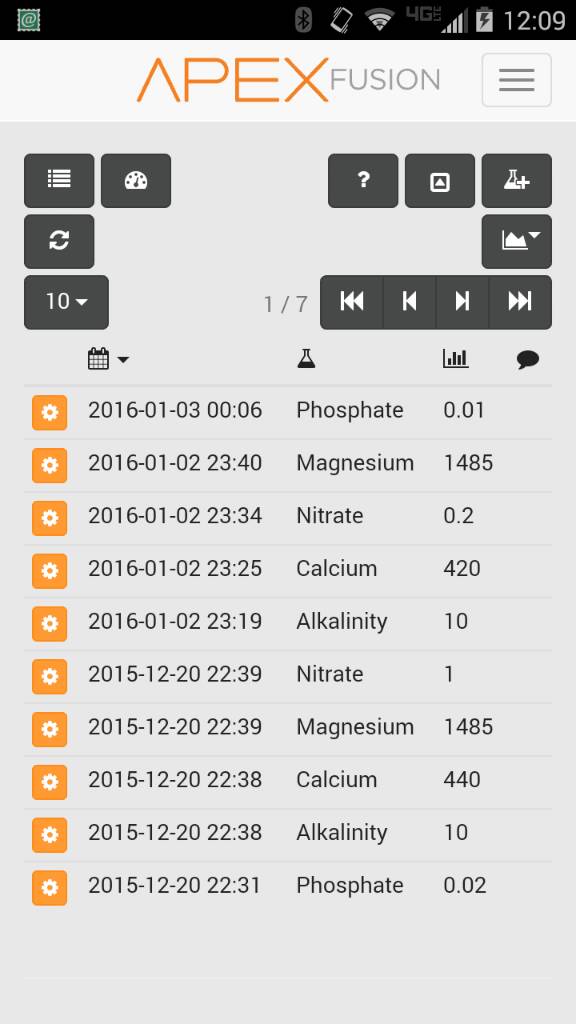
Yes, I've been carbon dosing for years and have dino's. None visually right now and probably wont see them again until I screw something up again. My parameters are pretty well posted around now to. With Nitrates under 1ppm and even under .5ppm. Phosphates around .03. Most recently under .03.

My many adventures in comparison testing
http://reefcentral.com/forums/showthread.php?t=2541190

My most recent set of test results
31a53b53016af7d8eec5dd1c7b23f4fb.jpg


But I don't strive for clean or dirty and have no idea which I fall into. My parameters for nitrate and phosphates are low. But my sump is full of detritus I never touch. I don't use filter socks or other typical mechanical filtration. The flow in my display tank is setup now to keep detritus suspended until sucked down the overflow to my sump where it becomes food and home to many critters.

For exports:
  • I don't run mechanical filters besides a skimmer which I use for aerating the water and removing bacteria that has consumed nitrates and phostphates.
  • I've used vinegar for years and dosed ~100ml/day for 200g total water volume.
  • I do ~1% automatic water changes daily exporting stuff.
  • I harvest algae via an ATS.

For imports:
  • I feed a lot. 4 times per day I have an automatic feeder dump some NLS Marine/AlgaeMax pellets. I hand feed 2-3x per day some meaty food maybe ~2-3 cubes worth. A sheet of nori per day. This brings in a lot of phosphates, trace elements, vitamins, minerals, etc. Plus increases urea dosing nitrates to my tank.
  • ~1% daily automatic water changes importing stuff
  • I add a small amount of Mg to that water change water. I need to reduce that amount.
  • I dose limewater which was via ATO and right now experimenting with limewater dosing separate from my ATO.
  • Carbon dosing via vinegar ~100ml/day. But recently experimenting with a vodka/vinegar mix dosing ~36ml/day.


I didn't touch the dino's this time around and just watched them. Pictures of their peak and eventual decline earlier in this thread.

Edit: and my Mg supplement used to be Tech-m but switched a few years ago to a Mg Chloride/Sulfate I mix together myself now for cheaper. Using Randy's ratio for those using Kalk.
 
Last edited:
This occurred to me too. Someone needs to experiment with adding a huge number of sand-dwelling corals to their reef. :) Alternatively I'm tempted to annoy a rock full of pest Discosoma mushrooms I have and see whether the mucus does anything. (Of course allelopathic compounds in coral mucus may make this a terrible idea-do NOT try this with your favourite corals).

Carbon dosing is an interesting point.. it has been known to encourage cyano blooms. I can come up with hypothetical reasons why it should help and harm. I don't *think* I recall anyone mentioning that they were c-dosing when they got dinos. Anyone?

hth
ivy

Well, what I DID do was add a couple of pieces of live rock from my "healthy" tank - no dinos/cyano on them. After 6 weeks of being in the tank - none on the new rocks. The other rocks have dinos receeding (slowly) but none showed up on the new rocks as one might expect. I also placed a bit of live sand (over the aragonite) in the same corner. Previously there were dinos on the sand - none are present there now.

While it would take a very concerted effort to identify exactly the bacteria correlated with dinos and where, it would be possible methinks. Nonetheless the whole complimentary bacteria story certainly follows in correlation with what folks here have observed. Yeah, I know correlation isn't causation but it seems to be on the correct path nonetheless.

I'd be thrilled to send a sample of my "dino" skimmate and my "healthy" skimmate to someone to analyze. Then perhaps dose my healthy skimmate into my dino tank. Or whatever else would be good to test a theory.

Also I removed coral from the dino tank and they are now in the healthy tank - doing much, much better. Maybe take a sample off the coral (for bacterial colonies in the mucous?) then place in dino tank, look for bleaching etc and test again?

Point is I don't have a uscope and I'm certainly not trained enough to be able to identify the critters therein even if I did have a uscope. But as I have 2 tanks using the same source water, simliar lights etc. and an ability to rather run some controlled procedures I'd be fine doing that.

Or not.

I'm willing to help if I can do so.
 
Last edited:
Just two months to be 1-year ostreopsis free. I beat it switching off the skimmer and dosing phytoplankton with a dosing pump (24 3ml shots per day)
 
Back
Top