Dinoflagellates.

My first dino outbreak and observations. I recently had an ever worsening hair algae problem. I dosed Marine Algaefix for the HA which worked. Just as the tank was looking good, in came the dinos in an incredible rush. What I didn't catch is that my normal nitrate level of less than 5ppm jumped up to 20ppm. I am assuming the total algae kill left plenty of nutrients behind. I do regular weekly 10% water changes. The only "new" things in my 1 1/2 year old reef was the slow buildup of hair algae, the algaefix to get rid of it and now the dinos. I have two new bags of Purigen and replaced what was probably stale Rowaphos in my phosphate reactor with Phosguard. It seems like I am in for a huge battle. Any comments or advice gladly appreciated..
 
My first dino outbreak and observations. I recently had an ever worsening hair algae problem. I dosed Marine Algaefix for the HA which worked. Just as the tank was looking good, in came the dinos in an incredible rush. What I didn't catch is that my normal nitrate level of less than 5ppm jumped up to 20ppm. I am assuming the total algae kill left plenty of nutrients behind. I do regular weekly 10% water changes. The only "new" things in my 1 1/2 year old reef was the slow buildup of hair algae, the algaefix to get rid of it and now the dinos. I have two new bags of Purigen and replaced what was probably stale Rowaphos in my phosphate reactor with Phosguard. It seems like I am in for a huge battle. Any comments or advice gladly appreciated..
My dinos were the result of algaefix as well, the algaefix decimated all the micro fauna and micro critters in my tank. I agree with Montireef, biodiversity is the key, I've added pods, phyto and garf grunge and am looking to get a piece of live rock from a fellow reefer with some tube worms on it. I've also seen results from not running my skimmer and allowing the nutrients to climb up resulting in green micro algae and cyano which seem to be out competing
the dinos, tank looks good but I can still see dinos under the microscope.
 
Mikefromaz. What I read from your post.

Your dinos were there all along.
They got the upper hand with the eradication of plant matter or the organisms that eats it.
Montireef is sort of heading back from the opposite direction and claims some success.

Sadly a permanent dino solution does not exists and reefers are not uniting to move towards it.
 
There are two solutions, but they're mutually exclusive.

The natural solution is to move the ecosystem in a direction with competition (algae) and predators (zooplankton). This is the dirty tank method. It takes time and luck (until someone bottles the predators).

The second is the nuclear option - like Noah's flood: kill everything and biodiversity be damned! I don't have a tank for plankton- I have it for corals, inverts and fish. The UV may destroy the natural food chainbutI can supplement that until these invaders are eradicated. This is the clean tank method (strip nutrients and UV bomb the plankton).

I think both work and both can recover to a healthy ecosystem in the long term. I don't like the intentional growth of turf algae and haven't been able to find the right predators.

There may be a third option - heavy UV and overfeeding/underskimming. Let the algae grow faster but nuke the plankton too! Only the algae already in the rocks will survive since anything in the water column will be nuked.
 
It makes perfect sense that the Marine Algaefix would kill all of the algae including the micro algae. With no competition for normal level of nutrients the dinos stepped right up to the "lunch counter". My local LFS sells a pod mixture which besides pods, rotifers etc. it has live phytoplankton. Seems like as good a place as any to begin rebuilding. I have one coral loss within a week of algaefix dosing. My otherwise healthy trumpet coral disentegrated. I will post regularly on my progress or lack of same.
 
Mikefromaz. What I read from your post.

Your dinos were there all along.
They got the upper hand with the eradication of plant matter or the organisms that eats it.
Montireef is sort of heading back from the opposite direction and claims some success.

Sadly a permanent dino solution does not exists and reefers are not uniting to move towards it.

That is right, I have tried many ways and this is the one that gave me best and longest results. Even with the natural parasite (parvilucifera) couldn't get such a success.

There are two solutions, but they're mutually exclusive.

The natural solution is to move the ecosystem in a direction with competition (algae) and predators (zooplankton). This is the dirty tank method. It takes time and luck (until someone bottles the predators).

The second is the nuclear option - like Noah's flood: kill everything and biodiversity be damned! I don't have a tank for plankton- I have it for corals, inverts and fish. The UV may destroy the natural food chainbutI can supplement that until these invaders are eradicated. This is the clean tank method (strip nutrients and UV bomb the plankton).

I think both work and both can recover to a healthy ecosystem in the long term. I don't like the intentional growth of turf algae and haven't been able to find the right predators.

There may be a third option - heavy UV and overfeeding/underskimming. Let the algae grow faster but nuke the plankton too! Only the algae already in the rocks will survive since anything in the water column will be nuked.

I agree. Mine is the second approach but water is absolutely pristine and polyp extension in my acros is awesome 24h a day. About a fortnight since the last time I had to clean the glass, no algae anywhere and the little mulm is quickly eaten by thousands of little snails (yes, thousands). I have made out at least four kinds of copepods and many small worms. In many shaded areas I can find clumps of featherdusters.


It makes perfect sense that the Marine Algaefix would kill all of the algae including the micro algae. With no competition for normal level of nutrients the dinos stepped right up to the "lunch counter". My local LFS sells a pod mixture which besides pods, rotifers etc. it has live phytoplankton. Seems like as good a place as any to begin rebuilding. I have one coral loss within a week of algaefix dosing. My otherwise healthy trumpet coral disentegrated. I will post regularly on my progress or lack of same.

Seed the tank with those pods and whatever you find. Almost every creature will feed on dinoflagellates. They are the first step in the food chain and they are delicate. They only thrive when they find the perfect conditions: no competition and just a little nutrients (so little than any other organism could not live on it). The outbreak comes when being alone (after that Algaefix dose for example) a nutrient spike takes place.
 
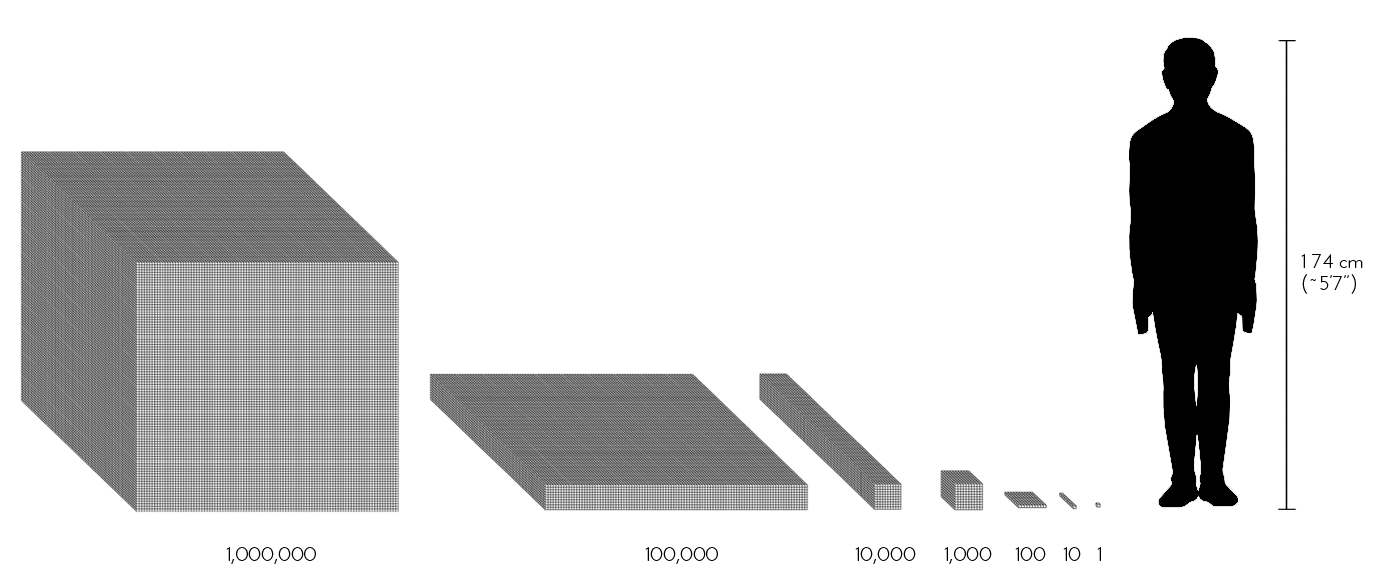
All my dinos would fit in a volume less than the block marked 10 in the picture below.
The big cube farthest to the left is 66% of my tanks volume.

All my Acroporas are dead and the Montiporas look like zombies.
Do we think their poison is in the water column or that SPS die or suffer due to dinos entering their tissue?

Think of that for a moment.


zoomin.pngl
 
I have to say that I am believing the variety of dino in my tank is not especially toxic, at least from a chemical standpoint. I can see how they would smother corals though. I can't help but wonder if they have an extremely short lifespan? Every morning the sand seems way less covered by brown, only to have the "bloom" rush back bigger and badder than before. If on the other hand they simply launch themselves into the water column at night perhaps UV would help? It does seem like I killed off one of their limiting factors, specifically competition. The simple green algae like you might expect to scrape off the glass seemed to disappear when the dinos showed up.
 
I am trying a multi-pronged approach to reduce the dinos by dosing Stability to increase the good bacteria population, vodka to reduce the bubble algae and zooplankton to increase the dinos natural predators and to build a better pod population for a future mandarin. All of that plus increased water changes and sand vacuuming to remove as much as possible from the sand bed. It is still too early to tell if this approach is going to work, but it is the cheaper alternative to a quality UV setup.

@Mike, I have that same "bloom" that you speak of but my bloom has been slowed by the approach listed above. I even added a Diamond Goby to keep the sand bed in a constant state of being turned over but he has made a burrow under some rocks and hasn't come out since I bout him last week. Only time will tell if he has any impact on the situation.
 
The center section of my 20g. fuge contains about 30pcs of live rock and two bags of Seachem matrix. The section is a low flow area and a LOT of detritus settles out on the bare bottom. When my nitrates get back to less than 5ppm. I am going to slowly remove the rock and see if the matrix is sufficient. My logic is if I don't have to pull the rock and rinse it I might do better husbandry. That seems like a more realistic kption than my hit and miss routine. I have begun removing my oolite sand bed and replacing it in thirds with coarser sand which I can actually vacuum. I replaced the first section about 2 months ago allowing the new stuff to populate before continuing.
 
I removed the sand bed from my tank about 6 months ago and did a large water change in the process. I left the tank as a bare bottom for about 2 months, then washed the sand extensively (it stunk) and put it back in the tank with another large water change. Within a short period of time, the dinos took over the sand bed again and it started to look like crap again. This was long before I started the dosing regime.
 
I don't see how dosing Seed or any kind of heterotrophic bacteria could help fighting dinos. In fact, most of dino populations use bacteria (but no in a parasitic way).

Do NOT use PO4 reducing resins if you are fighting dinos.
 
Phos. reducing resins

Phos. reducing resins

I don't see how dosing Seed or any kind of heterotrophic bacte.a could help fighting dinos. In fact, most of dino populations use bacteria (but no in a parasitic way).

Do NOT use PO4 reducing resins if you are fighting dinos.

I am learning here..... I am using Phosguard. I feel like I must have missed something. Why no PO4 reducers?
 
The theory is that dinos thrive in low phosphate because they take the place of algae. They need less than algae, but they're poisonous to snails... Creating chaos.

So if you go dirty tank method, you need some phosphate to create algae competition.
 
Phosphate reducers work in some cases with blooms like this, but not in others. You could try the approach. If the problem starts getting worse, removing the phosphate binder is easy to do.
 
If you're going to go clean, I recommend going heavy UV and skimming too. I also do water changes, carbon and full light in my refugium. I've also dosed hydrogen peroxide to kill anything in the water column. I also use small crabs and urchins to dislodge the dinos on the rocks. Big snails end up dying.

If it's brown algae, the phosphate removal would be good. If it's real dinos, you could go backwards unless you have a killing agent.
 
I have a coralife UV unit that needs a bulb. I will get one. I am using s coralife 125 super skimmer with a brand new pump I installed two days ago. My original pump burned out after 11 years so I can't complain. It seems foolhardy that I thought I could get by with a Maxijet 1200. It also failed last week so I finally got the original. My tank stats with the exeption of nitrates at 15ppm and pH at 8.4 seem normal enough. Hanna checker says PO4=0.01, SG=1.025, calc=480, dkH=9 and no silicates. There is a slight question in my mind though. This goop invading my tank is cinnamon brown trailing a slimy streamer here and there BUT it shows no bubbles whatsoever. Does that mean anything?
 
Back
Top