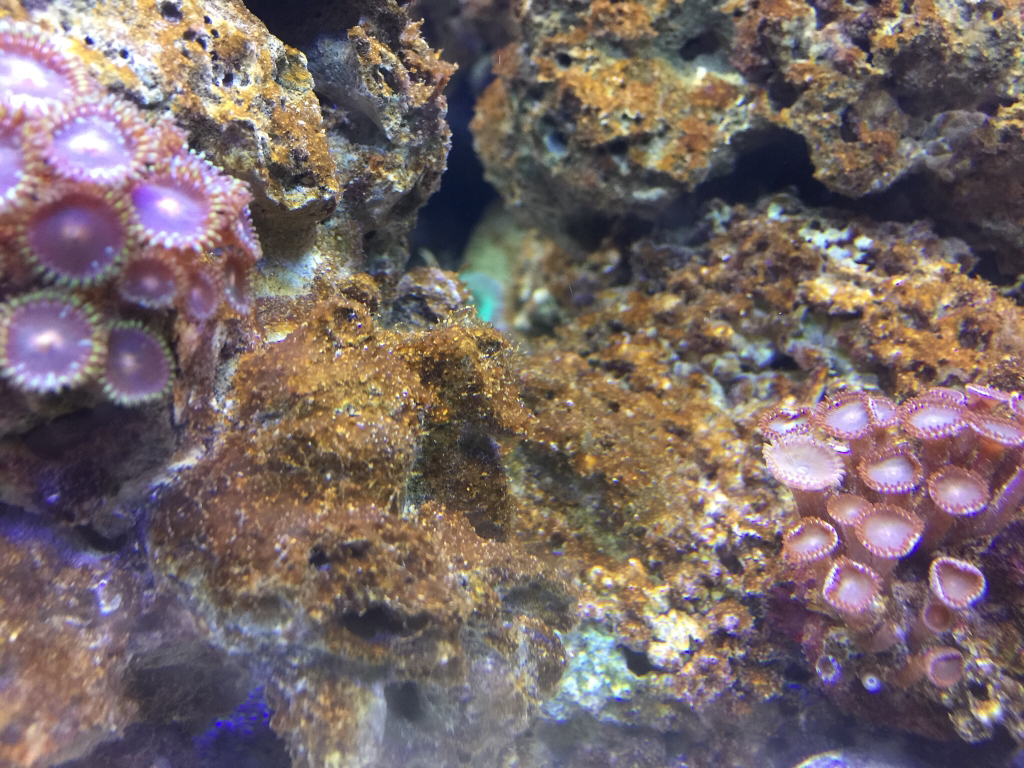
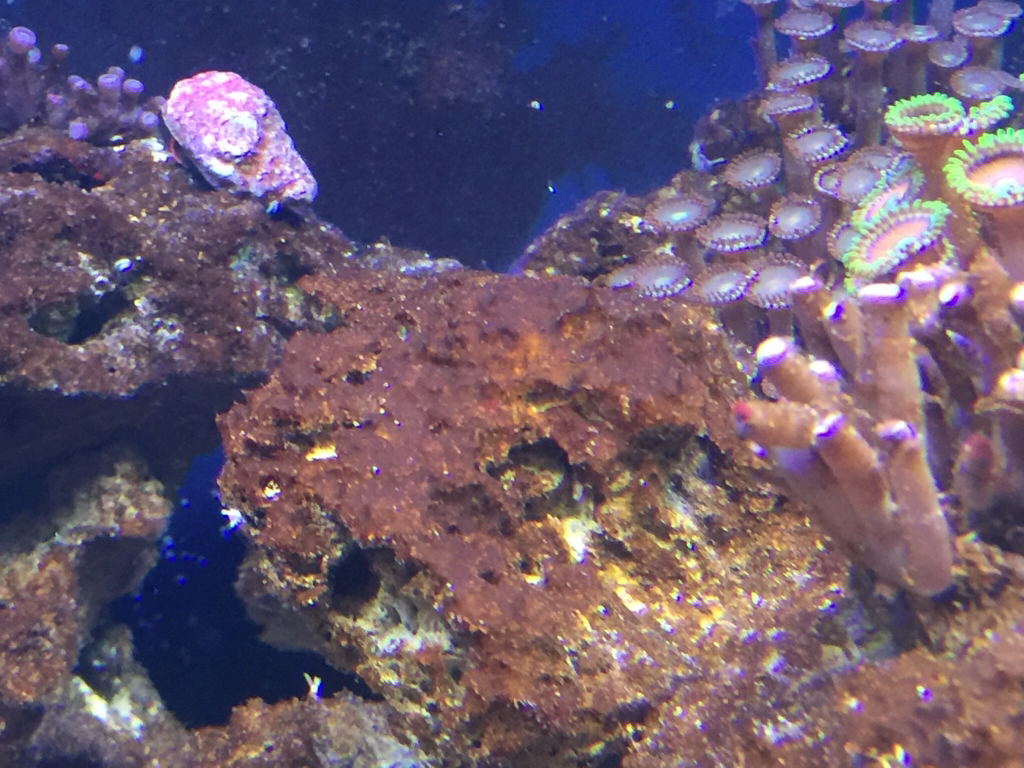
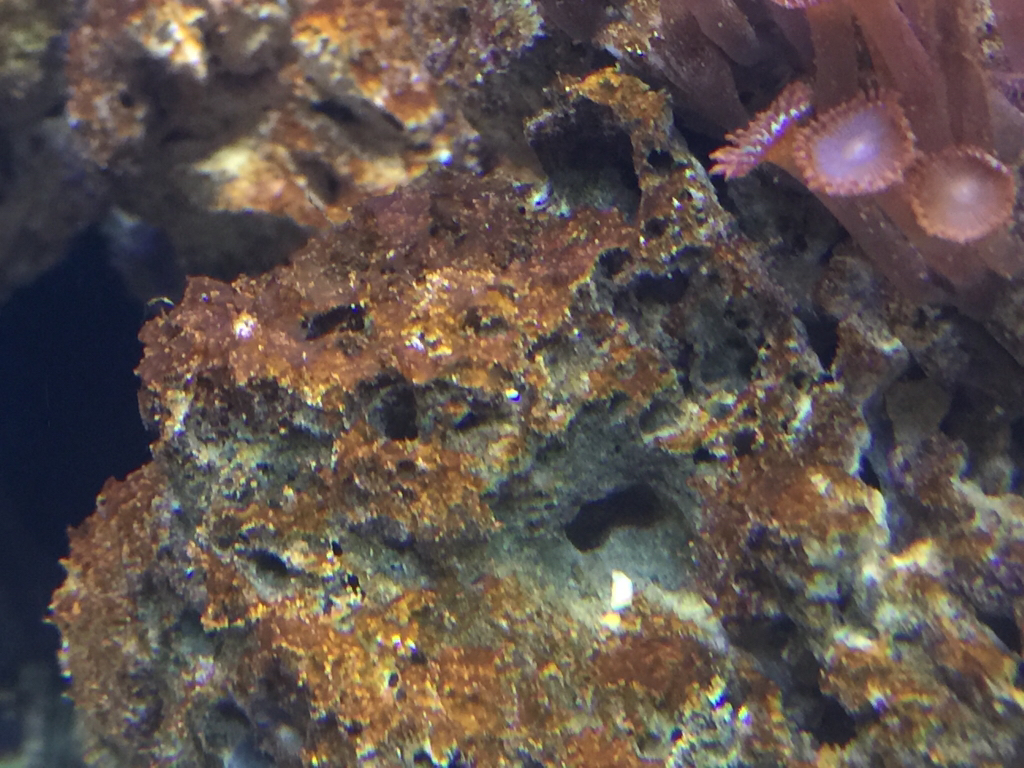
Dinoflagellates.

I bought the softcover for $30. The pictures says second edition, but there's a little note that says that the picture is of the hardcover that's only available in hardcover for $70.

In pursuit of knowledge and avoiding the wrath of my reef-hating wife, I'll stick with the first edition as a compromise. :D
 
I bought the softcover for $30. The pictures says second edition, but there's a little note that says that the picture is of the hardcover that's only available in hardcover for $70.

In pursuit of knowledge and avoiding the wrath of my reef-hating wife, I'll stick with the first edition as a compromise. :D
Will still be a great read. If I had a hardcopy I would loan it out to you. I only have it in my kindle. Can I share that with another kindle user?
 
I get that there are things in the tank that will use N and P but it still seems like a ridiculous amout of nutrients that are not being accounted for. I'm wondering more why algae doesn't show up right away when people are trying the dirty method.

Sent from my SM-G930V using Tapatalk
 
I get that there are things in the tank that will use N and P but it still seems like a ridiculous amout of nutrients that are not being accounted for. I'm wondering more why algae doesn't show up right away when people are trying the dirty method.

Sent from my SM-G930V using Tapatalk
Oh man, you have got to look under a microscope. It's everywhere along with every other nuisances you can think of like cyano. Periphyton is an all encompassing mix of life. Even if you never see it in full bloom, it's there.
 
No argument here about periphyton being there. I know it can and will suck up nutrients.

So then you think we just have to feed until the things in our tanks that suck up nutrients can't suck up any more and then green hair algae will start to apear?

Sent from my SM-G930V using Tapatalk
 
No argument here about periphyton being there. I know it can and will suck up nutrients.

So then you think we just have to feed until the things in our tanks that suck up nutrients can't suck up any more and then green hair algae will start to apear?

Sent from my SM-G930V using Tapatalk

I don't think so. It's not about the other parts of the tank absorbing nutrients. It's the dinos being able to outcompete in a specific chemistry and regions of the tank.

Most people cannot keep algae out of their tanks. It takes an imbalance for dinos to take over. The remedy is to back up and add enough nutrients, light, and flow to get algae back in the game. It's not about saturating the tank to the point that there's something left over for the algae. If dinos are present, they will simply consume and grow faster, releasing toxins and killing everything.

Either N, or P or both are too low. Flow is too low. or the algae-friendly zones aren't getting enough light... or a combination of those.

I still think that there are some elements that are more friendly to algae.. Iron? Zinc?
 
No argument here about periphyton being there. I know it can and will suck up nutrients.

So then you think we just have to feed until the things in our tanks that suck up nutrients can't suck up any more and then green hair algae will start to apear?

Sent from my SM-G930V using Tapatalk
I don't believe in the current discussion. [emoji4]

I gave my input on what I do which is nothing at all above and beyond what I normally do and patience. And I don't think any one way is applicable to all types.
 
so if I were to do another 3 day lights out, at the end of the 3rd day, do you think I would be able to measure any phosphate or nitrate? For some unknown reason, I can never get a measurable reading of either on this tank, no matter how much I feed. I always assumed the dinos were just too efficient at uptaking them to get a reading...
 
I am seriously shaken by all this - removing the sand was my last straw
Hey guys, It's me, DNA!

I'm the one that has had dinos for a decade and spent ridiculous amounts of time researching and implementing various methods on my own tank. I'm absolutely sure none even come close to have put the same effort into this than I have.

Here you are holding a working solution in your hands from the best source available and refuse to use it.

I swear this is my final post here until...
 
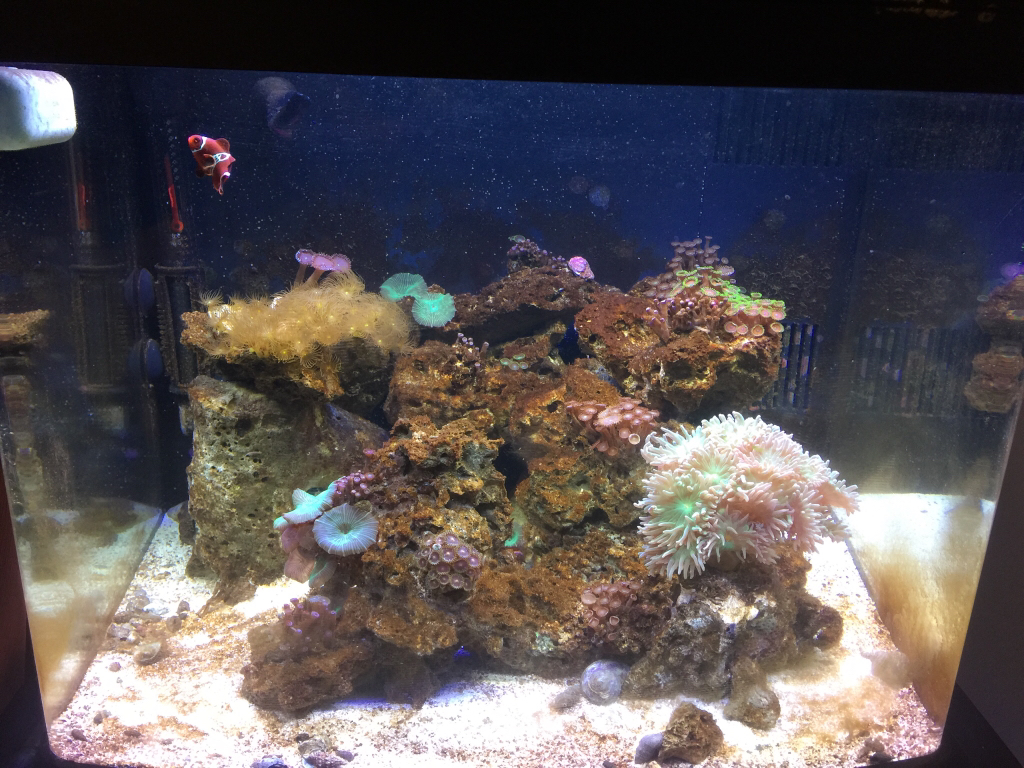
Wow... this thread is long. I read some of the first few pages and got some info. I also have been having a problem with what I assume are Dinos. It is like dust when I hit it with a baster. Lights off for 3 days seemed to clear it but it gradually returned despite lower light schedule. First, can someone confirm this is Dinos?

793ceed244d548350b37994f2bb693eb.jpg
d04ee94367b7b7fd4d84ffac1a8ef2bc.jpg
0b4e24d855ee30dec34a2202783c6a02.jpg
d3770419e048e7a0b04a83dd849d7d8a.jpg


Next, I've restarted my lights out. Previously it was covering almost all my zoas and it seemed to be killing them. When I did my lights out and blasted them off with a baster, my zoas returned. So again, I'm trying to get ahead of this stuff. Where would you guys turn next? Am I reading right that it's best to get rid of the sand bed? Most of mine seem to reside on my rocks and seem to especially light the more algae ridden rock. I'd think that I need to get this rock somewhat cleaned of algae to limit the Dinos from living in it. I was going to consider restocking my CUC, but then read that Dino toxin kills snails. Not sure where to go next. Thanks for any help.
 
technically, the only confirmation would come under a microscope. You need to take a picture and see if they match. There are several species of dinos...

but ... that looks like dinos to me. :(

most telling is the complete absence of algae anywhere.
 
get a UV sterilizer and run low flow through it and start an ATS and feed it.. that's what I would do if I were in your shoes.

DNA will tell you to remove all your sand and start over with a bare bottom after scrubbing your rocks too (jumping ahead :D).
 
DNA is correct in my opinion. Removing the sand bed worked for me. I may reintroduce crushed coral at some point but for now, it feels good to have this under control and to see my corals growing.


Sent from my iPhone using Tapatalk
 
Thanks for the likely confirmation. I need to get ahold of a microscope and see for sure. From reading, another confirmation is that when lights are out overnight, it seems to dissipate. Then once lights go on, it visibly gets more dense as the evening goes on. I know I have a spot or two of cyano, but the rest seems like Dinos I think.

A quick background story: I've had this 29g biocube set up for almost 2 years and am just now having the outbreak. 12 yrs in the hobby and first I've had an issue. My levels: SG 1.026, ph8.2, NO3 and NH3 are both 0 as always. Phosphates also zero. There's only the maroon clown, so very little daily pellet feeding.

Possible issues that started this: my RODI unit had long been overdue on DI media replacement. Plus my lights were the original lights and thus needed changed out big time.

So I changed out my RODI filters and got a TDS meter (didn't check before changing them) and my new water is 0 TDS. My lights have been changed also. My lights were then decreased from 6 hrs a day to only 4.5 hrs a day now. I also did some drastic water changes... A bit much at 80%... But I wanted to get any possible contaminants from the prior bad RODI water. That probably made the Dinos worse.

I will purchase a UV sterilizer. That definitely makes sense. I had an algae scrubber under my 180 for a long time a while back, but I gave up because of the maintenance required. I don't think I have space around my 29 that my wife wouldn't kill me for setting one up.

Is there still advise out there to do H202? I have a small RBTA, but I'd replace him if i knew the peroxide would help.
 
I tried peroxide and it was a temporary fix. I even had it dosing all day long and that was better, but not enough.

It's like a sickness and you need to consistently break it up (UV) and then have competition that isn't susceptible to the impact of UV like algae. The algae also needs to remove the dead tissue as it breaks down into N and P. Algae is your friend now.
 
Back
Top