New Perc's (pics) don't like different anemones

Mad Marine

Member
Hey,

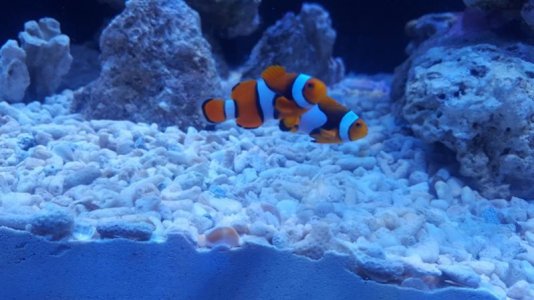
I received two perc's (not sure if wild or tank raised) from a company in France and shipped to Ireland. They have 'Tank raised' option on many of the lists but I didn't select this option, so presume they are wild. They're quite small in size (I did order one large one small to pair up but I received two small) markings are much deeper then Perc's in my LFS. I hope to get this clarified once the supplier is back from the xmas holidays. I have regular Bubble-tip, Rose Bubble-tip and a Green Long Tentacle anemone. They went in and hung out together (lots of quivering going on, the slighter smaller, lighter coloured one obviously accepting dominance of the other fish). I kept wild percs before and they immediately accepted a bubble-tip.

These guys totally ignored the anemones and when I added a flame angel to the system they separated. Now my plan is to catch them put them in a large fish trap with either a Magnifica, Gig, or crispa - see if they take to it and then release once accepted into the system.

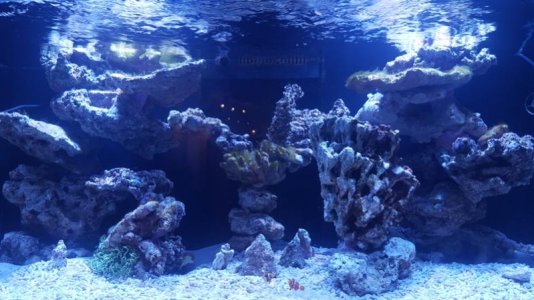
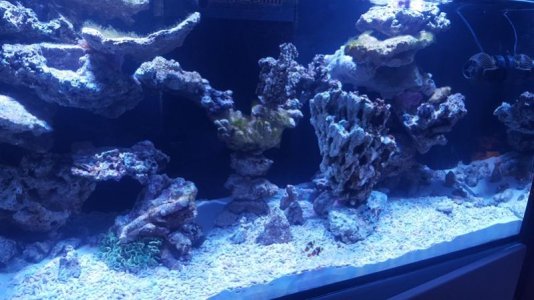
I have one soft tree coral, 2 urchin, fire shrimp and a couple of snails. 350 Red Sea Reefer, triton method, lots of flow, hydra AI 26 HD's.

My question is in your overall experience and knowledge which of the three anemones would be the least problematic? I wouldn't be too concered about Magnifica walking around as I have no corals at the moment.

All thoughts would be greatly appreciated.

Thanks. MM
 

Attachments

  • perc 1 small.jpg
    perc 1 small.jpg
    53.1 KB · Views: 4
  • perc 2 small.jpg
    perc 2 small.jpg
    65.8 KB · Views: 4
  • perc 3 small.jpg
    perc 3 small.jpg
    63.2 KB · Views: 3
of the 3 nems you listed, crispa is the easiest and least problematic, but they would need a sand bed i would think. the other 2 are prone to get infected as they are poor shippers unless you have the means to treat them.

as for the clowns, you dont need to go to any hardship trying to get them to host, give them time and they will eventually find the nem. like anything in this hobby, patience is the "key" to success. if you put the nem into a container with the clown, the nem will likely not like it as mag and gig loves the flow, you can stress them or they will be very unhappy. so going back to the "being patience", let it be and the clowns will eventually find their "home".
 
If you give a clown it's a natural host, they will jump in very quickly. The 3 you have now are not natural hosts for A. percula so they may or may not use them as hosts.

An magnifica, gigantea (I'm not sure about crispa) are natural hosts and it won't take long.


Sent from my iPhone using Tapatalk
 
^^ That, this is an area where a lot of reefers are starting to learn the difference in keeping natural match's as to what would be found in the wild vs an alternative.
So many base their experience on WC vs TB clowns and really there should be no difference, the instinct to want a host is still very much there in both, but many times people have kept clowns w/ an unnatural host and it went ignored, sometimes for a very long time, then a natural host match was given and hosting began almost if not immediately.
A magnifica is a natural host to percula.
 
My red sea clarkii went in the bta soon as he saw it. My two percula clowns too about two months for them to go in my gbta. They are in my coralife biocube 29.

My two mocha pair took a few days n my maroon took a few months to go into thrur btas , currently in my 110g.
 
First of, those are definitely wild caught percula, likely from the Solomons, or possibly from Irian Jaya.
Based on their coloration they were caught in shallow waters which means that they were in a gigantea in the wild.
To maintain the black in their coloration I would only give them a gigantea as crispa and magnifica in most cases cause the black to be reduced to just a fine line around the white bars.
A very good alternative to an anemone - short or long term - would be a ceramic flowerpot, anemonefish love those as anemone surrogates. The benefit of those is also that they usually don't affect the coloration of the fish.

Sent from my XT1254 using Tapatalk
 
Last edited:
My red sea clarkii went in the bta soon as he saw it. My two percula clowns too about two months for them to go in my gbta. They are in my coralife biocube 29.

My two mocha pair took a few days n my maroon took a few months to go into thrur btas , currently in my 110g.
Clarkii and closely related species will take any anemone, even none hosting anemones from the Atlantic.

Also, there is no such thing as a Red Sea clarkii - if your fish is from the Red Sea it's a bicinctus.

Sent from my XT1254 using Tapatalk
 
Thats the name most people and stores go by. It looks different from the normal clarkii, if you ask most people they wont know what a bicinctus is. Also on most fish store n online site that is what they go by.
 
When u do a search for Red Sea Clarkii nothing comes up. All point to Red Sea Two Band. And most list the scientific name.


Sent from my iPhone using Tapatalk
 
Thanks for the reply ThRoewer. Dealer confirmed they are wild caught. Added a magnifica yesterday, so far it has been ignored. I may have to go the gigantea route. cheers MM

P.s.aznflyfisherman - A. bicinctus are endemic to the Red Sea (I dived there), Clarkii doesn't come into the equation.
 
Hi,

One clown went into the magnifica when the lights came on this morning, I caught the other one (who was hiding in the upper corner of the tank behind the cleaning magnet but well and eating lots) I scooped him in a net a put him with the nem. The two looked very happy in their new home but then after 5 minutes they started locking lips and fighting pretty badly. I didn't want one to kill the other (maybe they would have settled after a while) but when there's no quivering/shimmering it wasn't looking good. I decided to catch and put into a floating container (see attached pics) with the hope they'll get use to each other without harming one another.

I would appreciate your thoughts.

Thanks MM
 
I would have gone with two flowerpots in the beginning. Especially ocellaris and percula love those as anemone surrogates, but they usually don't fight over them like over anemones.

A magnifica is IMO also not the best choice for shallow water percula as especially wild caught specimen will almost certainly lose their black.

If they are both still small they should over time become a pair. Though an anemone might not be helpful right now.
I had a similar situation with one of my percula pairs. They both were still rather small and it took them a year before they really got along well. They would not fight, but the dominant one would not allow the other to get inside the flowerpot.

I would think that you may be better off right now to keep them in a smaller tank without an anemone but rather just a couple of flowerpots. They seem to be too close in size to have figured out who is the boss. What they need right now is tme and food and maybe a mean damselfish to force them to stay together.

BTW, how large are they?

Sent from my XT1254 using Tapatalk
 
If you give a clown it's a natural host, they will jump in very quickly. The 3 you have now are not natural hosts for A. percula so they may or may not use them as hosts.

An magnifica, gigantea (I'm not sure about crispa) are natural hosts and it won't take long.


Sent from my iPhone using Tapatalk

Is RBTA natural host for black and white snowflake clownfish?
I know it is for Ocellaris.
I have 2 clowns one is ocellaris, and the other is black and white snowflake.
Planning to pick up an RBTA this weekend.
 
Snowflakes are designer occellaris.

RBTAs are NOT natural hosts for occellaris

Will occellaris choose btas as host? Sometimes yes, sometimes no. Tank breds seem to accept non natural hosts easier.


Sent from my iPhone using Tapatalk
 
Back
Top