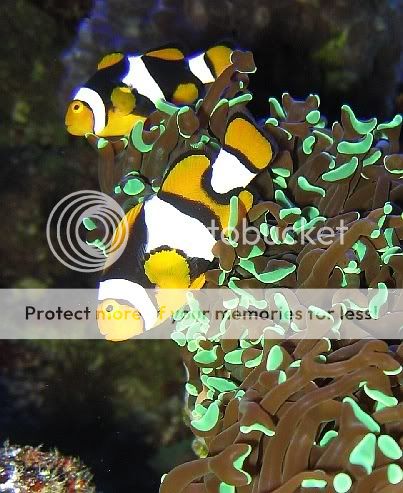
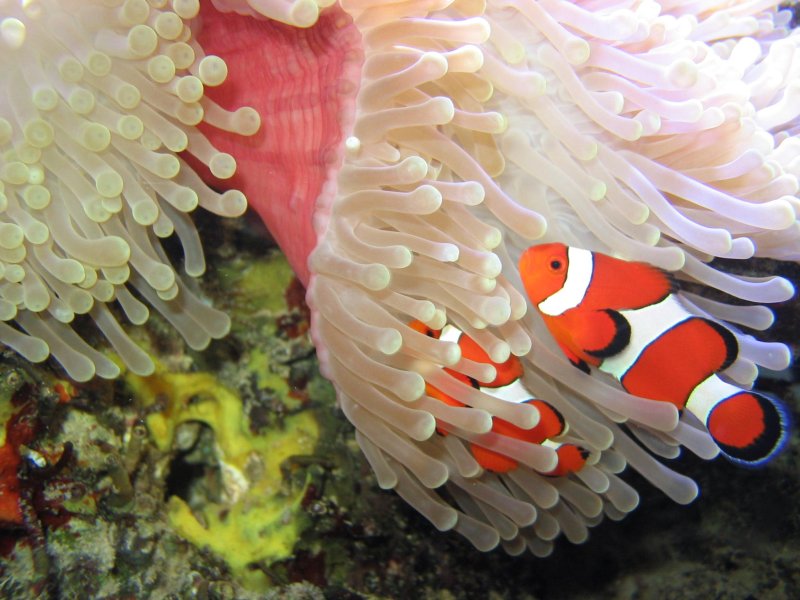
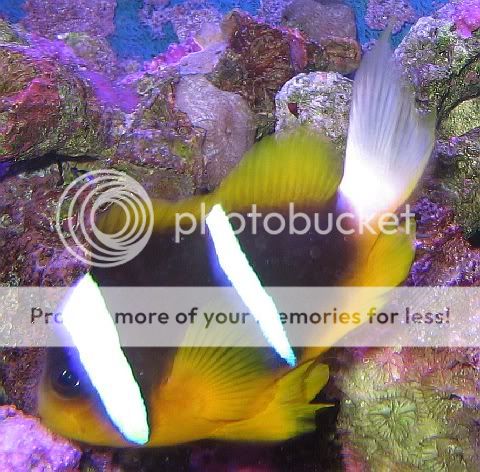
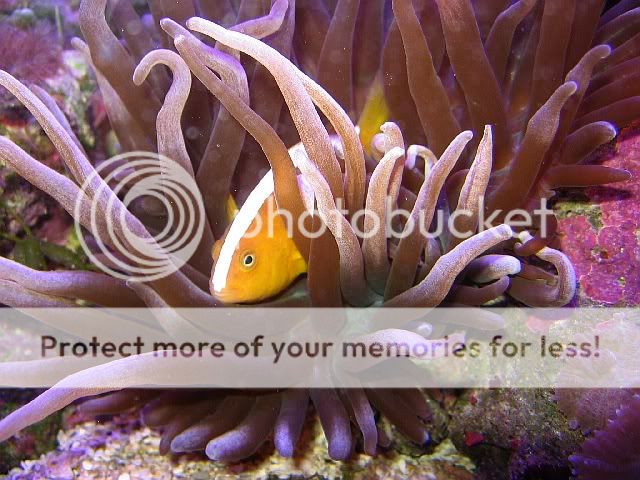
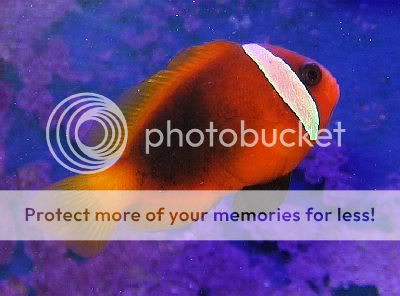
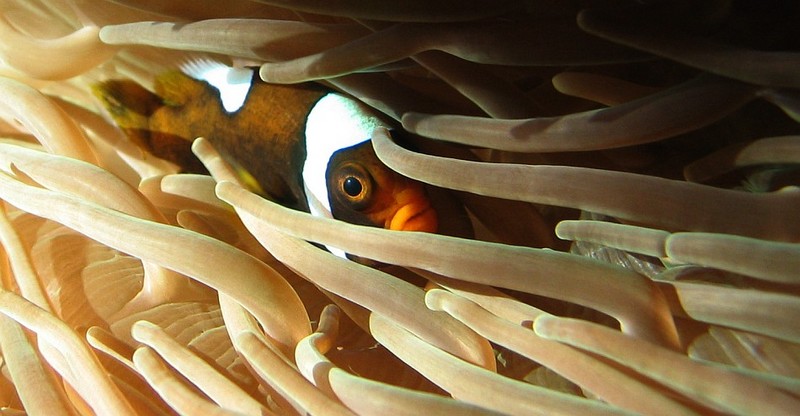
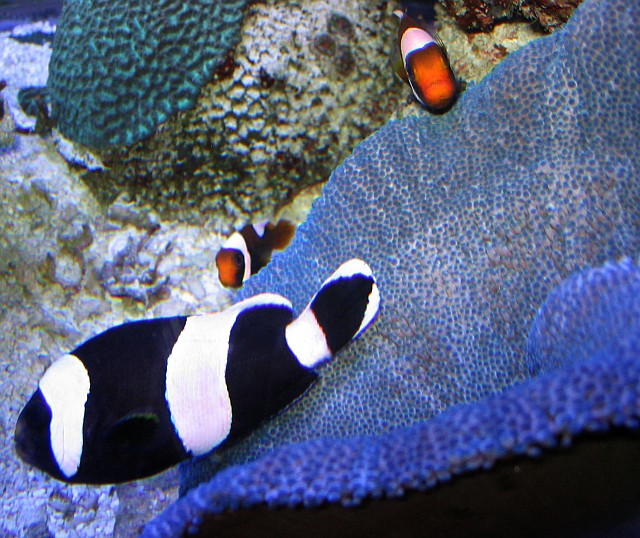
some of my Anemone & Clownfish pix

9_24_11c.jpg


9_24_11d.jpg


9_24_11e.jpg


9_24_11f.jpg


9_24_11g.jpg
 
Gary, beautiful tank and photography!! Wow, I am amazed! I only glanced through the text, but I saw that you were using a P&S, really? You must be on a full blown DSLR and serious length macro to get shots like that, I am thinking a 200mm to get some of those shots. Very well done on the reef and photog regardless.
 
Thank you for sharing your beautiful pics. I know nothing about photography and any pics I have taken of my tanks over the years didn't do them any justice and always looked too blue. After seeing your pics I ordered myself a Powershot A510. Since it's now an older model I was able to find a used one for $16! So thank you again : )

Please keep the pics coming. They're simply stunning.
 
no.
IME the diet fed to fishes can affect their coloration but I've never seen one of my Clowns get darker because of their anemone symbiont (although I know it can happen in certain cases).
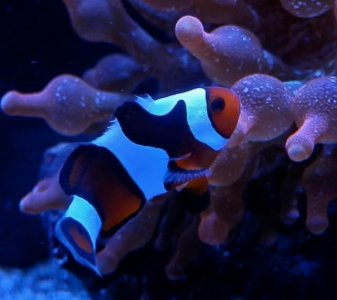
I had a feeling that clowns can darken after being hosted for a while. It happened to my male Misbar Ocellaris. My female never changed color though. I'll post a pic below of him now. His top half use to be just a slightly more faded/greyed color of orange compared to his bottom half, but now his top is almost completely black! Does this happen very often with clownfish? He and his girl are being hosted by an RBTA (as you can see in the backround).
P3220025 (640x570).jpg
 
Last edited:
Even among those that think host anemone species may affect Amphiprion coloration Entacmaea quadricolor is NOT an anemone species often cited as being one of them.
Your clownfish most likely darkened because of genetics, diet, maturation or a combination thereof, Holly.

I prefer not to turn my picture thread into a question and answer thread or debate on any topics so I'll start a new thread.
Here's the link:


might host anemone species affect Amphiprion coloration
 
Last edited:
Back
Top