algea scrubber

jimmyrow

New member
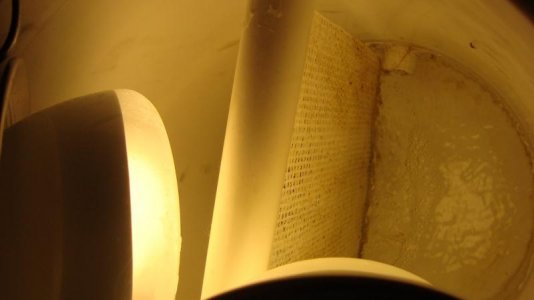
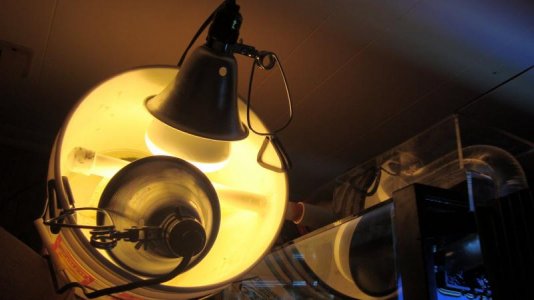
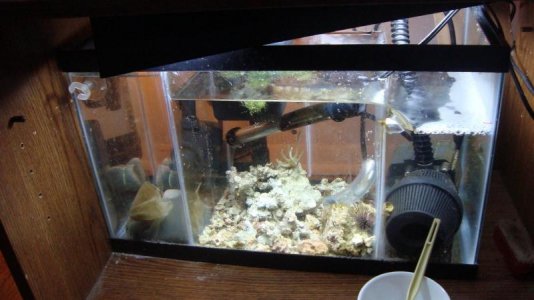
ok so a week ago i made an algea srubber. Its been hooked up and has been 4 a week now cleand the screen yesterday and all i seem to get is brown or dark algea so. my overflow is 300g my return pump from my sump is 250 my screen is 8inchs long like ten tall. im scared to turn off my skimmer thow cuz im not sure this thing is working proporly
 

Attachments

  • rsz_dsc01642.jpg
    rsz_dsc01642.jpg
    24.8 KB · Views: 33
  • rsz_dsc01640.jpg
    rsz_dsc01640.jpg
    35.7 KB · Views: 39
  • rsz_dsc01641.jpg
    rsz_dsc01641.jpg
    51.4 KB · Views: 32
Its too soon for you to turn off your skimmer right now. Its not working yet becuase it hasn't had time to seed itself with the right type of algae. Once you get dark thick algae growing on it, i would say its safe to turn the skimmer off.
 
Don't turn off your skimmer, the algae scrubber is NOT a replacement for a protein skimmer. The scrubber reduces nitrates and phosphates that are the end results of biological processes. The skimmer removes the dissolved organics, before they are broken down into nitrates. Skimmerless systems do poorly compared to systems with skimmers, and over the years the volume of information that supports this is ridiculously large. Even with the scrubber, and no skimmer, the build up of organics in the water will overburden the system, and must be dealt with. The only way is with very frequent water changes. The build up leads to such things as cyano outbreaks. Systems can be successful without a skimmer, but it takes a bit more than an algae scrubber.
 
Don't turn off your skimmer, the algae scrubber is NOT a replacement for a protein skimmer. The scrubber reduces nitrates and phosphates that are the end results of biological processes. The skimmer removes the dissolved organics, before they are broken down into nitrates. Skimmerless systems do poorly compared to systems with skimmers, and over the years the volume of information that supports this is ridiculously large. Even with the scrubber, and no skimmer, the build up of organics in the water will overburden the system, and must be dealt with. The only way is with very frequent water changes. The build up leads to such things as cyano outbreaks. Systems can be successful without a skimmer, but it takes a bit more than an algae scrubber.

Unc is 1,853.7 percent correct on this guys.....
T
 
Assuming you've roughed up the screen like it's going out of style, it looks like it could end up being pretty effective. But from what I've read, you really have got to have the scrubber running at full capacity before you take the skimmer offline.

Regretfully this forum seems to be low on folks that are able to offer solid, experience-based help with the scrubbers. But the scrubbers certainly have been known to have efficacy. The system I'm planning so far is going to use algae scrubber as the primary filtration. If you want comprehensive information and pictures, success stories etc, google 'santa monica scrubber' and hit the first link :)
 
Assuming you've roughed up the screen like it's going out of style, it looks like it could end up being pretty effective. But from what I've read, you really have got to have the scrubber running at full capacity before you take the skimmer offline.

Regretfully this forum seems to be low on folks that are able to offer solid, experience-based help with the scrubbers. But the scrubbers certainly have been known to have efficacy. The system I'm planning so far is going to use algae scrubber as the primary filtration. If you want comprehensive information and pictures, success stories etc, google 'santa monica scrubber' and hit the first link :)

Wonder if that is beacuse they have not proved out for the LONG HAUL....
Many things will work for relatively short periods.:thumbsup:

But, the yellow water, and the release of phenols, skatols and creosols, which are known irritants to most SPS, and many LPS corals....well it just does not make sense for many of us that cannot devote the time required for maintenace of rotating, scraping, washing down screens.
And - it is - again long term - inevitable that there will be turf algae species in the display tank to deal with. Grazing animals you say???, sure - that is a "failure of prevention" form of husbandry....just not the best scenario.
Would it not be more prudent to look down the road a bit further, and recognize that there are reasons the algae scrubber technology has been around for 30 odd years - and is *not* the approach of choice, for millions of hobbyist - perhaps for some very sound reasons???

Hey - whatever works for you....But there are plenty of us here, on this board that are VERY familiar with Dr. Adey's original designs, and may just have even worked on the ones empolyed at the Smithsonian:wavehand:
And, that - by most folks definition would be "experience"......:lmao:

Best of Luck!

T
 
Last edited:
You seem to have some very strong feelings there teesquare. Care to be productive/convincing with that energy?

But, the yellow water, and the release of phenols, skatols and creosols, which are known irritants to most SPS, and many LPS corals....

I'm happy to believe that phenols skatoles and creosols are known irritants to many things. Could you supply some sort of reference that talks about these molecules in relation to algae scrubbers?

well it just does not make sense for many of us that cannot devote the time required for maintenace of rotating, scraping, washing down screens.

I've never heard of a person spending more than five minutes a week doing this. Did I miss something?

And - it is - again long term - inevitable that there will be turf algae species in the display tank to deal with.

Yes this makes perfect sense - if turf algae is introduced. Every successful turf scrubber that I personally know of is not actually relying on true turf algae though.

Grazing animals you say???, sure - that is a "failure of prevention" form of husbandry....just not the best scenario.

I don't beleive I said anything about grazing animals :)

Would it not be more prudent to look down the road a bit further, and recognize that there are reasons the algae scrubber technology has been around for 30 odd years - and is *not* the approach of choice, for millions of hobbyist - perhaps for some very sound reasons???

It always has been around, just not so much on this forum. Try google, you'll have a lifetime's worth of successful setups to read about. Or if you would prefer to see an example on this forum, ask PaulB how the algae is working for him, or ask kcress or DWZM what they think.

Although you're absolutely right that by far protein skimmers dominate the hobby in this regard. I would imagine that this is because they are in fact much easier to use, and are basically guaranteed to work from the get-go.

Hey - whatever works for you....But there are plenty of us here, on this board that are VERY familiar with Dr. Adey's original designs, and may just have even worked on the ones empolyed at the Smithsonian:wavehand:
And, that - by most folks definition would be "experience"......:lmao:

Best of Luck!

I wasn't in the hobby decades ago, but from everything I've read, the methodology has changed considerably in the past few years. We could discuss this further if you like.

You say you worked on the turf scrubbers at the Smithsonian? I'd love to hear more about it. By all means though, please keep it factual and leave the sensational hyperbole out :)
 
You seem to have some very strong feelings there teesquare. Care to be productive/convincing with that energy?
Sorry - it is not my job to "convince". But I feel a moral obligation to attempt to help prevent frustration where it occurs, in a friendly manner


I'm happy to believe that phenols skatoles and creosols are known irritants to many things. Could you supply some sort of reference that talks about these molecules in relation to algae scrubbers?

Where would you like to start? Martin Moe, Julian Sprung, Charles Delbeek...or me:spin3:?
And - the chloropyll release is another fun adventure...you may want to study the impact of that one. In like respect to what skimmers remove, scrubbers utilize *some* of thesecompounds, but- release some as well as the individual algal cells ripen/die - or in some cases go sexual and are attempting reproduction.(Dependant on the species of choice, etc) As well - when you clean the scrubber, there may be residual organic of the above mentioned, and others which get back in to the water column


I've never heard of a person spending more than five minutes a week doing this. Did I miss something?

Only if you are talking about terribly small - and likely under-sized systems would a true "five minute cleaning" be sufficient, again without adding back a lot of the nasties mentioned above.


Yes this makes perfect sense - if turf algae is introduced. Every successful turf scrubber that I personally know of is not actually relying on true turf algae though.

This month...but it seems to go , in merry go round fashion - the choices that are the next best algae...I have seen the gambit. Turf, or any other algaes WILL inhabit the display within a couple of years of setting up an algal turf scrubber. It is just not possible to prevent ANY from getting back into the display


I don't beleive I said anything about grazing animals :)

No - you did not. That is usually the next comment tho:lol2:


It always has been around, just not so much on this forum. Try google, you'll have a lifetime's worth of successful setups to read about. Or if you would prefer to see an example on this forum, ask PaulB how the algae is working for him, or ask kcress or DWZM what they think.

I have great respect for Paul - but let's qualify his aquarium: Not a "reef" tank, by the typical appearance/definitions - and more importantly how many of us just go out to the beach, and get our water for water changes??? he is using reverse flow undergravel filtering as well....And I am duly impressed with him tenacity to the "old tried and true. But - folks like Paul are rare individuals, and due our wonder and respect. Not really a paralell most can draw from...Intersting that there are always the "1%" in any endeavor, - and we need that for a number of reasons to continue learning what to do , and not do - but really - if the method is better, providing better results...WHY is it not the popular choice? if it saves time or money, or even works well enough to impress perspective clients/customer, then where is Inland Oceans today? Why do the various speakers at MACNA or other conferences not keep pushing this system as *THE* approach for a better aquarium system???? Why do we not see wholesalers, or large scale frag farming filtered this way? Did you ever see their systems? Impressive in size - and very yellow looking.


Although you're absolutely right that by far protein skimmers dominate the hobby in this regard. I would imagine that this is because they are in fact much easier to use, and are basically guaranteed to work from the get-go.

Well...I don't give protein skimmers carte-blanche either, but- they are a part of a long term solution

I wasn't in the hobby decades ago, but from everything I've read, the methodology has changed considerably in the past few years. We could discuss this further if you like.

I live for the discussion:lol2: Actually - this subject is soold, I was surprised that it had come up again.


You say you worked on the turf scrubbers at the Smithsonian? I'd love to hear more about it. By all means though, please keep it factual and leave the sensational hyperbole out :)

Sensational hyperbole......You must have learned that word somewhere expensive! I am duly impressed.
What's to tell? My life history? I am afraid it would bore you, and frankly...you use of English just scares me:) Or you could just do your research on me! :beer:

T
 
Last edited:
I ditched my algae turf scrubber and things have improved. They collect detritus at the bottom of the screen and even weekly cleaning is not enough. I've found the water below the screen needs to be deep enough to run a power head for the detritus to remain in suspension and reach the filter sock or skimmer.
 
does the scrubber/skimmer debate necessarily have to be an either/or scenario?

I mean... couldn't you run both?
Once upon a time I had a small system running with an undersized algae tray filter and an undersized skimmer. the tray filter ran for about 14hrs/day while the display lights were out. The skimmer was shut down for about two hours in the morning and evening when I was most likely to be feeding.

I felt that the water quality was quite good- compared to other common reef tanks of the time (early 90s). The ease of maintenance was fantastic-- I had 4 parallel algae plates and would just remove one each week, and swap in a fresh one. Then I could scrape/clean the "full" one at my leisure.

the skimmer would skim a little more sometimes, the algae would grow a little faster sometimes. Probably related to my feeding behavior or water changes.
 

Where would you like to start? Martin Moe, Julian Sprung, Charles Delbeek...or me?

Anywhere? I couldn't find any paper that either of them authored which discusses this. Can you link anything?


And - the chloropyll release is another fun adventure...you may want to study the impact of that one. In like respect to what skimmers remove, scrubbers utilize *some* of thesecompounds, but- release some as well as the individual algal cells ripen/die - or in some cases go sexual and are attempting reproduction.(Dependant on the species of choice, etc) As well - when you clean the scrubber, there may be residual organic of the above mentioned, and others which get back in to the water column

I can't say I've ever heard of anyone using contemporary scrubbers encountering this problem. I have heard that in the past it was not necessarily customary to physically export the algae that is being scraped off of the plates, the belief being that releasing it into the water column was providing food for the inhabitants. It is very easy to see how this would result in yellow water.

But with the methodology that I'm aware of - removing the plate, scrubbing and rinsing outside of the tank, on a religiously weekly basis - I don't see how the algae could ever build up and ripen/die/lyse at a rate that would cause discoloration of the water.

Similarly, in the past I have had aquariums with terrible long-term nutrient problems, and for months at a time the rock work and glass would be covered in varieties of algae, and I never experienced this yellow water.


Only if you are talking about terribly small - and likely under-sized systems would a true "five minute cleaning" be sufficient, again without adding back a lot of the nasties mentioned above.

I guess it's a matter of scale. The average person with a 100 gallon tank that's running a turf scrubber on the world wide web seems to have an algae screen the size of a dinner plate give or take. And I would concede that that weekly cleaning could take up to ten minutes to scrape the algae off in the sink etc. I would imagine that the screens at the Smithsonian are an entirely different story though :)


This month...but it seems to go , in merry go round fashion - the choices that are the next best algae...I have seen the gambit. Turf, or any other algaes WILL inhabit the display within a couple of years of setting up an algal turf scrubber. It is just not possible to prevent ANY from getting back into the display

I guess I haven't seen the "gambit". All of the turf scrubbers I have followed thus far have, like I say, not been relying on actual turf algae to operate. No algae is introduced to the system for the turf scrubbers to work. Instead, the scrubbers rely on miscellaneous microalgaes that are already present in the system to populate the screen. The screen is created with the right water flow and lighting to provide a preferential niche for these "nuissance" algaes, and whichever species in the system happens to be the most dynamic at any given time will take hold of the screen.


No - you did not. That is usually the next comment tho

Rest assured, this seems silly to me as well. :beer:


I have great respect for Paul - but let's qualify his aquarium: Not a "reef" tank, by the typical appearance/definitions - and more importantly how many of us just go out to the beach, and get our water for water changes??? he is using reverse flow undergravel filtering as well....And I am duly impressed with him tenacity to the "old tried and true. But - folks like Paul are rare individuals, and due our wonder and respect. Not really a paralell most can draw from...Intersting that there are always the "1%" in any endeavor, - and we need that for a number of reasons to continue learning what to do , and not do - but really - if the method is better, providing better results...WHY is it not the popular choice? if it saves time or money, or even works well enough to impress perspective clients/customer, then where is Inland Oceans today? Why do the various speakers at MACNA or other conferences not keep pushing this system as *THE* approach for a better aquarium system???? Why do we not see wholesalers, or large scale frag farming filtered this way? Did you ever see their systems? Impressive in size - and very yellow looking.

First and foremost, I love what Paul has done with the beer bottles in his setup. So much, that last time I was at a bonfire, I tossed in a beer bottle and melted it to an interesting contorted shape, and it will be a fun feature of my next setup.

With that out of the way, I believe I have an explanation for why the turf scrubbers are not more popular in spite of the fact that they are efficacious: Protein skimmers work, and much more reliably. While a person can purchase a protein skimmer immediately, that will have his or her water sparkling immediately and permanently, how can you go wrong? With so many unknowns already in a reef tank, with water chemistry, nuisance species etc, why not clutch on to a device that works so effectively and consistently?

Meanwhile, scrubbers seem to be a lot more temperamental, and can be doomed from the beginning if they are not set up correctly. They add another big monkey wrench to the equation. Naturally, if I were a coral farmer or ran a public aquarium, I would definitely not want to take my chances when another device is proven to work so much better and more consistently.

Meanwhile, if I have gotten the correct information on the history of algae scrubbers, they did get a rough start, and for many a rough reputation in the reefkeeping community with the methodology that was employed in the past.


Sensational hyperbole......You must have learned that word somewhere expensive! I am duly impressed.

James (Acrylics). I said something in his thread a long time ago like "The thing about acrylic, is if you look at it wrong it will scratch." He said if I speak in hyperbole it's pretty difficult to have a real conversation, and it made perfect sense to me. But yea, each year my tuition amounts to the cost of a luxury car :)


What's to tell? My life history? I am afraid it would bore you, and frankly...you use of English just scares me:) Or you could just do your research on me! :beer:

It would be a lot of fun to hear more about the Smithsonian setup if you were employed there. Research you? Are you published or something?

 
Last edited:
I ditched my algae turf scrubber and things have improved. They collect detritus at the bottom of the screen and even weekly cleaning is not enough. I've found the water below the screen needs to be deep enough to run a power head for the detritus to remain in suspension and reach the filter sock or skimmer.

Great illustration of my point. The turf scrubbers just aren't as simple to use as protein skimmers, are they?
 
does the scrubber/skimmer debate necessarily have to be an either/or scenario?

I mean... couldn't you run both?
Once upon a time I had a small system running with an undersized algae tray filter and an undersized skimmer. the tray filter ran for about 14hrs/day while the display lights were out. The skimmer was shut down for about two hours in the morning and evening when I was most likely to be feeding.

I felt that the water quality was quite good- compared to other common reef tanks of the time (early 90s). The ease of maintenance was fantastic-- I had 4 parallel algae plates and would just remove one each week, and swap in a fresh one. Then I could scrape/clean the "full" one at my leisure.

the skimmer would skim a little more sometimes, the algae would grow a little faster sometimes. Probably related to my feeding behavior or water changes.

That's a great anecdote. It sounds like you're not running algae anymore, why'd you get rid of it?
 
Yes, you could run both and I suspect best water quality for effort/running expenses/cost would probably use both. Suspect you could use units that are sized...(?)60%(?) of what you'd need if either were used exclusively.

There is no doubt that a TS is going to export nitrates faster than a skimmer ever could. Likewise a skimmer will probably skim out undesirable proteins and other gunk that turf would pretty much ignore.

For large tanks a TS starts becoming a problem energy wise. You could probably run a skimmer with less electricity than the wall-o-light needed to power a TS. If you live somewhere tropical like Florida and you can run a TS with solar power outside then the energy issue would swap to a TS being less costly to run energy wise.

I'll be trying both on my build.


jimmyrow: I forgot to ask if you are running your lights 18 ON 4 OFF?
 
Anywhere? I couldn't find any paper that either of them authored which discusses this. Can you link anything?

http://www.marinedepot.com/ps_viewi...m_campaign=mdcsegooglebase2&utm_content=BKMAH


http://www.amazon.com/Marine-Aquarium-Reference-Systems-Invertebrates/dp/0939960052/ref=pd_sim_b_4

http://en.microcosmaquariumexplorer.com/wiki/Marine_Aquarium_Handbook_Beginner_to_Breeder

http://www.fosterandsmithaquatics.com/product/prod_display.cfm?pcatid=4703

Unfortunately, the internet is not the only place to find information, and sometimes is *not* the place. Within books you will find a wealth of information that is not available on the internet, and in some cases contradicts what is "common knowledge" or "common practice" put forth on the internet. As T pointed out, it is not the job to convince-- as this becomes cumbersome. Rather to advise (whether is is direct to the point or very detailed) based on experience, and knowledge obtained from books, or other sources. If those attending wish to research the information, it is usually available at the library if it is not online. :)
 
Last edited:
wow!!! um im gunna run um both till probly i take the tank down y not it cant hurt. i have the lights on the ts 18on 6 off. i mad mine a little weird so the dran hole is 2inchs off bootum off buckit might need to redesing or put a powerhead in there. as 4 the debate sorry to start all that i see benifits in the ts so i included one. i did rough up the screen a lot. after firstweek it was just brown now were on day 3 of 2week and theres as much as there was at the end of last week.
 
http://www.marinedepot.com/ps_viewi...m_campaign=mdcsegooglebase2&utm_content=BKMAH


http://www.amazon.com/Marine-Aquarium-Reference-Systems-Invertebrates/dp/0939960052/ref=pd_sim_b_4

http://en.microcosmaquariumexplorer.com/wiki/Marine_Aquarium_Handbook_Beginner_to_Breeder

http://www.fosterandsmithaquatics.com/product/prod_display.cfm?pcatid=4703

Unfortunately, the internet is not the only place to find information, and sometimes is *not* the place. Within books you will find a wealth of information that is not available on the internet, and in some cases contradicts what is "common knowledge" or "common practice" put forth on the internet. As T pointed out, it is not the job to convince-- as this becomes cumbersome. Rather to advise (whether is is direct to the point or very detailed) based on experience, and knowledge obtained from books, or other sources. If those attending wish to research the information, it is usually available at the library if it is not online. :)

1. I was quite simply asking for a place where I can go and read more about the phenols, skatoles and creosols that were brought up. Like I said, I would be happy to believe that these are a problem, I'd just love to see more information about it.

This is because, the more time I spend on these boards, the more skeptical I become of statements that are presented as fact, which are quite simply not true. Example:

http://www.reefcentral.com/forums/showpost.php?p=17787416&postcount=41

2. But you're absolutely right about the value to be found in physical texts. My last pharmacology professor recently told us that hes been teaching for decades, and has yet to find a better explanation of a particular mechanism than was originally printed in one of his books. Maybe it's finally time for me to pick up a copy of The Reef Aquarium by Delbeek and Sprung :)
 
I've been running an ATS for about 18 months with no other form of filtration (not even a filter sock). It most definitely works. Conversion from a 5 year old FOWL with consistantly high nitrates (50+PPM) and off the chart P04. Now everything is rock solid at 0.

I've never tried a skimmer, but would like to give a good skimmer a try to see if I can get increased growth out of my SPS.
 
Back
Top