
You are using an out of date browser. It may not display this or other websites correctly.
You should upgrade or use an alternative browser.
You should upgrade or use an alternative browser.
Dinoflagellates.
- Thread starter DNA
- Start date

DNA
New member
I wouldn't boil a filter sock under any circumstances.
Not the best choice of words on my behalf.
I was just saying the heat in in washing machine has no effect on the toxins.
Boiling is really dangerous since the toxins can be breathed in with the steam.
After my socks get cleaned and dried they give off smelly odor and it's clear that there are still particles stuck in the socks massive surface area. Dust them off and you could be breathing them in.

Quiet_Ivy
New member
I would like to point out that filter-socks used in dino infested tanks could be a health risk after washing and drying.
They can potentially collect a lot of toxins in a few days of use in the tank. The toxins are not neutralized with boiling and the little that did not get washed off can easily get airborne after the sock dries.
A solution could be to store them in a salt bucked.
I'm using cheesecloth and throwing it out for exactly that reason. Dinos make my asthma a lot worse. Modern washing machines suck, they don't even kill dust mites and other allergens. Did you know that Ostreopsis ovata makes palytoxin, the toxin that's been poisoning the heck out of aquarium enthusiasts lately? Scary.
Amphidinium is one of the most common genera Pants identified in people's tanks, along with Ostreopsis and Symbiodinium. His website with pics: http://www.algaeid.com/identification/
I'm not recommending 8 day blackouts, I have no idea if that's safe for other life. I just find it interesting that they tested the usual 3 days and found dinos regrew very well. That has certainly been my experience.
8 days is the length of time it took the dinos to starve-even mixotrophic organisms must prey on something. They were checking on starvation vs apoptosis/chemotrophy.
hth
ivy
I recommend no skimming until you start to notice the early stages of hair algae then start skimming dry, a small amount of carbon to remove toxins, maybe 1/4 of what is recommended for your size system.Question about the Dirty method. I've seen some recent posts showing people going Dirty but also skimming and running carbon.
Does that still qualify as dirty? I havent done either while in dirty mode. Is it recommended I wet skim and run carbon?
Billybatz9
New member
Going to order filter socks to siphon water into... hopefully will catch some dinoflagellates.
Should I go with 10 microns or 25?
Should I go with 10 microns or 25?


scubadan206
Member
When my tank had dino's, my nitrates and phosphates were at zero. Mine went through a two week blackout. After the die-off my nitrates spiked to over 150. All the algae died and released it all back into the water column. I then did about a 90% waterchange. Have not seen any of the stuff since.
If you are wondering, I removed any coral I could to another tank.
Daniel. :wildone:
If you are wondering, I removed any coral I could to another tank.
Daniel. :wildone:
Billybatz9
New member
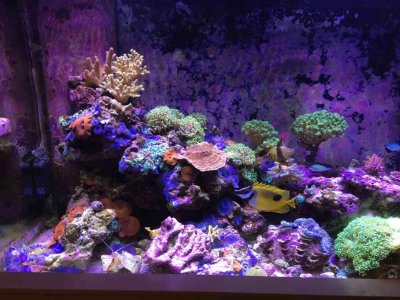
You used Dino x right?Been three weeks without dinos and still have no detectable nitrates or phosphates. Been feeding 4 times a day and haven't done a water change in two months.
No chemical filtration. No carbon.
Just a skimmer and filter floss. And a ton of cheato.
View attachment 331662

karimwassef
Active member
I'll make a few claims here - and see what you think
"Dinos explode when the majority of rock in the system is artificial or decimated through bleaching/baking, etc..."
Another claim:
"The lack of biofauna creates an environment like the ancient oceans, where dinos were prevalent without predators or sufficient competitors"
Final claim:
"Systems with stablished bio rich rocks are not susceptible unless chemicals are used to kill the biofauna on the rocks (like algae or bacteria killers) or starve them."
...
"Dinos explode when the majority of rock in the system is artificial or decimated through bleaching/baking, etc..."
Another claim:
"The lack of biofauna creates an environment like the ancient oceans, where dinos were prevalent without predators or sufficient competitors"
Final claim:
"Systems with stablished bio rich rocks are not susceptible unless chemicals are used to kill the biofauna on the rocks (like algae or bacteria killers) or starve them."
...
DNA
New member
I'll make a few claims here - and see what you think
"Dinos explode when the majority of rock in the system is artificial or decimated through bleaching/baking, etc..."
Another claim:
"The lack of biofauna creates an environment like the ancient oceans, where dinos were prevalent without predators or sufficient competitors"
Final claim:
"Systems with stablished bio rich rocks are not susceptible unless chemicals are used to kill the biofauna on the rocks (like algae or bacteria killers) or starve them."
...
I like the metaphors and yes, this is nicely put on what we have been saying for the last months.
karimwassef
Active member
I'm writing an article of man made rock, so this is good confirmation thus far.
I wonder how long artificial rock needs to cycle and with what grade of live rock to overcome the deficiency of life.
I wonder how long artificial rock needs to cycle and with what grade of live rock to overcome the deficiency of life.
karimwassef
Active member
I couldn't find a reference to dinos... But I had to skim. It's a great build but 150 pages...

bheron
Active member
@bheron the carbon is more to soak up toxins. I run it since I have toxic Ostreopsis and have had a lot of deaths. Skimmer did nothing for me but some people have had good results. Dinos suck up *insane* amounts of nitrates and phosphates. I have had to actually dose nitrates to maintain a reading.
ivy
Thanks Ivy. I wanted to run Carbon simply to clear up the water after running 'dirty' for so long. so this is helpful! Also had no idea they suck up nitrates and phosphates. explains my low readings. Will post my results after running both carbon and skimmer.
bheron
Active member
I think these are great points. Here's my experience and why I agree: For me, my two big battles with Dinos both started after I decimated my live rock - bleach and acid. First time I did it b/c i lost a battle with hair algae and assumed it was b/c of excessive phosphates in my live rock. When I started my tank up next I experienced my first battle with Dinos. They were sooo bad that I decided once again to nuke the tank and start over. Again assumed dinos came from excess waste/phosphates. Bleached and acid'd my rocks again. Completely cleaned out my whole tank, started with a new sandbed and all. Dinos again. And this time I'm pretty sure they came when I added a piece of Live Rock from a trusted source. Seemed like within two weeks I had Dinos everywhere.I'll make a few claims here - and see what you think
"Dinos explode when the majority of rock in the system is artificial or decimated through bleaching/baking, etc..."
Another claim:
"The lack of biofauna creates an environment like the ancient oceans, where dinos were prevalent without predators or sufficient competitors"
Final claim:
"Systems with stablished bio rich rocks are not susceptible unless chemicals are used to kill the biofauna on the rocks (like algae or bacteria killers) or starve them."
...
So thinking at the start with new tank no Dinos existed in my sytem? system was devoid of live. Then I added some fish and a microfauna pack from IPSF - pods and other stuff. Months later, no dinos. Then I added a piece of LR from LFS which probably had Dinos on it. Lack of established life in my tank = Dinos??
bheron
Active member
I always use a little bleach when I wash my filter socks. Hoping it kills everything. Plus I run through an extra rinse cycle to get rid of bleach residue. This may not be the best way but has worked with no apparent effects
Thats exactly what I do. Hope thats ok!? I was told bleach oxidizes anything organic. And I use a good deal of it, such that my wife says the laundry room smells like the YMCA pool!
Last edited:
Billybatz9
New member
Hey guys,
Nobody answered my question and I am kind of still needing help. If anyone can help, that would be great.
1. What size filter sock should I get to siphon dinoflagellates out? 10 or 25 microns? I will be buying felt kind on ebay which should around to $11 for 2.
2. Are these washable after use? Will siphoning out dinos actually help? or will they just grow back and I will be wasting my time.
Does dino x kill pods and microfauna?
Nobody answered my question and I am kind of still needing help. If anyone can help, that would be great.
1. What size filter sock should I get to siphon dinoflagellates out? 10 or 25 microns? I will be buying felt kind on ebay which should around to $11 for 2.
2. Are these washable after use? Will siphoning out dinos actually help? or will they just grow back and I will be wasting my time.
Does dino x kill pods and microfauna?
Similar threads

- Replies
- 61
- Views
- 675


