Okay..... Let me word the question a little differently.
What benefit is there to shading a gigantea that's bleached to this degree?
Or....
What harm can come from providing it with full strength aquarium lighting?
I'm looking for the mechanism, or cause and effect, that shows this is a good idea. What's the science that supports shading a bleached gigantea?
EC, the cause of the bleaching was already described.
All we know is that the anemone was placed in several stressful situations, and through this time, it lost color. We do not have near enough information to show exactly what caused the anemone to bleach.
I have given an example of one anemone that benefited from light acclimation,
You shaded an anemone and it survived. That does not show that the anemone benefited from being shaded. For all you know, the shading may have interfered with the anemones ability to heal. You may have simply prolonged the time it took for the anemone to recover. The anemone in your link is also a completely different species, that typically inhabits a completely different environment. Witch makes it highly likely to host a completely different clad of zooxanthellae.
and there are many more threads on this site. I don't know of any thread where "blasting" a new anemone was a fix-all.
We shade, or light acclimate, other species of anemone that have their full compliment of zooxanthellae, to reduce the risk of oxidative stress on the animal, or for lower light species. The animal in this thread has virtually zero chance of suffering oxidative stress. No matter how much light you give it. It has very few healthy zooxanthellae within it's tissues. These few zooxanthellae can not produce enough oxidants during photosynthesis to cause this animal stress. They can't even produce enough nutrition to keep the animal from suffering malnutrition. In other words, you can't hurt this anemone by providing it with full strength aquarium lighting. There simply isn't enough zooxanthellae within it to cause problems.
This is a very shallow water species. They are exposed to the full strength tropical sun, pretty much year round. The zooxanthellae that live within this animal have evolved to thrive under these intense lighting conditions. If they do not get enough lighting, they will die, and the anemone will bleach further. Eventually, leading to the death of the anemone as well. This is like trying to grow a Southern pine tree in your living room. It's most likely going to die from insufficient lighting. A piece lilly may thrive in your living room due to it's lower lighting requirements. Zooxanthellae are much like terrestrial plants in this regard. There are different clades of zooxanthellae that prosper under different lighting conditions. Those within S. gigantea thrive under very intense lighting, while those in other species of anemone may prosper under much lower lighting conditions.



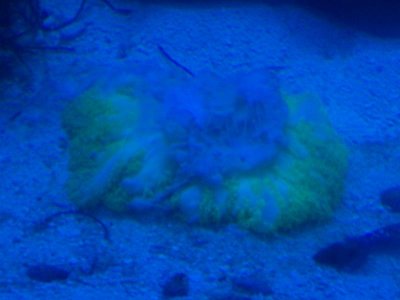
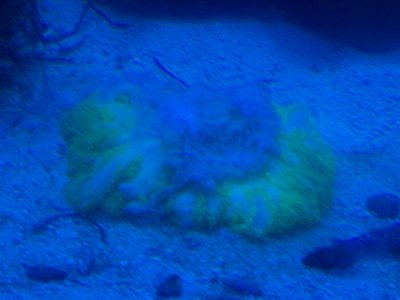


 Sorry
Sorry 


