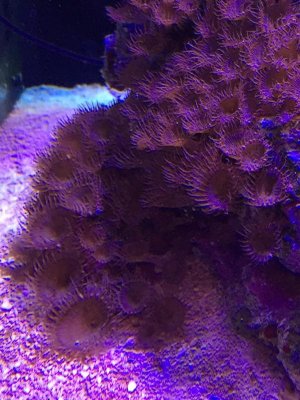
Tricky question. First, some varieties of palythoas seem to be really, really bad, and others less so. BUT, big howling great but---individual sensitivities to some things vary; and we don't understand these species (as a hobby) as well as we should: a difference that might scream information to a scientist is a 'huh, looks alike to me' with most of us. SAFEST, since these things can kill you, is to get rid of them sanely, carefully, and well-insulated from prowling dogs looking for garbage, etc. Inhaling, touching, all sorts of contact have sent people to the hospital, and some RC members have had some very, very unpleasant experiences with the class. Rather than try to encourage a new hobbyist to tell which are the really bad ones, I'd rather say the sea is full of neat things that won't hurt you, so get rid of sea mat and enjoy the others safely. Understand, these are not zoas. Different scientific name, different critter. But always, when working with your tank, use exam gloves and rubber-band your wrists: hands get sore spots and hangnails.
Likewise don't pipette: I know they do it in labs. I've also seen serious risk in labs. Just use a squeeze bulb (turkey baster) and be careful to wash your hands and not rub your face, eyes, nose, or mouth while working with corals. When fragging, wear eye protection: your eyes are a perfect growth surface and corals are living tissue. Don't even ask. THis is a good hobby if you take sensible precautions and don't eat or drink or inhale the specimens, or encounter them with naked fingers or open sores.