Pete's 110 build

That is looking sick Pete! Nice, clean job putting it together. Are the feet height adjustable? Also what size tank is the skimmer rated for?

thanks Brett

the feet are fixed but if I need to it looks like I can cut them down by a half inch or so.

The skimmer is rated for 100-200g but other skimmers of like design, size and pump specs seem to be rated more in the 200-300 range, so it would seem they may be conservative.
 
Looks very clean! Whats the media in the air intake/silencer, CO2 Scrubber?
Thanks Alex, the media is just a sponge to help silence the air draw. I do have an issue with it that I will cover more in the build steps I'll add here shortly. Once the silencer is built there is no way to drain or clean it.
 
Below is a breakdown of the Avast Skimmer build
It does come with instructions and there are two online videos that are very helpful but they don't do a good job covering the upgrades they have recently made. I'll cover these in the steps outlined for each component of the build.

The Skimmer Collection Cup
file.php


There are 2 glued connections and installation of the screwed in drain pipe
Steps
1) install the drain elbow, I love and hate these things. The elbow is longer then the space between the hole and neck so can not be screwed in or out once the cup in built.
2) glue the neck to the cup base. You will use the cone section top ring as a spacer guide. It glues on both sides of the base plate but let one side dry before turing it over.
3) Glue the outside of the cup to the base. This joint will get glue in a grove and outside edge. Hold on this step untill after making the first cone section glue joint as the outside skimmer cup section is used as a temporary clamp for the cone section.


Collection Cup Lid
file.php


There is only one step to the lid assembly; glue the internal ring to the cover plate.


Base plate and bubble chamber
note: I modified the round baseplate to an octogon to fit in my sump
file.php


There are two glued pieces, a ring to the top of the bubble chamber lid and the effluent out pipe
1) the bubble chamber bolts to the baseplate but the instructions are wrong as it appears this is a recent modification. The first video has a completely different assembley and the updated video shows the threaded connections backward as do the instructions. The baseplate I got was only drilled (not threaded as discussed in the video and instructions), but the bubble chamber lid has both a drilled set of holes and tapped set of holes. The instructions show threading a rod into the base plate and putting a nut on the bubble chamber lid but I had to do the opposite.
2) Instalation of the effluent outlet pipe is straight forward but the hole did need to be sanded some to get the pipe to fit. Other then that it is just a matter of inserting the pipe flush and gluing it
3) Install a Uniseal for the pump. Very easy but like any Uniseal the fitting is tight.
 
Last edited:
The effluent outlet, valve and air silencer
I like the valve, it is simple and provides a lot of control. The air silencer is probably very effective but is the only real drawback I have with the skimmer, so I'll end up making some sort of modification to it. The issue I have is once assembled there is no way of cleaning or draining it. I'll end up either adding a threaded/plugged drain port or somehow add a threaded cap as the bottom cover.

file.php


All the pipe connections are friction fit so no gluing is required.
The valve is made up of a plug a threaded rod and a turn handle. The unit is threaded through a cover plate that doubles as the top of the air silencer.

The air silencer is made up of a clear tube, some sponge material and an inlet and outlet piece of tubing, a cover and a bottom plate. The whole unit is glued together, technically I have no opperational issues with it, but for maintenance it would be nice if the unit could be disassembled for cleaning and/or draining.
 
Last edited:
The Cone Section
note: I modified the lower ring from being round to an octogon to fit inside my sump
file.php


The assembly of the cone section takes the most time, and has the hardest to make glue joint on the cone seam. There are a total of 3 joints to make

The cone assemble starts with the upper ring. The upper ring has been upgrade since the original build so the video is not accurate. The build is simple and only requires gluing a small acrylic ring to the grey PVC. The included instructions describe what to do and reference to a picture that was not was not included in the manual, but the online version shows it clearly.

The cone is held together for gluing the seam in 3 places; on top with the top ring, on the bottom with the bottom ring and in the middle with the skimmer cup piece, so you need to complete the initial cone seam glue joint before completing the build of the skimmer collection cup. The skimmer cup piece fits over the cone and works as a temporary clamp in the middle of the cone.

The internal glue joint is made with one long motion of glue application or it will look sloppy. So just practice the motion and be careful with how fast you squeeze out the glue. The outside will also get a single long glue application, but let the unit dry a couple hours before you make it.

Glue Joint
file.php


Gluing the top ring and bottom ring will be easy compared to gluing the cone seam. Just make sure you have the rings square and/or flush before you glue them in place

Leg Assembly
note: I slightly modified the leg ring to fit inside my sump.
file.php


no glue joints, just a friction fit of the stand ring over the legs

the threaded holes in two of the legs were not deep enough for the screws, so I clipped about 1/4" off the screws. The screws are also a very tight fit and I think it could be a problem for future maintenance so I'll end up either rethreading them (if I have the proper size tap) or sand down the screws and grease them before the final reassembly.

More to come when I get the unit up and running

 
How much did the skimmer cost you and why did you decide to go with this skimmer instead of the other popular ones? BTW, great build.
 
How much did the skimmer cost you and why did you decide to go with this skimmer instead of the other popular ones? BTW, great build.

cost for the skimmer and pump was $255
that's hard to beat for a cone skimmer with a 4" neck

the why did I buy that skimmer
here was my decission process as my other skimemr was doing fine but required being cleaned every 2-4 days

1) I wanted a skimmer that I could install an internal wiper blade cleaner on. From what I could find I needed at least a 4"diameter straight neck.

2) After some research, it appears that cone skimmers are the most energy efficient

3) I needed a smaller foot print so starting looking at cone skimmers with the pump mounted below the cone

4) I wanted a material capable of using ozone as I will probably use it again in the future

5) Once I decided on the type and size of a skimmer I started to compare products. There are a lot of cone skimmers out there but in the 250 -350 price range most have smaller necks, unproven pumps made in china or are made of non ozone safe material. In the end the Advast captured my attention, but I still had some concerns. I did some more reading, and after trading a few emails back and forth, I ended up buying their product. The DIY saved me some bucks and was fun to build.

I'm sure there will be a few things I end up not being 100% happy with but for now I still think it was a good by.

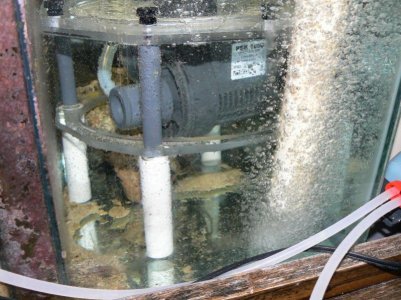
I'll post a couple pictures here in a few minutes but it is in the sump churning away.

and thanks :)
 
Last edited:
this is about 3 hours after I turned it on. Once it seems to settle in I'll need to adjust the valve to get a dryer foam

file.php
 
Excellent tutorial! :) I'm assuming this pic (above) is not showing the swabbie attachment? Are you going to have to cut the legs to make it work?
 
Excellent tutorial! :) I'm assuming this pic (above) is not showing the swabbie attachment? Are you going to have to cut the legs to make it work?

Thanks Brett, and you are correct I have not installed the swabbie yet. I wanted to break in the skimmer first while I did some reading on the swabbie adjustments. I remember reading up on the swabbie before I bought it, but they did not send instructions and I didnt find a manual on it. They sent some plumbers grease with it but I'm not sure where to use it. It may have read it on one of their forums.

As for the height adustments to the skimmer, I ended up raising it, not lowering it. Initialy I wanted to shove the skimmer all the way to the front or back in hopes that I could make enough room for the Ca reactor. To do this I would have put the skimmer right under the work light (in front) or return pipe (in back) giving me the potential clearance issue.

I decided to recheck the optimal sump depth and found that I actually needed to raise the skimmer as I was already too low. I actually had to raise the skimmer, but with it positioned about center in the sump I have plenty of vertical room, even with the 2 1/2" I added to the legs.
 

Attachments

  • skimmer legs.jpg
    skimmer legs.jpg
    95.3 KB · Views: 20
Last edited:
here is an updated Temp and pH chart. Since adding the fan my temperature has stabilized nicely but my pH went up. My test kit readings show actual pH about 0.2 lower then shown on the charts. It may be the probe is old, or needs to be calibrated, or maybe being next to the skimmer the elevated o2 may be throwing it off.

file.php
 
Gotcha, the skimmer is looking good indeed. Probably no need for the swabbie yet until it really starts pulling out the gunk anyway. My guess is the pH probe is picking up the oxygenated water from the skimmer since they are close together. Are there any bubbles collecting on the probe itself?
 
Gotcha, the skimmer is looking good indeed. Probably no need for the swabbie yet until it really starts pulling out the gunk anyway. My guess is the pH probe is picking up the oxygenated water from the skimmer since they are close together. Are there any bubbles collecting on the probe itself?

Yes there were bubbles and some algea on the probe end, it kind of looks like the probe was dislogged and floated closer to the surface. On my next parts order I think I'll add one of those probe holders that use magnets to hold it to the inside of the sump.

I agree, I probably don't need to add the Swabbie yet but I head out for a few days so I went ahead and installed it. There was about an inch clearance left but everything fit fine. I found the owners manual online (I must have just missed it last night) and after following the lube and install directions, I programmed it to come on for 1 minute every 6 hours.

file.php
 
here is a quick update on a couple corals
<object width="853" height="510"><param name="movie" value="http://www.youtube.com/v/gRaibVwtG80?version=3&hl=en_US&rel=0&hd=1"></param><param name="allowFullScreen" value="true"></param><param name="allowscriptaccess" value="always"></param><embed src="http://www.youtube.com/v/gRaibVwtG80?version=3&hl=en_US&rel=0&hd=1" type="application/x-shockwave-flash" width="853" height="510" allowscriptaccess="always" allowfullscreen="true"></embed></object>
 
Very beautiful... Corals are looking very healthy... this for sharing..:)

thank you SJ :)


Great Vid. And a little Kenny Chesney in the background... diggin' it. :D Why did you name the video "Dirty Water SPS"?

thanks Brett

Dirty water? only because all the stuff, junk, detritius or what ever it is floating around in the videos. Not that noticable when a coral is up close but if I try to shoot a video across the tank or more then about a foot away you start seeing all kinds of stuff floating around.

Most SPS set ups, or at least those that seem to focus on SPS, appear to go for pristene conditions, but with all the feeding I do, I'm far from it. :lmao:


Update on the high pH, I recalibrated the probe, it was off but as much as 0.4. At the time of recalibration the probe was reading 8.52 and recalibrated it droped to 8.14, so a huge difference. I do have a new one so if this one drifts again it's toast. For what its worth, the existing probe is one of the lesser expensive ones and is smaller then the standard (e.g. it won't fit in a standard probe holder).
 
Back
Top