Silent and Failsafe Overflow System

I agree. I've set up only bean animals on all of my systems. Only truly works like a bean animal if the siphon is submerged under the water line and the air can purge from it. If it's not submerged it will never become a true full siphon
 
I agree. I've set up only bean animals on all of my systems. Only truly works like a bean animal if the siphon is submerged under the water line and the air can purge from it. If it's not submerged it will never become a true full siphon

If course it will ;)


So a few notes:

If the flow volume is low and and the siphon standpipe is a very large diameter, then you are correct, the area between the valve and the sump may not product a true siphon. In this case submerging the end of the siphon (thus preventing atmospheric pressure from destroying the vacuum) will maintain the siphon. At higher flow volumes this does not become a problem.

We sometimes run into an issue at lower flows, where the volume is not sufficient to purge the standpipe of air. Drilling a small hole or two just above the (running) sump water line can fix this. The small hole will allow the standpipe to purge the air, but is not large enough to fully interfere with the siphon.

An alternative fix would be to place the control valve closer to the sump. This will ensure that he entire length of the standpipe (down to the valve) is always under full siphon.

Cheers...

-Bean
 
bean animal setup

bean animal setup

Dear Bean: this Friday i am finishing up the plumbing (hopefully) on my 150g. I have a couple of questions: My tank is bottom drilled and with the bulkheads will support 3 drains 1.5" each. Since it is an internal overflow i wont be incorporating the T and the screw top PVC standpipe just the 3 returns with elbows (primary, secondary, emergency). each will have an elbow (possibly with strainer) the third being upturned (the third will be 3/4" from weir. all three will be in a row same height. with the emergency being upturned so in effect higher. the secondary will have a hole drilled in the top of elbow (what size drill bit do you reccomend?). the sump is in the stand below; the stand is a little taller than normal (maybe 2 feet taller), my pump is the large varios 8 adjustable. and i have a gate valve on the primary only. So with that small hole it will break the siphon and only a small amount of water will flow into that pipe? should all the pipe be glued within the overflow?
do you see any problems?
grateful for your input
PS i think your site is down.
thanks Carl :reading:
 
If course it will ;)


So a few notes:


If the flow volume is low and and the siphon standpipe is a very large diameter, then you are correct, the area between the valve and the sump may not product a true siphon. In this case submerging the end of the siphon (thus preventing atmospheric pressure from destroying the vacuum) will maintain the siphon. At higher flow volumes this does not become a problem.


We sometimes run into an issue at lower flows, where the volume is not sufficient to purge the standpipe of air. Drilling a small hole or two just above the (running) sump water line can fix this. The small hole will allow the standpipe to purge the air, but is not large enough to fully interfere with the siphon.


An alternative fix would be to place the control valve closer to the sump. This will ensure that he entire length of the standpipe (down to the valve) is always under full siphon.


Cheers...


-Bean


Bean,

I have a question for you. In my new setup I've discovered that going from 3/4 from the external box and upsizing the pipe is not working. I have my Spears gate valve about 2 feet above the sump.

I feel that I am not getting a full siphon due to the height of my gate valve and the upsize of my pipe.

Would lowering the gate valve to the sump allow the 1 inch pipe to fill and create a full siphon?


Sent from my iPhone using Tapatalk
 
Lowering the valve will certainly help. What is the flow rate of the return pump?

Also, the discharge end of the siphon standpipe should be submerged .5" or so during normal operation.
 
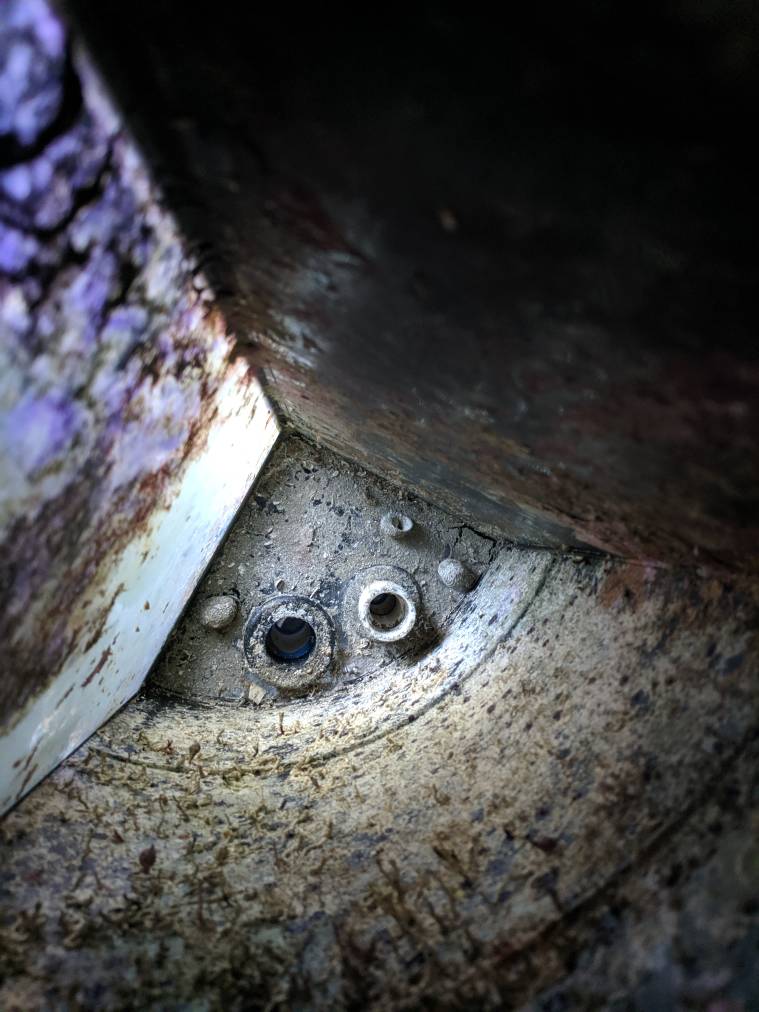
This has probably been asked but there are thousands of posts and it would take forever to search for it, so I'm asking again sorry but I just picked up a used 75 gallon with a corner overflow (1" & 0.75" predrilled) is it safe to drill a third 1" hole to convert to a Bean? Image below, sorry it's not the best, I still have to clean everything.
919b2292f0efd95a355234f6bf2afc90.jpg


Sent from my Pixel XL using Tapatalk
 
2 problems. You can't get another hole into such a tight area and still have enough integrity in the glass and the bigger issue is that there is a strong chance that aquarium has a tempered bottom after it was drilled at factory so cannot be drilled again.
You can engineer something similar (2 drains, no emergency) using both existing holes as drains and just have your return over the top of the aquarium rather than through bottom

AM
 
2 problems. You can't get another hole into such a tight area and still have enough integrity in the glass and the bigger issue is that there is a strong chance that aquarium has a tempered bottom after it was drilled at factory so cannot be drilled again.

You can engineer something similar (2 drains, no emergency) using both existing holes as drains and just have your return over the top of the aquarium rather than through bottom


AM
Thanks, after doing a bunch of research yesterday I was afraid of that. Didn't realize some manufacturers tempered glass after drilling till yesterday. I had that thought too, just running it without an emergency drain. I think my sump is big enough to handle the amount of water from the tank of there is a power outage but I'll have to make sure to have a high water sensor in the sump to turn off my return pump if my drains ever clog.

Sent from my Pixel XL using Tapatalk
 
Thanks, after doing a bunch of research yesterday I was afraid of that. Didn't realize some manufacturers tempered glass after drilling till yesterday. I had that thought too, just running it without an emergency drain. I think my sump is big enough to handle the amount of water from the tank of there is a power outage but I'll have to make sure to have a high water sensor in the sump to turn off my return pump if my drains ever clog.

Sent from my Pixel XL using Tapatalk

they call that the herbie overflow. It's still quiet just without that final added safety measure.
 
If course it will ;)


So a few notes:

If the flow volume is low and and the siphon standpipe is a very large diameter, then you are correct, the area between the valve and the sump may not product a true siphon. In this case submerging the end of the siphon (thus preventing atmospheric pressure from destroying the vacuum) will maintain the siphon. At higher flow volumes this does not become a problem.

We sometimes run into an issue at lower flows, where the volume is not sufficient to purge the standpipe of air. Drilling a small hole or two just above the (running) sump water line can fix this. The small hole will allow the standpipe to purge the air, but is not large enough to fully interfere with the siphon.

An alternative fix would be to place the control valve closer to the sump. This will ensure that he entire length of the standpipe (down to the valve) is always under full siphon.

Cheers...

-Bean

Hi Bean...

So I'm running into this exact issue. I have a 300 gallon tank that I am running about 900-1200 gallons per hour through. It is plumbed with 1.5 plumbing in to the basement. The total length of pipe is about 50 feet with 15 feet of head.

Is one of the fixes preferable in this scenario? I would like to keep the valve closer to the tank if possible but also want to fix it correctly.

Thanks!
 
I would suggest submerging the siphon standpipe and/or reducing the diameter at the discharge end. You can reduce down a pipe size or use a valve. 1.5” at 15’ of head can move a tremendous amount of water.

Ideally, the adjustment would be at the sump end with this much head, but you can likely find a good balance by using a valve near the floor upstairs and submerge/reduce at the sump. Remember, tumbling water and cavitation make noise, a full pipe does not.
 
I would suggest submerging the siphon standpipe and/or reducing the diameter at the discharge end. You can reduce down a pipe size or use a valve. 1.5" at 15' of head can move a tremendous amount of water.

Ideally, the adjustment would be at the sump end with this much head, but you can likely find a good balance by using a valve near the floor upstairs and submerge/reduce at the sump. Remember, tumbling water and cavitation make noise, a full pipe does not.


Thank you! I just looked at our respective stats. We joined Reef Central a year apart...I have 200+ posts...you have 20k+ posts and have set the standard in overflow design. Hats off to you!


Sent from my iPhone using Tapatalk
 
And to think in the last 5 years I only have maybe 100 posts ;)

I looked at one point years ago and the only folks with more posts were moderators... I hope that has changed!

Still in the hobby, just busy.
 
Need to silence a 250 reef ready with 2 corner overflows. Currently running a durso and return in each overflow. Wondering if I can convert one overflow to s Herbie overflow . Thinking the other overflow (durso,) could act as the emergency drain should the Herbie fail. Any issues with doing this?
 
Back
Top
