Deep Sand Bed -- Anatomy & Terminology

I know they aren't new was just trying to understand how they work. My tank as of now is BB so a RUFG is out of the question but a RDSB might work. Just curious how large one I need. Tank is 220. 72x24x31high
 
is there a suggested size fuge for a certain size tank?
corey

That's not a complete question; do you wish to only harvest fauna, reduce nitrates or both?

If your intentions are to only harvest tiny creatures, then 10% of the volume is more than enough. Where pods are most desired, many hobbyists will simply take a length of PVC (1.5-2'' diameter, nearly the length of the tank) drill multiple small holes (maybe 5/16ths of an inch) fill with large crushed coral and cap the ends. The tube is then placed on the bottom rear of the tank and hidden with LR. Pods can come and go without fish being able to enter the PVC.

For nitrate reduction on a heavy bioload using a RDSB, the optimum size would be as large as the display or even bigger. A smaller RDSB will assist but will not be able to handle a large bioload alone. In this case using an over-sized skimmer, carbon and/or a filter sock with frequent water changes will keep the tank pristine.
 
light bioload for now. oversized geo skimmer on the tank now, use filter socks and just put carbon in pantyhose inside the socks to help out. def wanna lower nitrates
 
ok question again, i have a 220 softy lps tank that is BB and im thinking of adding a RDSB in my sump. heres the catch tho, i use a few rubbermaid(heavy duty ones) linked together and would put a tupperware or sort in the sump and put sand in them. so itd be rubbermaid sump then a tupperware dish or something along that line and fill it with sand, would this work? how much surface area do i need to get any benefit of the
RDSB?
corey
 
For the record, I am just getting back into the hobby after a forced layoff from the hobby (auto accident) of 5 years. When the accident occurred, I had a 60 gal with a 6" dsb up and running for 11 years, with no apparent problems. Anyway.......
I just spent the last few days reading this entire thread. Alot of interesting information. I for one cannot add much to it. However, I do have a question or two, and a couple of observations.
After the accident, I was in the hospital for over a month, during that time, nobody was taking care of the tank. Obviously, everything died. When I returned home from the hospital (little over a month), the house smelled like a fishing pier in 90 degree summer heat.....on a windless day. My daughter and I took some plastic and duct taped the top of the tank to seal it until I was well enough to empty and clean out the tank. A week later, my daughter and I went to work. After siphoning the tank, we started removing the now "dead rock". Of course there was some black areas sand where the rock had been sitting, but only in those areas. Once the rock was out, I started shoveling out the sand. First, suprisingly, the sand was NOT clumped at all. After over 11 years. Second, while the smell was quite unbearable, there was not what I would consider to be alot of black areas deeper in the sand bed. You would have thought with the everything shutdown for the duration that it was, it would have been a black mess. Just my observations.
My questions.....I am putting my new tank together now. I think it was Tom (maybe not) that posted early in the thread that rock should sit on some sort of PVC frame so it is not buried in the sand. Also it was stated that the frame should not impead flow. Wouldn't any kind of obstruction impead flow? Do you have a pic or a good description of the frame you have used?
This is a great thread.....looking forward to more useful information.
 
Water does not "flow" through a deep sand bed. Water does not flow vertically, or laterally, in a deep sand bed. If such flow did occur, the various levels, oxic, hypoxic, and anoxic, would all be oxic. A DSB works on the principle of diffusion. Basically, a vertical movement of dissolved substances in the water, from an area of higher concentration, to an area of lower concentration. The water does not move in the sand bed, other than by the incidental activity of sand bed infauna.

In practice, you don't really want the rock sitting on the sand bed, and it is wise to minimize the contact areas between the rock and the substrate. Setting the rock right on the sand, can prevent oxygen from diffusing into the upper layer of the sand bed, creating a hypoxic or even an anoxic area, directly under the rock. Burying the base of the rock, is essentially the same thing.

I make my own rock, and used "legs" "cast" into the base rocks, that hold the rock up off the substrate, minimizing the contact area, and allowing water to flow under the rock, above the sand bed.
 
Great thread Whys lots of good info

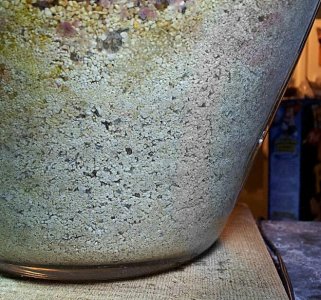
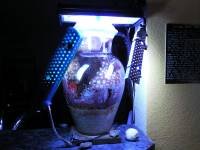
Just wanted to post my long term dsb experiment in a gallon vase started in 2006, to see whether or not the size of the tank is truly a limiter for natural nitrate reduction

I think it is not

Since the vase is tall vs wide it balances a 6 inch deep sandbed nicely

The sand is caribsea arrive alive sand

Its biofilm coated with age such that it never hardens...there are no natural stirrers
but I blast clean the top layer of detritus once a year

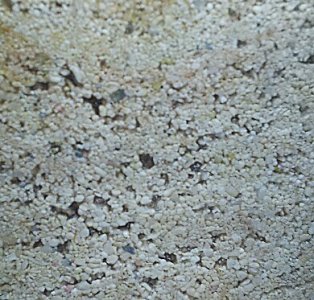
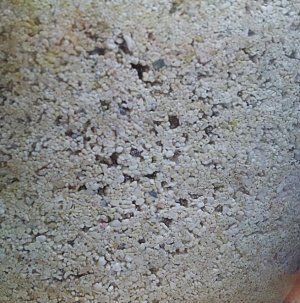
the shot below shows what I am nearly certain is nitrogen gas

The nitrate levels were 2 ppm last time tested just before a water change
The tank carries a decent bioload for its volume, along w 5 lbs live rock to round out the nnr test for the pico reef

The tank is feed heavily to sustain the corals
 

Attachments

  • ngasbedreefbowlpicsay.jpg
    ngasbedreefbowlpicsay.jpg
    104.4 KB · Views: 14
  • MacroCloseup6.2011.1.distance.av.jpg
    MacroCloseup6.2011.1.distance.av.jpg
    6.1 KB · Views: 15
  • macro dsbpicsay.jpg
    macro dsbpicsay.jpg
    71.6 KB · Views: 12
Last edited:
This was a little clearer macro pic of the clear gas bubbles
 

Attachments

  • macron2bubbles-picsay.jpg
    macron2bubbles-picsay.jpg
    101.2 KB · Views: 17
In practice, you don't really want the rock sitting on the sand bed, and it is wise to minimize the contact areas between the rock and the substrate. Setting the rock right on the sand, can prevent oxygen from diffusing into the upper layer of the sand bed, creating a hypoxic or even an anoxic area, directly under the rock. Burying the base of the rock, is essentially the same thing.

I make my own rock, and used "legs" "cast" into the base rocks, that hold the rock up off the substrate, minimizing the contact area, and allowing water to flow under the rock, above the sand bed.

For the most part I agree and attempt to apply the same practice as uncle. If I'm not using a stand or legs, I occupy about 1/5th and no more than a 1/4th of the tank bottom (usually a back corner) and create a rubble pile on the bare glass. Once in place and secure I add my 4''+ of sand. It won't interfere with the DSB and provides a nice refugium for larger fauna; this is especially important if you add larger creatures like ornamental shrimp to your fuge.
 
Water does not "flow" through a deep sand bed. Water does not flow vertically, or laterally, in a deep sand bed. If such flow did occur, the various levels, oxic, hypoxic, and anoxic, would all be oxic. A DSB works on the principle of diffusion. Basically, a vertical movement of dissolved substances in the water, from an area of higher concentration, to an area of lower concentration. The water does not move in the sand bed, other than by the incidental activity of sand bed infauna.

.

Those that believe in advection would debate with you that water can flow through a sand bed
 
Are there any fish that will prolong the developement of a DSB in the DT? I ask because after nearly a year I can now see the benefits of my DSB. (critters and 'pods, low to nil nitrates) But it seemed to take my Sixline wrasse unfortunate demise for the DSB to show signs of life.
 
Are there any fish that will prolong the developement of a DSB in the DT? I ask because after nearly a year I can now see the benefits of my DSB. (critters and 'pods, low to nil nitrates) But it seemed to take my Sixline wrasse unfortunate demise for the DSB to show signs of life.

Not going to get specific, however, any critter you put in the tank, must be researched as to their actual diet, rather than anecdotal comments concerning it. (especially with omnivores that are said to be algae eaters) There is often a difference between the two. Introducing predators to a tank with a young immature sand bed can decimate it rather quickly and render it completely useless, without continuous reseeding, which may need to be done anyway. This is why a DSB (in tank) is the first order of business at setup. It can take several months and longer for the sand bed populations to grow to a point able to withstand against predation which is going to occur.
 
Those that believe in advection would debate with you that water can flow through a sand bed

Many will argue just about any point, if only just for the sake of argument.

The best way to view advection would be to dump salt in a river [Fresh Water], moving swiftly, and thus the transport of the salt in the water would be "advective" whereas if the river were not moving, the transport would be "diffusive," not advective.

Convection and advection are often confused. The term advection is reserved in reference to transport due to net flow of the fluid, for instance in a river, a pipeline, or due to an ocean current. It can be made more complex, or simpler: advection is horizontal transport, and convection is vertical mixing. Or Convection is the total of advection + diffusion. Or even more obscure, advection is the transport of a point, and convection is the transport of a vector.

So what has to be proven, to allow for advective transport in a sand bed, is the net lateral movement of the water, against the impediment of the substrate itself. What you would more likely see would be the advective transport of the sand--which is not happening, as a general rule, unless the power head is too low...........as far as advective water movement in a sand bed, hummm well the sand is not in motion is it. Advective transport occurs in a liquid or a gas.........due to the net movement of that liquid or gas.

The "advection" argument, IIRC, was used, some time ago, to explain transport in live rock to allow denitrification, well suffice to say: not happening.
 
Last edited:
Water does not flow vertically, or laterally, in a deep sand bed. If such flow did occur, the various levels, oxic, hypoxic, and anoxic, would all be oxic.

The "advection" argument, IIRC, was used, some time ago, to explain transport in live rock to allow denitrification, well suffice to say: not happening.


Are you serious?

How do you think reefs work ?
The account quoted above needs correction;not just for the sake of argument since there is no joy in going through all this again particularly with a pedantic poster who dismisses contrary points of view in advance but rather for the sake of accuracy and understanding.

The account quoted above is just simply not correct as it pertains to the flow or the oxic, hypoxic or anoxic levels in the water and does not account for or demonstrate any understanding of the aerobic and anaerobic bacterial activity occurring in denitrification.

Diffusion alone will not provide enough oxygen or nitrate or organic carbon for the heterotrophic facultative bacteria to flourish and do much denitrification . They need organic carbon, nitrate and phosphate and oxygen whether it's free oxygen or taken from nitrate(NO3). Advective flow as well as deposits and channeling by sand critters facilitate the movement of the nutrients these bacteria need into the sand bed. Advective flow alone may not be enough to keep the bed fuctioning efficiently as it is a limited forc r but it is a larger part of nutreint movement than the weak molecular movement of diffusion .
As oxygen enters the area with the nutreint carrying water these bacteria use it up and then turn to nitrate,stripping off the oxygen via anaerobic activity . Once the oxygen from the nitrate gone, the water is anoxic( void of oxygen or nitrate). If there is organic carbon available in anoxic water , sulfate reducing bacteria take over using the O from SO4 generating black sufides and toxic hydrogen sufide gas as by products. So , a balanced level of water movement is important and the vertical up and down advective flow helps this along.
Anaerobic bacterial activity occurs in very shallow places with flow even in the bacterial mulm. Both aerobic and anaerobic activity can occur there and/or in very shallow sand. A sand bed need not be deep or still for denitrification to occur. Without water movement carrying nutrients into it the deeper areas it will be much less effective at depth.

In fact deep still areas are mostly sterile as very small amounts of necessary nutrients pass thorugh given the weak low volume contribution achievable by difusion alone .

This thread is long and the information noted above and below has been given earlier on.
Folks can also find numerous references to studies on the effects of advective flow and the bacterial processes involved in denitrification in it.

Not everyone needs to read the whole thing but common courtesy would require those making authorative statements to at least scan it and avoid presenting inaccurate unsubstantiated personal notions as facts.

When moving water hits an obstruction a pressure drop occurs under the obstruction ( eg a chunk of live rock or a coral, the Great Barrier Reef , a bridge support in a river or your feet on sand as a wave hits your ankle) . The drop in water pressure causes an upwelling through the substrate and the structure if its porous and a consequent downward flow of water to fill the void. Advective flow is up and down and related to the footprint and hieght of the obstruction . It is explained well in the Reef Aquarium Volume 3 by Sprung and Delbeek and more so in the studies they cite there. It can occur to some degree from the obstruction of sand grains but it is stronger with larger obstructions.

Again, the bacteria involved in denitrification are facultative heterotrophs. They flourish in the presence of oxygen and without it in the presence of NO3 ,nitrate. They need to consume raltively large amounts of organic carbon, some nitrogen and less phospahte.They do this in aerobic activty and when the free oxygen is used up they go for the oxygen in nitrate . The liberated N from the NO3, nitrate, joins up to form N2( nitrogen gas) and bubbles out to the air. So bound nitrogen is reduced by aerobic activity( using oxygen for energy ) and some nitrogen as food and further by anaerobic activity using the oxygen in nitrate for energy, freeing the N to form N2 gas.
 
there was not what I would consider to be alot of black areas deeper in the sand bed. You would have thought with the everything shutdown for the duration that it was, it would have been a black mess. Just my observations.
My questions.....I am putting my new tank together now. I think it was Tom (maybe not) that posted early in the thread that rock should sit on some sort of PVC frame so it is not buried in the sand. Also it was stated that the frame should not impead flow

I'venever waited 11 years but the lack of sufides is not surprising since defusion wouldn't move much nutrient( organic carbon ) down deep to support sulfate reducing bacterial activity without some water movment and advective flow. I think any obstruction placed in the current will change water pressure and aid vertical flow up and down . Allowing a rock (live rock holds lots of organics) to be buried in the sand will likely bury enough organic carbon so plenty is left after dentrifying bacterial use up the oxygen and nitrate in the area This condition supports sulfate reducing bacteria which produce sulfides and hydrogen sulfide.
 
Hey guys, sorry for bringing this post back from the dead...

I was linked to this from another forum and found the reading most informative, but I wanted to get a few things straight. Hopefully, some of the informed people originally writing in here could help out this complete newbie. I'm looking at purchasing my first ever fish tank and it's looking to be a 120g with a 70g sump, and my endless research has brought me here... to this 28 page post that I've read in one go.

It goes back and forth so much I'm almost nauseous, but it seems like everyone is saying the same thing in different terms. I just want to make sure I have it right in summary. Here are some facts I've gathered...

DSBs can work. People have done them, and some over decades.
DSBs can fail. People have seen that countless times.
DSBs are desirable because of their ability to remove nitrates from the system in the form of N2 gas (if it isn't first consumed by cyanos).
DSBs have the obvious con of possibly (if something goes wrong) totally f'ing your hard work, money, and time.

Now it seems to me that although the con is huge the pro is pretty major also. We all want to reduce nitrates, and no one seems to question the ability of a DSB at doing this job (at least not at first). So perhaps someone can clear things up for this admittedly newbish newb? Why would someone opt for a DSB with its risks if macro algae can give you the same pros without the cons? Is the best answer to be had on this post, "cause I like the way it looks"? :facepalm:

I'm looking at starting this new system, and I really wanted to do a DSB. I'm a huge fan of watching life and seeing the critters clean the bed and maintain it, so even looking at a SSB makes me feel letdown. But isn't there life to be had in a SSB? From what I've read here 1-2 inches still provides good nitrate removal. Plus with a PVC pipe you can make a safe spot for pods in the DT as well. Couple that with macro algae in the fuge, and a good skimmer... isn't that the best of both worlds? Or am I just totally missing the point?
 
Back
Top