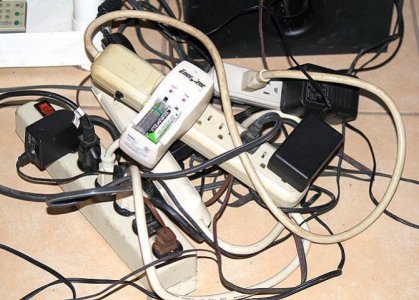
WARNING: Electrical Fire Hazzard!!!

The most common excuse to have an unprotected circuit is, "Well if it trips it could crash my tank." That's nonsense since there's ways to avoid that from happening.

I'd be interested in hearing your thoughts on how to avoid that from happening?

It is also interesting that in the USA you are allowed to wire your own AC equipment into mains electricity? This is strictly forbidden in New Zealand, if you do that you will void your house insurance if it is related to a fire. Needs to be done or certified by a qualified electrician (who will usually prefer to do it themselves than check your own work).
 
I'd be interested in hearing your thoughts on how to avoid that from happening?

It is also interesting that in the USA you are allowed to wire your own AC equipment into mains electricity? This is strictly forbidden in New Zealand, if you do that you will void your house insurance if it is related to a fire. Needs to be done or certified by a qualified electrician (who will usually prefer to do it themselves than check your own work).

I won't speak to specific laws about doing work around "your" house. Obviously when dealing with electricity if you don't know what you're doing, hire an electrician. I'd be more concerned with killing yourself than the insurance company. ;)

As far as protecting your tank from a tripped GFCI there are a few options. In fact I have incorporated all 3 into my systems.

1) Split life support between different circuits. This way if a circuit fails you still have life support operating on the other circuit.

2) If you have an aquarium controller like the Reef Keeper or Neptune Apex, for example, you can sign up on Reeftronics.net and they will contact you via text/e-mail if they lose communication with the controller. I believe the people at Neptune have now included this alert feature for Fusion users as I recently recieved a text from Fusion when there was an apparent brief interruption in utility power.

3) Setup a battery back up. I don't recommend using a UPS designed for computers. Most don't have the battery capacity to operate over long periods of time, nor are they very reliable. They are after all designed to give you a few minutes to save work on your computer, not power a reef tank. Mine is much more robust and can last 24 hrs+. I can post the link to the thread if you want. Ultimately the battery back up needs to be automatic. A hypoxic tank crash can happen in the time that most people are gone at work.

So, in terms of a tripped outlet any one of these things will work. My system is a huge investment and so I've made every effort to install as many failsafes as possible to combat any unforeseen events that could possibly send the whole works crashing down.
 
Yes this happened to a friend of mine . An avid member of many reef clubs and lives in my home town . I have had GFCI's trip and thought aww crap but then thought about it after and was glad that was what tripped . your best protection are ARC fault circut breakers . yeah they are about $75 each but well worth it as they will stop a fire A GFCI might as well but sometimes an arc is not "sensed " by the GFCI . I will go on to say that even though his life is turned upside down right now and he has lost all his reefing equipment , livestock tanks everything . he has taken the time to post in multiple forums about what caused it to try and help others prevent it . lets all wish him well and try to help if we can . be safe everyone remember this is our hobby ..... we glue animals to rocks and put disturbing amounts of electricity around them
 
I won't speak to specific laws about doing work around "your" house. Obviously when dealing with electricity if you don't know what you're doing, hire an electrician. I'd be more concerned with killing yourself than the insurance company. ;)

As far as protecting your tank from a tripped GFCI there are a few options. In fact I have incorporated all 3 into my systems.

1) Split life support between different circuits. This way if a circuit fails you still have life support operating on the other circuit.

2) If you have an aquarium controller like the Reef Keeper or Neptune Apex, for example, you can sign up on Reeftronics.net and they will contact you via text/e-mail if they lose communication with the controller. I believe the people at Neptune have now included this alert feature for Fusion users as I recently recieved a text from Fusion when there was an apparent brief interruption in utility power.

3) Setup a battery back up. I don't recommend using a UPS designed for computers. Most don't have the battery capacity to operate over long periods of time, nor are they very reliable. They are after all designed to give you a few minutes to save work on your computer, not power a reef tank. Mine is much more robust and can last 24 hrs+. I can post the link to the thread if you want. Ultimately the battery back up needs to be automatic. A hypoxic tank crash can happen in the time that most people are gone at work.

So, in terms of a tripped outlet any one of these things will work. My system is a huge investment and so I've made every effort to install as many failsafes as possible to combat any unforeseen events that could possibly send the whole works crashing down.
I've been seeking out a good battery back up for my system so a link would be very much appreciated.
 
Just want to point out something very important. GFCI's aren't used to stop fires but to protect people from being electrically shocked which is an important aspect in this hobby. Although in some cases they can help prevent fires. If you are irresponsible with your power strips (cheap ones) and device setups a fire can still occur on a GFCI. I don't want people to have a false sense of security. When I went to that post a commenter goes into detail about that. This is also a good read. http://www.interfire.org/features/gfi.asp

My dad is an electrician and I've talked to him a lot about this.
 
Yes this happened to a friend of mine . An avid member of many reef clubs and lives in my home town . I have had GFCI's trip and thought aww crap but then thought about it after and was glad that was what tripped . your best protection are ARC fault circut breakers . yeah they are about $75 each but well worth it as they will stop a fire A GFCI might as well but sometimes an arc is not "sensed " by the GFCI . I will go on to say that even though his life is turned upside down right now and he has lost all his reefing equipment , livestock tanks everything . he has taken the time to post in multiple forums about what caused it to try and help others prevent it . lets all wish him well and try to help if we can . be safe everyone remember this is our hobby ..... we glue animals to rocks and put disturbing amounts of electricity around them

Reefstarter2, let your friend know stories like his hit home over here at RC. I feel bad for his situation and IMO Coralife is very much responsible. An aquarium hobby company selling an electrical power strip product which at first glance would be considered for aquariums, yet with barely visible letters it has a warning stating "not for aquarium use". I hope he sues the hell out of them. If he's up to it he should join the discussion over here.

I've been seeking out a good battery back up for my system so a link would be very much appreciated.

Kalen, this is what I did. Post #19 has all the details. My setup is not cheap,mbut its robust, long lasting and versatile. If you don't want to invest that much, I know some powerhead manufactuers sell back ups. Ecotech, Jebao.
http://www.reefcentral.com/forums/showthread.php?t=2440002

Any SLA Battery I prefer Genesis NP.

My ATI trips any GFCI outlet I install. Any suggestions?

I don't know why people have trouble with T5's. Considering commercial hydroponic growers likely use them and GFCI perhaps that would be a good place to ask questions. Lots of grow supply companies. I wonder if it would still trip if it was plugged into another outlet on the circuit and not directly into GCFI outlet. Remember, equipment doesn't need to be plugged directly into a GFCI a outlet. A GFCI outlet simply needs to be installed on the circuit.

Just want to point out something very important. GFCI's aren't used to stop fires but to protect people from being electrically shocked which is an important aspect in this hobby. Although in some cases they can help prevent fires. If you are irresponsible with your power strips (cheap ones) and device setups a fire can still occur on a GFCI. I don't want people to have a false sense of security. When I went to that post a commenter goes into detail about that. This is also a good read. http://www.interfire.org/features/gfi.asp

My dad is an electrician and I've talked to him a lot about this.

I get what your saying. The main design purpose of a GFCI is to eliminate a person from being electrocuted by becoming the ground if for whatever reason the ground is lost on the circuit. However, it will prevent an electrical fire or at a minimum stop feeding it electricity. In the case I noted in the first post, had the hobbyist had his powerstrip on a GFCI outlet the circuit would have been shut down prior to it catching fire.

There is a reason code requires wet areas to have protected outlets and as soon as you install a tank, that area becomes a wet one. From an electrical standpoint everything could be just fine, but if a pipe or tank springs a leak and it penetrates an unprotected outlet that could spell absolute disaster for your family.

Are there some situations that it wouldn't make a difference, perhaps, but a meteor could hit my house tomorrow. My point is we need to make every effort to eliminate possible disasters. Installing a GFCI is smart and will eliminate most of them.

 
I will add Marchillo that in the link you shared the one example where a GFCI outlet won't stop a fire is if a 2 strand wire lacking a ground (like a lamp cord) were to be damaged and not find a ground the GFCI would not sense that. However, they also specifically state if water archs the damaged wire on the ground it would trip the GFCI. Given that almost all aquarium electrical products are 3 strand wire inlcuding a ground it is a non issue. And frankly, your "false sense of security" or "in some cases" post is not a reason to not add a GFCI. I would say it provides you with a good sense of security and almost always will prevent an aquarium fire. Being that your dad is an electrician I would be absolutely shocked if he recommended anyone not install a GFCI where their 5-1000+ gallon aquarium sits.
 
Reefstarter2, let your friend know stories like his hit home over here at RC. I feel bad for his situation and IMO Coralife is very much responsible. An aquarium hobby company selling an electrical power strip product which at first glance would be considered for aquariums, yet with barely visible letters it has a warning stating "not for aquarium use". I hope he sues the hell out of them. If he's up to it he should join the discussion over here.


Kalen, this is what I did. Post #19 has all the details. My setup is not cheap,mbut its robust, long lasting and versatile. If you don't want to invest that much, I know some powerhead manufactuers sell back ups. Ecotech, Jebao.
http://www.reefcentral.com/forums/showthread.php?t=2440002


I don't know why people have trouble with T5's. Considering commercial hydroponic growers likely use them and GFCI perhaps that would be a good place to ask questions. Lots of grow supply companies. I wonder if it would still trip if it was plugged into another outlet on the circuit and not directly into GCFI outlet. Remember, equipment doesn't need to be plugged directly into a GFCI a outlet. A GFCI outlet simply needs to be installed on the circuit.


I get what your saying. The main design purpose of a GFCI is to eliminate a person from being electrocuted by becoming the ground if for whatever reason the ground is lost on the circuit. However, it will prevent an electrical fire or at a minimum stop feeding it electricity. In the case I noted in the first post, had the hobbyist had his powerstrip on a GFCI outlet the circuit would have been shut down prior to it catching fire.

There is a reason code requires wet areas to have protected outlets and as soon as you install a tank, that area becomes a wet one. From an electrical standpoint everything could be just fine, but if a pipe or tank springs a leak and it penetrates an unprotected outlet that could spell absolute disaster for your family.

Are there some situations that it wouldn't make a difference, perhaps, but a meteor could hit my house tomorrow. My point is we need to make every effort to eliminate possible disasters. Installing a GFCI is smart and will eliminate most of them.
Thanks I'll have to read it and take notes. I greatly appreciate it. Like I believe I have before, I've been trying to find info on good reliable battery back up but was not really successful most I came across mention using the ups backups and that just didn't seem worth it or cost effective for me. I don't mind spend or investing the money into some if its going to work and be reliable.
 
I will add Marchillo that in the link you shared the one example where a GFCI outlet won't stop a fire is if a 2 strand wire lacking a ground (like a lamp cord) were to be damaged and not find a ground the GFCI would not sense that. However, they also specifically state if water archs the damaged wire on the ground it would trip the GFCI. Given that almost all aquarium electrical products are 3 strand wire inlcuding a ground it is a non issue. And frankly, your "false sense of security" or "in some cases" post is not a reason to not add a GFCI. I would say it provides you with a good sense of security and almost always will prevent an aquarium fire. Being that your dad is an electrician I would be absolutely shocked if he recommended anyone not install a GFCI where their 5-1000+ gallon aquarium sits.

Please don't jump from one comment to something you are concluding. I never said don't add gfci. I actually think you should. But my other comment is also true. Being responsible with what you plug in is also as important.

And the reason why they are required near water is to protect against electrical shock.
 
Also if you think gfci always protects you then why not put in the gfci and buy a bunch of those coralife power strips.

I'm not trying to be a D. But if someone installs an expensive GFCI and then plugs in a bunch of crappy power strips and other stuff that isn't safe they could also run into an issue.
 
Let me add one more thing. Thank you for posting this. I'm not trying to go against what you are saying. I just wanted to clarify that GFCI is an important item but additional precaution is required
 
Let me add one more thing. Thank you for posting this. I'm not trying to go against what you are saying. I just wanted to clarify that GFCI is an important item but additional precaution is required

We agree. ;) This is not smart.

attachment.php
 

Attachments

  • image.jpg
    image.jpg
    68.8 KB · Views: 3
Back
Top