pico reef pest algae problem challenge

Finally found the thread. Didn't know where the nano section was lol.

I'm not able to remove the two rocks from the tank, what should I do? They aren't covered in bryo, just tufts in the crevices. Can I dose in tank?

I also have a zoa frag that is covered in it. I'm guessing that's where it came from. I can remove it, just do a peroxide dip?
 
Hi! I need a full tank shot to see the right approach

Lift out and externally treat what you can where possible. Based on your pics we may use approaches like underwater spot treating, posts above show simple tank dosing, there are many ways

The more pics we get the better the cure thanks for considering
B
 
ImageUploadedByTapatalk1339721563.987762.jpg

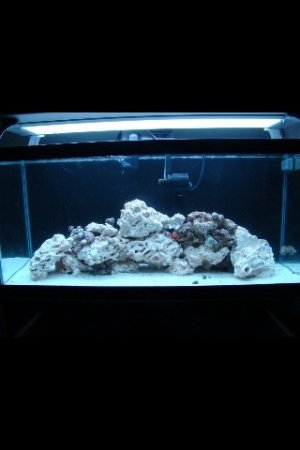
This is the fts at the very beginning (about 7 months ago). I posted this to show you where all the rocks are, they have stayed in there place but a lot if sps and others have been added. The main problem areas are the left side
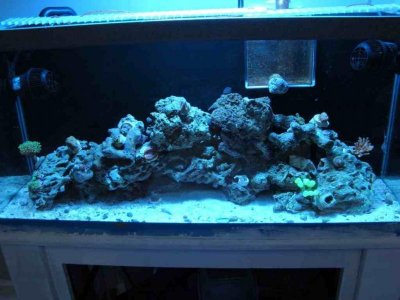
And the right side. There are to bigger slanted rocks on either side, those are them. I have one rock on the top left that has it, but it can be removed. It has an acan and zoas on it. The sides can't be removed, it would make the whole thing fall. The sides have mushrooms, frogspawn, birdnest colony, acan, and palythoa on them. If you want me to, i can post on my other thread, don't want to clutter this one up unless you want it.
 
I don't mind posting here at all we like to collect the pics in one place

Two good news points-your infestation is so light I can't even tell you have a problem

And the cure is simple. Pretty much one treatment and its fixed, if it comes back in a few months treat again so very little in reefkeeping is one off. There is no way id look to strip nutrients out of that tank or jack the magnesium, tank is clean as a whistle. In earlier posts here we discuss how bryopsis, algae grows in low nutrient conditions I don't believe that's the solution in a huge percentage of cases.

So the treatment, do you have any cleaner shrimp in the tank, and to save a ton of work can you just lift out the rocks even with corals and briefly wet/rinse off the target area patches with a little directed drip of peroxide? In tank dosing will require extra planning but this is fast.
 
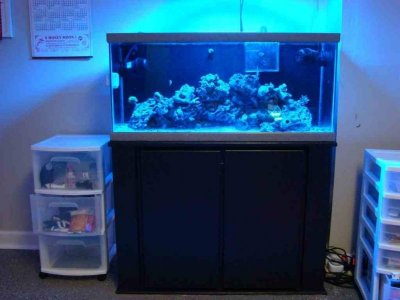
This is when I first started. Here's a pic of it now..ImageUploadedByTapatalk1339727418.860955.jpgImageUploadedByTapatalk1339727440.601401.jpg

I still have a very clean tank, If anything its overfiltered. I don't have any shrimp, should I get a cheap peppermint or something? I was going to get a flame hawkfish which eats shrimp, but that can wait of it needs to. Will a drop of peroxide hurt my zoas? I wouldn't think it would decide to pick the bryopsis instead of zooxanthellae algae, but maybe I'm missing something. How do you do in tank dosing? I would rather do that with the bigger pieces and take the smaller, main trouble spot out and dose.
 
Laugh those are good pics to work with i'm brainstorming a few options, its packed I can see how you don't want to take it all down for external treatments but by all means start off by draining down as low as you will to expose target areas. If you can simply lift out and treat some of the top structures by all means hit what you can right off the bat. As the patches start to turn white you'll be motivated!

The corals you have, no prob for the in tank treatment. You can even catch and refill with the current water each time although any new water you want to input is only good.

Regardless of the method take days and weeks of tiny runs to clear the tank, this took months to establish there is no hurry and we'll work carefully around your sensitives

You would hit a patch or two, give a good while for dissipation before adding more peroxide in the next round.

The net effect of each in tank dose is a slight boost in dissolved oxygen, so we will be careful
not to exceed the shrimps maximum
I see a cleaner shrimp, that's your potential loss but honestly if you take several small treatments you likely have enough tank volume to dilute it out harmlessly.

Even submerged spot treatments with pumps off will begin to kill off any patch you underwater inject, small patches with a small amount of peroxide from a new bottle.

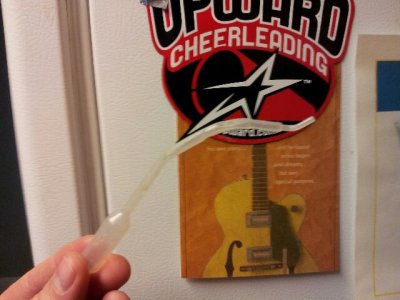
Underwater injection tools: look at this fine point pipette I posted, they cost five cents and can slowly inject tiny amounts of peroxide right at the base of a patch. Wait two days, hit another patch as the previous dies off, that's what I would do.
A diabetics syringe and needle from a pharmacy is the best, the plunger releases peroxide slowly and can inject deep at the base, but you have to endure the inevitable issues from the pharmacist of a non diabetic trying to buy

After a month of drain and treats/submerged spot runs it will die off. The key is to take long enough to not exceed the toxicity levels for the blood shrimp, its your sensitive to plan around. I strongly feel based on previous runs none of your included corals shown are of a concern. Let's watch the clam too but again not a listed sensitive

The drain and treats are worth the effort! It kills patches fast and uses the least...often times three drops per patch is all that's needed.

While drained, you can lay a paper towel wet w peroxide squared flat against the back glass, let sit for 2 mins then remove and refill

This can also be razor blade scraped as a non peroxide option
 

Attachments

  • pipette.jpg
    pipette.jpg
    72.8 KB · Views: 30
Last edited:
Cowbell I had asked about shrimp because they are sensitive to peroxide and can die

For the zos, we have easy success in applying 3% peroxide 50% diluted with saltwater on the target, wait two mins, rinse and reinstall, they won't be harmed

Always use a new bottle of peroxide not an old one

The submerged treatment is to turn off pumps, still the water, use a tool to spot inject a little peroxide right at the base of the algae tuft

Can you take any close up shots of algae so that after its dead we can clearly see the effect
 
Sure I'll take some closeups, although my algae is much more stringy than everyone else's. I'll be buying some h2o2 then! It will have to be in a little bit, going on vacation and don't want anything different going on with my tank.
 
Yep good plan there is never a rush, after externally treating the zo's like we mentioned there are these take it slow spot treats underwater, stretch em out to be safe no prob!
 
The half and half is for rocks/frags lifted out of the water because it will be too dilute to use it as a submerged spot treatment. In nearly all cases except zoanthids we try not to ever contact the peroxide directly to a coral polyp, we try to use it only on the target to reduce stress. This is why taking time to lift out target rocks is preferable to full tank dosing, although now that full tank dosing is becoming a preferred method to save time we have amassed several pics of mixed coral systems that tolerate the practice well. Unless the reef is bare rock only like above where huge amounts of peroxide can be input I recommend taking any full tank dosing out over periods of time to be on the safe side
 
Hopefully I will be able to do some treatments this weekend. I will post pics of the results. There are at least a few rocks I can remove and treat externally so I will start there.
 
I have a couple of questions.

1) I am going to be transferring all the rock from my current tank to my new tank. Is it OK to dip each rock in a SW and Peroxide solution before moving them over?

2) Some of the rocks that need to be dipped are full of sponges. Will the Peroxide dip harm the invertebrate life on the rocks?

I've used peroxide dips to remove small amounts of Byropsis before, so I am confident it will work. I'm just not sure if i should dip all the rock in one day. Thanks.
 
That is a fine idea take us some pics if there's good growth! I have sponges in my tank that aren't affected, common lr sponges, but my contact time is really brief remember I do in tank treatments, fill up tank which is now technically a full tank treatment, and then since my tank is one gallon I drain all that contact water back out and replace with clean/fresh.

So since you are xferring rock why not just spot apply peroxide only on targets not collateral growth i'm nearly two years into treating and I bet most of my stuff has some sensitization in its favor

Thanks for posting
B
 
I just tried it myself, took out about 8 rocks that were on the top of my rockwork, and dipped them in H2O2. If they had corals I tried to just use a dropper and dose it onto the rest of the rock and avoid the corals. I did this on a few LPS/detached corals that were on my sandbed the other day, and it worked well. Seems like this will be a tool/aid in beating GHA, but with larger tanks (mines also a 92g corner) it will be near impossible to eradicate like this because of the scope of things.

Ill be using this in conjunction with GFO (Ive found this stuff to be pretty useless even if I change it every two days), skimming, macro algae, and I think most importantly a algae turf scrubber. Have you looked into scrubbers? I set mine up a few weeks ago and it has already started to grow GHA on it, so hoping the scrubber will out compete my display

Good luck to you also, its a hell of a battle!

Hi Jim, I set up an ATS about 2 months ago, and it is very slowly growing algae and I am scraping more frequently, but it's not growing GHA. Did you try out the peroxide and ATS simultaneously? If so, what were the results? I assume I would have to take the ATS offline if I were to dose the whole DT. I assume the H202 kills other algaes as well?
 
A good ATS will fix your algae problems in short order. I had an oversized ATS in my sump and no algae in my display tank or sump. I was given about 50 Lbs of live rock from a friend who was getting out. His tank was neglected and his rock was covered in algae. I just placed all of it in my sump and the algae on those rocks withered away and died off. It took a month but you could tell within a week that the algae on the rock was loosing out to the algae on the ATS. Without a doubt, a good ATS will starve the other algae in your tank.

That said, all the other methods of reducing algae work well too. This is just my experience.
 
I agree, use one or the other or the ATS offline/back on after you are sure peroxide is dissipated. if it was me id use exclusively one or the other, ATS has a great track method and since its all natural its a respectable method. Adey and Santamonica would agree only they wouldn't reciprocate the appreciation for my preferred method lol

I like peroxide solely due to the quickness, natural approaches are very respectable in their own right, or methods that control phosphate for example. There are many ways to a clean tank!
 
I agree, use one or the other or the ATS offline/back on after you are sure peroxide is dissipated. if it was me id use exclusively one or the other, ATS has a great track method and since its all natural its a respectable method. Adey and Santamonica would agree only they wouldn't reciprocate the appreciation for my preferred method lol

I like peroxide solely due to the quickness, natural approaches are very respectable in their own right, or methods that control phosphate for example. There are many ways to a clean tank!

Thanks Brandon, especially for starting this awesome thread, I am very intrigued with this method. I plan to pull out a few rocks and dip them in HP solution and see what happens. The ATS is an experimental stage right now and in fact the algae has started to disappear...... but very very slowly. :thumbsup:
 
Back
Top